The first man wasn't Adam. He was Adapa. And the Sumerians wrote his story roughly 1,500 years before anyone in Judah put quill to Genesis.
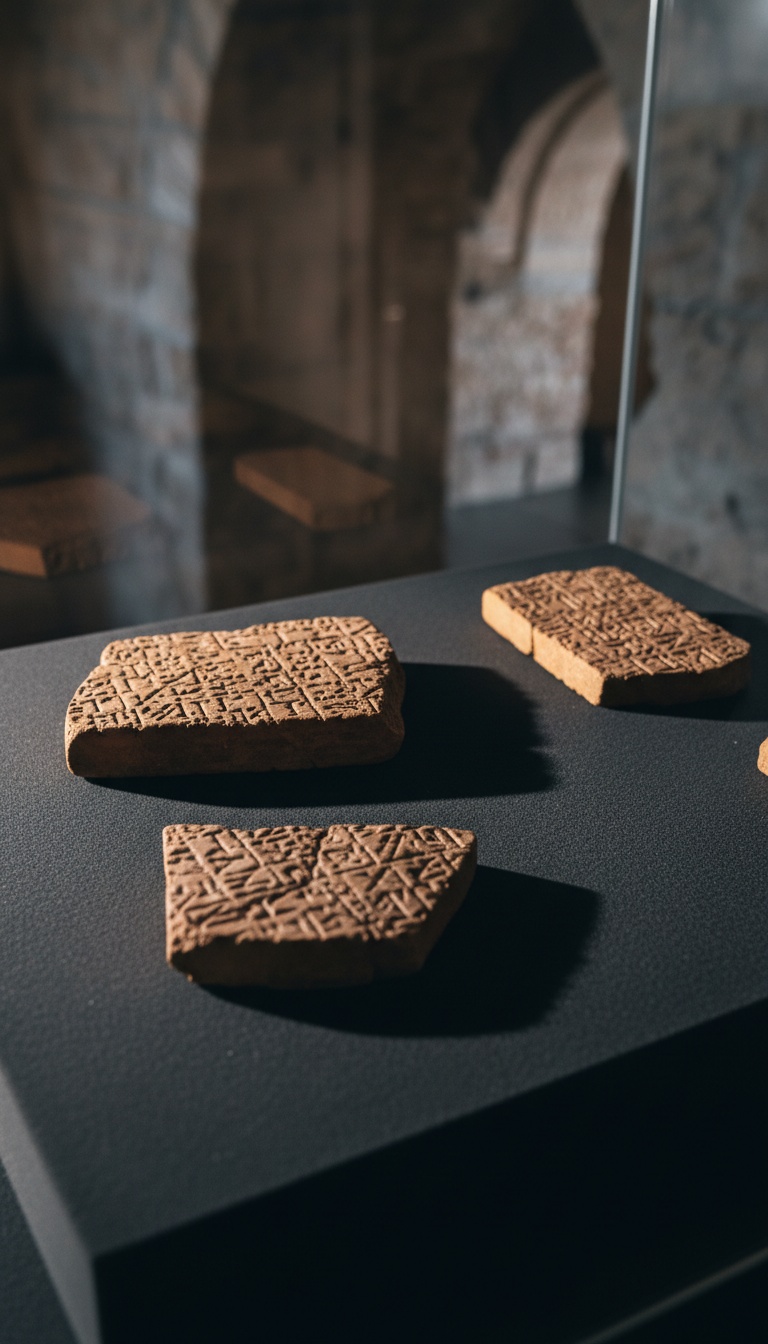
Three fragmentary clay tablets sitting in the British Museum tell the whole thing. A created man. A divine test involving food. A lost shot at immortality. Almost nobody has ever been told it exists. That is the part I want to talk about.
The Tablets Are Real And They Have Catalog Numbers
The Adapa myth is not folklore floating in the ether. It sits in the British Museum collection under three specific accession numbers: K.8214 (21 lines), K.8743 (18 lines), and K.15072 (8 lines). You can look them up on britishmuseum.org right now.
All three came out of the Library of Ashurbanipal at Nineveh, the Assyrian king who reigned from 668 to 627 BCE and hoarded over 30,000 cuneiform tablets in a single archive. The library was excavated by Austen Henry Layard and Hormuzd Rassam starting in the 1840s and 1850s, then shipped to London.
The composition itself is older than the Assyrian copies. The earliest known Adapa fragment is a Middle Babylonian tablet from Tell el-Amarna in Egypt, dated to roughly the 14th century BCE. That is at least 700 years before the earliest plausible date for the Genesis text in its current form.
Eridu Was The Oldest City On Earth
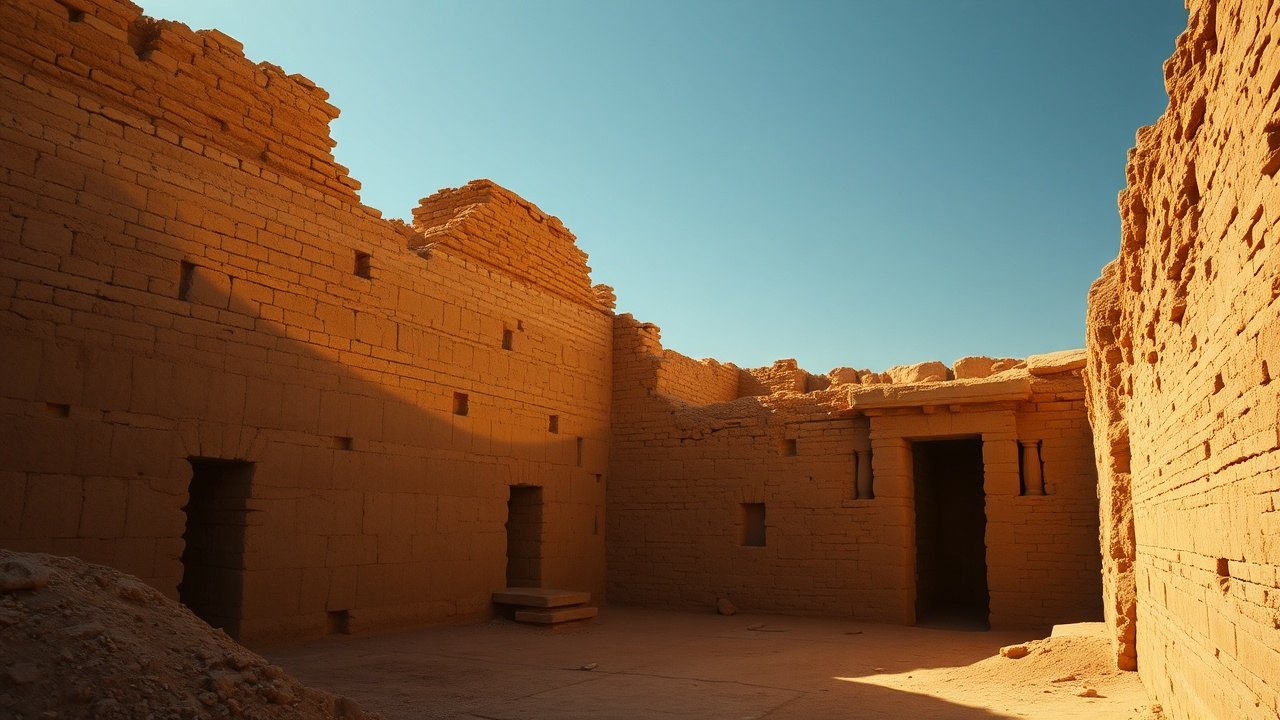
Adapa was created at Eridu. Eridu is not mythological geography. It is a real archaeological site in southern Iraq, modern Tell Abu Shahrain, excavated by Fuad Safar and Seton Lloyd between 1946 and 1949 for the Iraq Directorate of Antiquities.
Sumerian king lists name Eridu as the first city, the place "where kingship descended from heaven." Stratigraphic levels at the site reach back to the Ubaid period around 5400 BCE. That is more than four thousand years before any redactor compiled the Garden of Eden narrative.
Adapa served as priest of Ea, the freshwater god the Akkadians called by the Sumerian name Enki. His job was baking bread and managing offerings in Ea's temple at Eridu. Wise. Blameless. Mortal.
The Test That Mirrors Genesis 3
The story turns when Adapa breaks the wing of the South Wind while fishing. The sky god Anu summons him to heaven to answer for it. Before he goes, Ea coaches him. Refuse the bread they offer you. Refuse the water. They are death.
Anu offers him the food of life and the water of life. Immortality on a plate. Adapa refuses. He followed his god's instruction and walked away from eternal life.
Now open Genesis 3. A first man. A garden. A god giving food instructions. A test. A lost shot at immortality. The narrative beats are identical. The polarity is flipped. Adam disobeys and loses immortality. Adapa obeys and loses immortality. Same outcome. Inverted obedience.
Adapa obeyed his god and lost eternal life. Adam disobeyed his god and lost eternal life. The test is the same. Only the moral wiring got rewritten.
The Timeline Nobody Wants To Talk About
The Amarna Adapa fragment is dated to the 14th century BCE. Mainstream biblical scholarship dates the J source of Genesis, which contains the Eden narrative, to somewhere between the 10th and 6th centuries BCE. Even the most generous early date for Genesis 3 puts it at least 400 years after Adapa was already being copied by Egyptian scribes.
The Ashurbanipal copies in the British Museum date to the 7th century BCE. That puts polished Akkadian versions of the Adapa myth in active circulation in Mesopotamia during the exact century the Judean elite were marched to Babylon in 597 and 586 BCE.
The exiles spent roughly 50 years in Babylon. They came back with the Pentateuch substantially as we know it. The Adapa tablets were sitting in royal libraries the whole time.
What Changed When Scholars Finally Read It
The first Adapa fragment was translated by the Assyriologist Sayce in the 1890s. A fuller reconstruction came from Stephen Langdon and later from Giorgio Buccellati and Shlomo Izre'el, whose 2001 monograph "Adapa and the South Wind" remains the standard critical edition.
The academic response has been to compartmentalize. Alexander Heidel, in "The Babylonian Genesis" (University of Chicago Press, 1951), put the parallels down in print and then spent his next breath steering his colleagues away from the conclusion they point at. That warning is the tell. You do not build a fence around a door that opens onto nothing. The Assyriologist William Hallo went further and argued for a shared Mesopotamian literary background sitting underneath both stories, which is the same admission in a safer coat: the older story is under the newer one, holding it up.
The general public was never told any of this. The Adapa tablets sat in Nineveh for roughly 2,600 years before anyone read them. They have now sat in London for another 170 years. They are still not on permanent public display.
Three tablets. One British Museum. Two stories that read like the same script with the obedience switch thrown the other direction. Written down at Eridu, copied at Nineveh, archived in Bloomsbury, and somehow absent from every Sunday school in the Western world.
The harder question is the one I cannot shake. If the test was the same test, and the loss was the same loss, and the only variable was which god gave the instruction. Then who exactly wanted you to read it the second way.
Before you go
7 books the Vatican doesn't want you reading. Free PDF, the texts they cut, with sources. Joined by 140+ Inner Circle members.
No spam. Unsubscribe anytime.
Go deeper
The Hidden Canon, Vol. I, Enoch. Jubilees. Thomas. Mary. Judas. 90 pages, 14 chapters, every receipt cited. The books your Bible quietly removed.
Read the Canon →Books that informed this investigation
- The Sumerians (Kramer)
- Babylon: Mesopotamia and the Birth of Civilization (Kriwaczek)
- The Ancient Near East (Hallo & Simpson)
As an Amazon Associate, Hidden Epoch earns from qualifying purchases. Cost to you: nothing.
Research safely
The VPN we use to research without being tracked. First 3 months free.
Get NordVPN →