Bible Officer's Gold Receipt Found in a British Museum Drawer
A prophet in Jerusalem and a temple clerk in Babylon wrote down the same man's name, and the clerk's copy sat in the British Museum for 87 years before anyone read it. The man is Nebo-Sarsekim. The Book of Jeremiah puts him inside the conquered city in 587 BC, seated in judgment at its gate. A cuneiform tablet catalogued as BM 114789 puts him in Babylon nine
Read the Investigation → Biblical ArchaeologyThe High Priest Who Sentenced Jesus Left His Name on a Stone Box
The high priest who handed Jesus to Pilate left behind a limestone box with his own name carved into it, and that box sits in a Jerusalem museum today. Most people treat the trial of Jesus as scripture, something you take on faith or leave alone. Then in November 1990 the ground under a Jerusalem construction site gave way and dropped a work crew into the fa
Read the Investigation → Inca AstronomyMachu Picchu's Sun Stone Survived Conquest. A Beer Ad Broke It
Machu Picchu's carved stone held the sun on its path for five centuries, and on September 8, 2000, a beer commercial knocked a piece off the top. The Inca called stones like this one a place to tie the sun. The Spanish crown sent a viceroy to smash every one of them it could find. This one stood untouched through the conquest, through four hundred years of j
Read the Investigation → Mars AnomaliesThe Face On Mars: NASA Swapped The Photograph
NASA photographed a two-kilometer human face on Mars in 1976. It then spent the next twenty-five years sending cameras back to replace the picture. The first frame is still in the archive, filed as 35A72. The Viking 1 orbiter took it on July 25, 1976, over a stretch of northern Mars called Cydonia. It shows a mesa with two eyes, a nose and a mouth, staring s
Read the Investigation → Banned ScriptureDante's Hell Was Copied From a Book the Church Banned
Dante's Hell was copied from a book the Church banned, and Dante admitted it in the second canto of the Inferno. The book is the Apocalypse of Paul. It was written in Greek in the late fourth century, then translated into Latin, and monks across Europe kept copying it for a thousand years. Augustine called it a forgery full of fables. A sixth-century church
Read the Investigation → Banned ScriptureThe Banned Gospel That Names the Two Men Crucified Beside Jesus
The Bible never names the two men crucified beside Jesus. A banned gospel names both of them, then follows Jesus straight down through the floor of Hell. The book is the Gospel of Nicodemus, called the Acts of Pilate in its oldest Greek copies. It gives the thieves their names. It puts two dead men's sworn statement on the record. It also gave Eastern Christ
Read the Investigation → Biblical ArchaeologyBelshazzar Was Called a Bible Myth. Then the Clay Spoke.
The Bible named a Babylonian king every historian swore never lived, and the clay proved the Bible right, so the hand that wrote his death sentence deserves the same respect. Daniel chapter 5 tells it in one breath. A king throws a feast for a thousand nobles. He drinks from the gold cups stolen from the Temple in Jerusalem. Fingers with no body appear by th
Read the Investigation → Biblical ArchaeologyThe Temple Solomon Copied Has Footprints for a 65-Foot God
A temple built on the same plan as Solomon's Temple has footprints carved into its floor for a god sixty-five feet tall. The temple is Ain Dara, on a hill above the Afrin River in northwest Syria, about forty miles northwest of Aleppo. Its foundations are nearly three thousand years old. Its walls are lined with carved basalt lions and sphinxes. And cut into
Read the Investigation → SETI and First ContactThe Alien Signal From K2-155 That China's FAST Cannot Explain
The biggest radio ear humanity has ever built pointed at another planet, and a signal from that planet's direction survived every filter designed to kill it. The source is K2-155, a red dwarf star 238 light-years from Earth with worlds in orbit around it. The telescope is China's FAST. The scientists who caught the signal filed it under one word: unclassifie
Read the Investigation → Biblical MysteriesWitch of Endor: The Medium Whose Ritual Worked Only Once
A woman who ran a forbidden ritual for a living saw it work exactly once. That was the night a disguised King Saul knocked on her door, and the thing that rose out of the ground knew who he was and named the day he would die. The account is in 1 Samuel 28, and it is the strangest chapter in the Hebrew Bible. For three thousand years rabbis, church fathers an
Read the Investigation → Biblical MysteriesThe Fourth Man in the Fiery Furnace: The King Counted Wrong
A Babylonian king threw three bound men into a furnace, looked inside, and counted four men walking free. That is the whole flip, and it sits in Daniel chapter 3. The king was Nebuchadnezzar II, ruler of Babylon from 605 to 562 BC. The men were three Judean exiles, Hananiah, Mishael, and Azariah, whom the Babylonian court renamed Shadrach, Meshach, and Abedn
Read the Investigation → Biblical MysteriesThe Donkey That Saw an Armed Being Its Prophet Could Not
A donkey saw an armed being standing in a public road three separate times, and the man riding it, a prophet kings paid to see into the unseen, saw nothing until the animal opened its mouth and spoke. This is Numbers chapter 22, verses 21 through 35. It is one of the strangest passages ever copied by a scribe, and it keeps getting filed under children's Bibl
Read the Investigation → Biblical ArchaeologyNoah Was Born Glowing. His Father Thought He Was Not Human.
The man chosen to survive the flood came out of the womb lit up like a lamp, and the first person to see him decided the boy was the child of a fallen angel. That scene sits in chapter 106 of the Book of Enoch, a text the New Testament letter of Jude quotes by name, copied by hand in Ethiopia for two thousand years, and pulled in Aramaic fragments from Cave
Read the Investigation → Biblical ArchaeologyNephilim Means Fallen Ones. The Bible Translators Wrote Giants.
Every English Bible says giants in Genesis 6:4. The Hebrew says Nephilim, from the root naphal, to fall, and somewhere between Alexandria and London a bloodline became a height. The Hebrew word is still sitting in the oldest complete copy of Genesis on earth, the Leningrad Codex of 1008 AD at the National Library of Russia in St Petersburg, and in the Aramai
Read the Investigation → American ConspiraciesKennedy's Order to Replace the Federal Reserve Died in Dallas
John F. Kennedy signed the order that let the United States Treasury print its own money on June 4, 1963, and the order was buried with him at Arlington five months later. Executive Order 11110 sits in the Federal Register at 28 FR 5605, and anyone can pull it. The Treasury issued more than four billion dollars in silver-backed notes under the authority it g
Read the Investigation → Biblical ArchaeologyThe Ark of the Covenant Is in Ethiopia and One Monk Guards It
The Ark of the Covenant is in Axum, Ethiopia, and one monk on earth is permitted to stand in the room with it. The Ethiopian Orthodox Tewahedo Church has said so in writing since the fourteenth century. The guardian is chosen for life, sleeps inside the compound of the Church of Our Lady Mary of Zion, and never leaves it. Emperors, patriarchs and foreign gov
Read the Investigation → Biblical ArchaeologyTel Dan Stele: The Stone That Proved King David's Dynasty
Historians spent a hundred years calling King David a legend. An enemy king carved his dynasty into black basalt stone, named his royal house in Aramaic for the whole ancient Near East to read, then deliberately smashed the evidence and buried it face-down inside a wall. The ground held that secret for twenty-eight centuries. In 1993, a dig crew at Tel Dan p
Read the Investigation → Biblical ArchaeologyThe Book That Named 200 Fallen Beings. The Church Cut It.
One book names every single one of the two hundred who came down. The Council of Laodicea removed it from your Bible in 363 AD, and the Western church did not recover the complete text for fourteen hundred years after that. The Book of Enoch was circulating in Jewish synagogues no later than 300 BC. The apostle Jude quoted it by name in the New Testament. El
Read the Investigation → Ancient EngineeringThe Great Pyramid Has Eight Faces: What Petrie Measured
The Great Pyramid of Giza has eight faces. The fourth-grade textbook shows four. The tourist brochure shows four. The UNESCO photograph shows four. The number is eight, and the builders put it there on purpose. This is not a fringe claim. It was measured with calibrated steel instruments by William Flinders Petrie in 1880. It was photographed from the air by
Read the Investigation → Biblical ArchaeologyTel Dan Stele: The Stone That Named David's Dynasty
Historians spent a hundred years building a case that King David was invented. In July 1993, a broken slab of volcanic rock pulled from a trash wall in northern Israel ended that argument. His dynasty was carved in stone. By his enemy. In the enemy's own words. The stone is at the Israel Museum in Jerusalem right now. Archaeology Wing, ground floor. Anyone c
Read the Investigation → Church HistoryThe Vatican Sealed This Archive in 1611. They Still Won't Open It.
The Vatican sealed an archive in 1611, and every document that has ever come out of it has contradicted something the Church told the world for centuries. That is not a coincidence. That is a pattern. And a pattern that consistent only runs one way.
Read the Investigation → Lost CivilizationsThe Grand Canyon Egyptian Tomb the Smithsonian Erased
In April 1909, a newspaper printed the precise location of an Egyptian tomb buried inside the Grand Canyon. The Smithsonian Institution funded the explorer who found it, confirmed the excavation through a named representative, and then told the public that neither the explorer nor the representative had ever worked for the institution. The article is still i
Read the Investigation → Ancient EgyptEvery Prayer on Earth Ends With the Name of a Pharaoh's God
Every prayer on Earth ends with the name of a pharaoh's god. That word is Amun. The scribes who translated your Bible kept it in and said nothing about where it came from. The evidence is not hidden. It is in the British Museum. It is in the Egyptian Museum in Cairo. It is in the Hebrew text of Numbers, chapter five, verse twenty-two. The trail is that short
Read the Investigation → Classified HistoryThe CIA Sealed This Book for 50 Years: The Pole Shift Inside
The CIA classified a geology book. That sentence is not a theory. It is a documented fact sitting in the agency's own reading room, stamped with a declassification date of June 25, 2013. The book is called The Adam and Eve Story . Chan Thomas wrote it in 1963. The agency held it for fifty years. They released part of it. The rest is still blacked out. The qu
Read the Investigation → Ancient EgyptRoman Soldier Killed a Cat in Egypt. The Crowd Killed Him.
Kill a cat in ancient Egypt and the mob would execute you in the street. Around 59 BCE, a Roman soldier proved this, and the Greek historian Diodorus Siculus watched the entire thing happen from the pavement and wrote it down because he could not believe what he had seen.
Read the Investigation → Biblical ArchaeologyThe Serpent Who Stole Immortality: 2,000 Years Before Genesis
The serpent who blocked humanity's access to eternal life does not originate in Genesis. It originates in the oldest poem on earth, carved into clay tablets that predate the Hebrew text by at least two thousand years, and the tablet is sitting in the British Museum right now. This is not interpretation. This is not a fringe reading. Tablet 11 of the Epic of
Read the Investigation → Ancient EgyptThe 5,300-Year-Old Drill That Should Not Exist
A copper alloy precision drill sat in an Egyptian grave for 5,300 years, and the leather thong that drove it is still attached. That is not the mystery. The mystery is how a pre-dynastic culture with no documented metallurgical tradition built it in the first place.
Read the Investigation → Lost ScriptureThe Letter Paul Commanded You to Read Does Not Exist
Colossians 4:16 orders you to read a specific letter. The institution that canonized that instruction cannot produce the letter. The verse is not metaphor and it is not rhetorical. The author writes: "After this letter has been read among you, see that it is also read in the church of the Laodiceans, and that you in turn read the letter from Laodicea." Two i
Read the Investigation → Biblical ArchaeologyGilgal Refaim: The Wheel of Giants the Bible Named First
The Bible named this structure before any archaeologist excavated it. That name is the only explanation that has not collapsed under scrutiny. Rujm el-Hiri. Golan Heights, modern Israel. Five concentric rings of basalt stone rising from a volcanic plateau at 1,000 meters elevation. Forty-two thousand tons of material. No mortar. No inscription. Not a single
Read the Investigation → Ancient EgyptEgypt Built the Afterlife Trial 1,300 Years Before Christianity
Egypt built the courtroom where your soul gets judged 1,300 years before Christianity claimed the patent. The mechanism was already written down, illustrated, and deposited in a royal scribe's burial scroll. The British Museum has had it since 1888. The comparison has been documented in academic literature for two centuries. The receipts are public. What fol
Read the Investigation → Ancient MysteriesThe Irish Tomb That Outengineered the Pyramids
A tomb built in 3200 BC captures the winter solstice sunrise to within one degree of geometric perfection. No GPS. No transit level. No written mathematics. No metal of any kind. The structure still hits its target every December 21st, five thousand years later, which means the people who built it solved an engineering problem that most contemporary textbook
Read the Investigation → Ancient EgyptThe Egyptian Temple With No Inscriptions and No Agreed Date
An Egyptian king carved his name on every wall of every temple he built. Every wall except one. The Osireion sits behind the Temple of Seti I at Abydos, cut from hundred-ton granite blocks, sunk permanently below the Nile water table, and covered in absolutely nothing. No text. No cartouche. No date. Pharaoh Seti I ruled Egypt from approximately 1279 BC, and
Read the Investigation → Early Church HistoryEternal Hell Was Voted Into Christianity in 553 AD
An emperor of Rome voted eternal hell into Christianity in 553 AD. Before that vote, the most credentialed theologian in the first three centuries of Christian history had spent his life arguing the opposite. His books sat in every major library from Alexandria to Antioch. His followers ran the church schools. Then one man with a crown decided the doctrine w
Read the Investigation → Biblical ArchaeologyRobert Ballard Found a Drowned City. Genesis Named It First.
The man who proved the Titanic was real just confirmed a story your church calls mythology. Robert Ballard located the Titanic in 1985. The scientific community gave him a standing ovation. In 1999, the same man photographed a drowned city on the floor of the Black Sea, carbon-dated to 7,500 years ago, at the exact coordinates a Columbia University model pre
Read the Investigation → Ancient MysteriesThe Book No Human Has Ever Decoded
A 240-page book has existed for over six hundred years. Every code-breaker who has ever touched it left empty-handed. Not one word, not one letter, not one identifiable symbol has been decoded. The Vatican held it for two centuries and said nothing about what was inside. In 1912, rare book dealer Wilfrid Voynich purchased a manuscript from Villa Mondragone,
Read the Investigation → Biblical ArchaeologySodom Was Not Burned. It Was Vitrified at 2,000 Degrees
Every archaeologist who digs the Dead Sea basin hits the same layer, and it is not ash. It is glass. Vitrified sand, shocked quartz, sulfur pellets fused at temperatures no campfire, no city fire, no volcano in the region has ever produced. Sodom and Gomorrah were not burned. They were flash-melted from above, and the numbers coming out of the labs put the h
Read the Investigation → Giants & NephilimThe Kandahar Giant: What a US Army Patrol Shot in an Afghan Cave
In 2002 a US special operations team walked into a cave in Kandahar province looking for a patrol that had stopped reporting in, and what came out of that cave left under a heavy-lift helicopter in a cargo net within twenty four hours. Joe Rogan gave the story eleven minutes of airtime in 2013. The Department of Defense has never confirmed it. The Department
Read the Investigation → Biblical ArchaeologyThe Dead Sea Scrolls Had Seven Copies of Enoch. Your Bible Has Zero.
The community that hid the Dead Sea Scrolls kept more copies of the Book of Enoch than they kept of most books that made it into your Bible, and the church that assembled your Bible left every one of them out. That is not a rounding error in an ancient library. Cave 4 at Qumran, excavated starting in 1952, produced seven separate Aramaic manuscripts of Enoch
Read the Investigation → Sumerian HistoryThe Anunnaki Voted to End Humanity. One God Leaked the Plan.
The oldest flood story on Earth is not a story about weather. It is the minutes of a meeting, and the minutes record a vote: the Anunnaki council moved to destroy humanity, the motion passed, and one god voted no. His name was Enki. He was the one who designed us in the first place. And when the council sealed our extinction, he found a loophole in the rulin
Read the Investigation → Ancient MysteriesIndonesia's Pyramid Is Older Than Every Known Civilization
A pyramid in Indonesia returned core sample dates of 27,000 years. That number is not a rounding error. It predates agriculture, writing, and every civilization with a name in the historical record. The question is not whether the site is that old. The question is who was organized enough to build it. This is Gunung Padang. A terraced megalithic site on a hi
Read the Investigation → Book of EnochKokabel: The Angel Who Named Every Star
The Book of Enoch Chapter 6 lists two hundred angels who descended on Mount Hermon. Chapter 8 gives each of them a job. Kokabel's job was the stars. Every constellation above you tonight has his name on it. This is not mythology. The Book of Enoch predates the New Testament by at least two centuries. Dead Sea Scroll fragments found at Qumran Cave 1 in 1947 c
Read the Investigation → Ancient GeneticsHaplogroup X: The DNA Anomaly With No Origin Point
Haplogroup X is in your mitochondrial DNA right now, and it has no origin point in the fossil record. It appears in the Druze communities of the Golan Heights at 26 percent concentration. It appears in the Basque people of the Pyrenees. It appears in the Ojibwe of the Great Lakes. Five continents carry it. None of them trace a common ancestor. Twenty-eight y
Read the Investigation → Ancient EngineeringBarabar Caves: Who Polished Granite Into a Mirror?
Someone carved the inside of a granite boulder into a room and polished every wall to a mirror finish. You can see your own face reflected back at you right now, standing inside the Barabar Caves in the Jehanabad District of Bihar, India. That room is 2,300 years old. The mirror is still there. The Archaeological Survey of India administers these chambers. T
Read the Investigation → UFO HistoryRadar Tracked Unknown Objects Over the White House in 1952
In July 1952 unknown objects flew over the White House on two consecutive weekends, and the United States Air Force could not stop them, could not catch them, and could not name them. This is not folklore. This is radar tape, tower logs, and the sworn accounts of the men who ran air traffic control for the capital of the United States. The targets sat over t
Read the Investigation → UFO HistoryThe Army Fired 1,400 Shells at One Object. It Never Fell.
In the early hours of February 25, 1942, the United States Army fired more than 1,400 anti-aircraft shells at a single object holding position over Los Angeles, and when the guns finally went silent, the object was still in the sky. This is not folklore. It is logged in the records of the Army's Western Defense Command, it ran on the front page of the Los An
Read the Investigation → Ancient AstronomyFour Ancient Civilizations Calculated the Same Catastrophe Cycle
Four ancient civilizations sat down, watched the sky, and arrived at the same catastrophe number. They never met. Sumer to the Hopi mesas of Arizona is 11,000 miles of ocean, desert, and ice. Babylon to the Maya lowlands is 7,500 miles. The Ganges to Third Mesa is farther still. There was no trade route, no shared script, no common priesthood. And yet the cl
Read the Investigation → Ancient AstronomyGoseck Circle: Germany's Exact Solar Observatory Before the Wheel
In 4900 BC, three thousand years before the first stone was dragged to Stonehenge, farmers in central Germany who had never seen a wheel built a solar observatory so precise that modern surveying equipment confirms its alignments to within a fraction of a degree. The site is called the Goseck Circle. It sits in a field in Saxony-Anhalt, about 40 kilometers s
Read the Investigation → Forbidden EgyptologyThe Pharaoh Whose Skull Matched Nothing Human. Egypt Erased Him.
Akhenaten ruled Egypt for 17 years, and when he died, Egypt did not bury him with honors. It spent decades chiseling his name off every monument, striking him from every king list, and referring to him only as "the criminal of Akhetaten." You do not do that to a failed king. You do that to a king who proved something. Because here is the problem the textbook
Read the Investigation → Biblical ArchaeologyCherubim Are Not Baby Angels. The Bible Describes Vehicles.
The fat winged toddler on your grandmother's Christmas card is a Renaissance invention, and the Hebrew Bible describes something else entirely: an object God rides, sits between, speaks from, and stations at doorways with a rotating weapon. Strip away fifteen centuries of art history and read only what the text says cherubim do. They fly with a rider aboard.
Read the Investigation → Lost CivilizationsThe Eye of the Sahara Matches Plato's Atlantis to Within 3 Percent
In the middle of the Sahara desert sits a perfect circle, fifty kilometers wide, visible from space, and when you convert the measurements Plato wrote down in 360 BC, the circle matches his description of Atlantis to within three percent. Geologists filed it under natural formation and moved on. That filing decision, made from photographs and rock samples, i
Read the Investigation → Megalithic PeruThe 100-Ton Stones Above Cusco That No Builder Ever Explained
A fortress of hundred-ton stones stands on the ridge above Cusco, Peru, and not one human being in history ever wrote down how it was built. The site is called Sacsayhuaman. Three zigzag tiers of limestone run nearly four hundred meters along the hilltop, stacked from blocks that outweigh loaded freight cars. There is no engineering document. There is no con
Read the Investigation → Forbidden ArchaeologyGobekli Tepe: The 12,000-Year-Old Temple Its Builders Buried
Twelve thousand years ago, on a limestone ridge in southeastern Turkey, people the textbooks call hunter-gatherers quarried twenty-ton pillars, raised them in perfect circles, carved them with foxes and vultures and scorpions, and then came back and buried the entire complex under a man-made hill. Deliberately. Every enclosure. Every pillar. Filled to the to
Read the Investigation → Ancient EngineeringThe Great Pyramid Resonates at 2.3 Hz. It Was Never a Tomb.
The Great Pyramid is a tuned instrument. Scientists published the measurement in May 2026, in a peer-reviewed journal, with sensors placed inside the structure. The frequency is 2.3 hertz. Egyptology still calls it a tomb. That frequency sits below human hearing in the infrasound range, where the body absorbs vibration instead of registering it as sound. The
Read the Investigation → Forbidden GeologyThe Deepest Hole on Earth Is Welded Shut. What Did the Soviets Find?
There is a hole in Russia that goes deeper than any human being has ever gone, and it is welded shut. The Soviet Union spent twenty two years drilling it. From May 24, 1970 until 1992, on the Kola Peninsula above the Arctic Circle, borehole SG-3 chewed 12,262 meters straight down into some of the oldest granite on the planet. Then the drilling stopped, the p
Read the Investigation → Human OriginsEvery Skull Before Yours Had a Brow Ridge
The brow ridge did not shrink. It vanished. For roughly 2.5 million years of hominin evolution, every skull in the fossil record carries a supraorbital torus. The shelf of bone above the eye socket that defines Homo habilis , Homo erectus , Homo heidelbergensis , and Neanderthals. Then around 300,000 years ago the record produces a skull without one. Globula
Read the Investigation → Biblical ArchaeologyThe Bible Gives Directions to Eden. The Gold Mine Is Still Open.
Genesis chapter two is not a poem. It is a route description with four named rivers, a mineral survey, and a destination. Two of the rivers still flow. The gold field it names is still producing ore under a Saudi mining license. You can drive to it. For two centuries the official position has been that Eden is theological geography, a place that exists on no
Read the Investigation → Deep Space SignalsA Telescope Heard 72 Seconds in 1977. It Never Spoke Again.
On the night of August 15, 1977, a radio telescope in Delaware, Ohio recorded 72 seconds of something that has never happened again, before or since, on any instrument on Earth. The signal arrived on one narrow frequency. It rose and fell exactly the way a transmission from a fixed point in deep space should. It hit thirty times the background noise of the s
Read the Investigation → Medieval Heresy TrialsBaphomet Was Drawn In 1856. The Templars Never Saw It.
The face you picture when someone says the word devil was drawn in Paris in 1856 by a failed deacon, and every knight who burned for worshipping it had been dead for 542 years. That is not a metaphor and it is not a stretch. The horned goat with the torch between its horns has a signature, a publisher and a publication date. The men accused of bowing to it w
Read the Investigation → Biblical TranslationJesus and Lucifer Share the Same Title in the Bible
Two figures in the same book are given the same title, and almost nobody has ever read the two verses side by side. Revelation 22:16 has Jesus describing himself in the first person. "I am the root and the offspring of David, and the bright and morning star." Isaiah 14:12 uses that same image for the figure the King James Version calls Lucifer. Same star. Sa
Read the Investigation → The Blueprint
Heracles: The God-Man Who Died, Left No Bones, and Ascended. 500 Years Before the Creed
Son of the highest god by a mortal woman. He wrestled Death with his bare hands and won. He went down into the underworld and came back. He died in agony on a hill, his mortal half was destroyed, his divine half rose to heaven, and when his followers searched the ashes they found no bones at all. Then the ancient world worshipped him as a god who had once be
Read the Investigation → The Blueprint
Asclepius: The Savior Who Healed the Blind and Raised the Dead. His Cures Are Carved in Stone
The blind see. The lame walk. The mute speak. The dead are raised. His followers called him Savior. And the receipts are not in a book that was copied for centuries. They are carved in stone, on temple tablets you can stand in front of today, dated around 350 BC. His name was Asclepius, son of the god Apollo and a mortal woman, and his healing sanctuaries we
Read the Investigation → The Blueprint
Buddha Faced the Same Three Temptations as Jesus, 500 Years Earlier. Pleasure. Fear. Power.
A holy man fasts alone in the wilderness. A named demon comes to break him. The attack comes in three waves: pleasure, fear, and power over the world. The holy man refuses all three. The demon withdraws, and the teaching ministry begins. That is Matthew chapter 4. It is also the Padhana Sutta, a Buddhist scripture that a stone edict of Emperor Ashoka was alr
Read the Investigation → The Blueprint
Romulus: A Missing Body, a Sworn Witness, and an Ascension. Written Down Before the Gospels
A missing body. A grieving crowd. A respected witness who swears under oath that he met the risen man on the road, that the man gave him a message for his followers, and that he ascended to heaven. The authorities declare him a god. That is not Easter morning. That is the death of Romulus, founder of Rome, as recorded by Livy around 27 BC, decades before a s
Read the Investigation → The Blueprint
Horus: Almost Everything You Have Heard Is Fake. What Survives Is Stranger
You have probably seen the list. Horus: born December 25 of the virgin Isis, star in the east, three kings, twelve disciples, walked on water, crucified, dead three days, resurrected. It is the most shared meme in this entire genre, it went global with the film Zeitgeist in 2007, and almost every line of it is fabricated. This is part 10 of THE BLUEPRINT, an
Read the Investigation → The Blueprint
Zoroaster: The Devil, Heaven, Hell, and Judgment Day Were Persian First
Open the early books of the Hebrew Bible and try to find the devil. He is not there. Try to find heaven and hell as destinations for human souls. Not there. A resurrection of the dead at the end of time, a final judgment, armies of named angels. None of it is there. Then the Jews spend two centuries inside the Persian Empire, and when the literature resumes,
Read the Investigation → The Blueprint
Krishna: A Tyrant King, a Hunted Infant, and a Stone Pillar Older Than Christmas
A king is warned that a newborn child will destroy him. He orders infants killed. The baby is smuggled away in the night, across a river, to be raised by foster parents among herdsmen, until the day he returns to fulfill the prophecy. If that sounds like the second chapter of Matthew, it is also the birth story of Krishna, told in the sacred texts of India.
Read the Investigation → The Blueprint
Attis: Rome Celebrated a God Who Died and Rose on March 25, Before Easter Existed
A Roman festival celebrated a god who died and rose again on a fixed spring calendar, in public, with a sacred meal, two centuries before anyone celebrated Easter. The god was Attis, consort of Cybele, the Great Mother of Anatolia. His cult was formally imported to Rome in 204 BC, by vote of the Senate, during the war with Hannibal. It stayed for six hundred
Read the Investigation → The Blueprint
Mithras: The Church Father Who Admitted the Pagan Eucharist Was Real
The best witness for the Mithras parallel is not a skeptic. He is a saint. Justin Martyr, one of the earliest Church Fathers, wrote to the Roman emperor around 150 AD that the cult of Mithras had a sacred meal of bread and a cup, parallel to the Christian Eucharist. He did not say the pagans were lying. He said demons had copied the Christian sacrament in ad
Read the Investigation → The Blueprint
Dionysus: Bread as Flesh, Wine as Blood, 400 Years Before the Last Supper
Centuries before the Last Supper, Greek initiates were eating flesh and drinking wine as the body and blood of a resurrected god, the son of the highest god and a mortal woman. His hymns call him King of Kings and God of Gods. His name was Dionysus, and the city where John's Gospel was written had worshipped him for centuries before the apostle arrived. This
Read the Investigation → The Blueprint
Tammuz: The Bible Records Women Weeping for a Dying God at the Temple
The strangest witness in this entire investigation is the Bible itself. Ezekiel chapter 8, verse 14: the prophet is carried in a vision to the north gate of the Temple of Yahweh in Jerusalem, and, in the text's own words, behold, there sat women weeping for Tammuz. Jewish women. Inside the Temple precincts. Performing the mourning ritual of a dying and risin
Read the Investigation → The Blueprint
Inanna: The Oldest Resurrection Story Has Three Days, a Hook, and a Goddess
The oldest resurrection story in human history is about four thousand years old. The one who dies hangs dead for three days and three nights. On the third day, help is sent, and the dead one rises and returns to the world above. And the god in question was a goddess: Inanna, queen of heaven. This is part 3 of THE BLUEPRINT, our 23-part investigation into the
Read the Investigation → The Blueprint
Osiris: Egypt Worshipped a Resurrected King of Kings 2,400 Years Before Jesus
Egypt worshipped a resurrected god more than two thousand years before Jesus, and his titles will sound familiar: Lord of Lords. King of Kings. The Good Shepherd. The Resurrection and the Life. His name was Osiris, and his story is not preserved in some late, contaminated source. It is carved into the oldest religious writings in human history. This is part
Read the Investigation → The Blueprint
The Composite Messiah: 22 Figures Carried the Jesus Story Before Jesus
Every core miracle in the Gospels was already being worshipped somewhere in the ancient world before Bethlehem. Virgin birth. Death and resurrection. Rising on the third day. A sacred meal of flesh and blood that grants eternal life. Ascension into heaven. Not one of these motifs appears for the first time in the first century. Every single one is older. Tha
Read the Investigation → Lost Technology
The Antikythera Mechanism: A 2,000-Year-Old Computer Pulled From the Sea
In 1901, Greek sponge divers off the island of Antikythera pulled a corroded lump of bronze out of a Roman-era shipwreck. It sat in an Athens museum drawer for years before anyone realized what it was. When they finally opened it, they found a machine that should not exist. Thirty-seven meshing bronze gears in a wooden box, roughly the size of a shoebox. Bui
Read the Investigation → Lost Civilizations
Doggerland: The Lost Country Under the North Sea
There is a lost country under the North Sea, and the strangest part is how we keep finding it. Not with submarines. With fishing nets. Ten thousand years ago the seabed between England and the Netherlands was dry land. Forests, rivers, hills, marshes. Archaeologists call it Doggerland, after the Dogger Bank that was once its high ground. It was not a bridge
Read the Investigation → Biblical History
The 85-Year-Old Who Cleared a City of Giants. Named.
David killed one giant and became the most famous name in the Hebrew Bible. An 85-year-old cleared a whole city of them and got a single chapter buried in Joshua. His name is Caleb. The text names the giants he killed. And almost nobody teaches it.
Read the Investigation → Biblical Astronomy
The Star of Bethlehem Stopped Over One House. No Star Does That.
The Gospel of Matthew describes a star that moved ahead of travelers, led them to a single town, then stopped over one specific house. No star in the observable sky does that. I am Jordan Vale, and this is the problem astronomers have been circling for four hundred years without landing.
Read the Investigation → Forbidden Scripture
Book of Enoch 13: Fallen Angels Begged a Human for Mercy
Two hundred fallen angels once knelt on a burning mountain and begged a human being to write their appeal to God. The Book of Enoch preserves the transcript. Most Bibles do not. I am Jordan Vale, and this is the chapter the councils cut. Chapter 13. The scene where beings of fire needed a scribe with ink.
Read the Investigation → Biblical Archaeology
The Shroud of Turin Carries a Photo-Negative No One Can Reproduce
There is a linen cloth in Turin Cathedral that behaves like a photograph taken centuries before the camera existed. It is 4.4 meters long. It bears the front and back imprint of a beaten, crucified man. And after 127 years of scientific scrutiny, no one has reproduced how the image got there.
Read the Investigation → Biblical Archaeology
The Ark of the Covenant: Measured to the Inch, Then Gone
The Bible measures one object to the cubit, guards it for four centuries, then loses it without a single line of explanation. That object is the Ark of the Covenant. And the silence around its disappearance is louder than the specs that describe it.
Read the Investigation →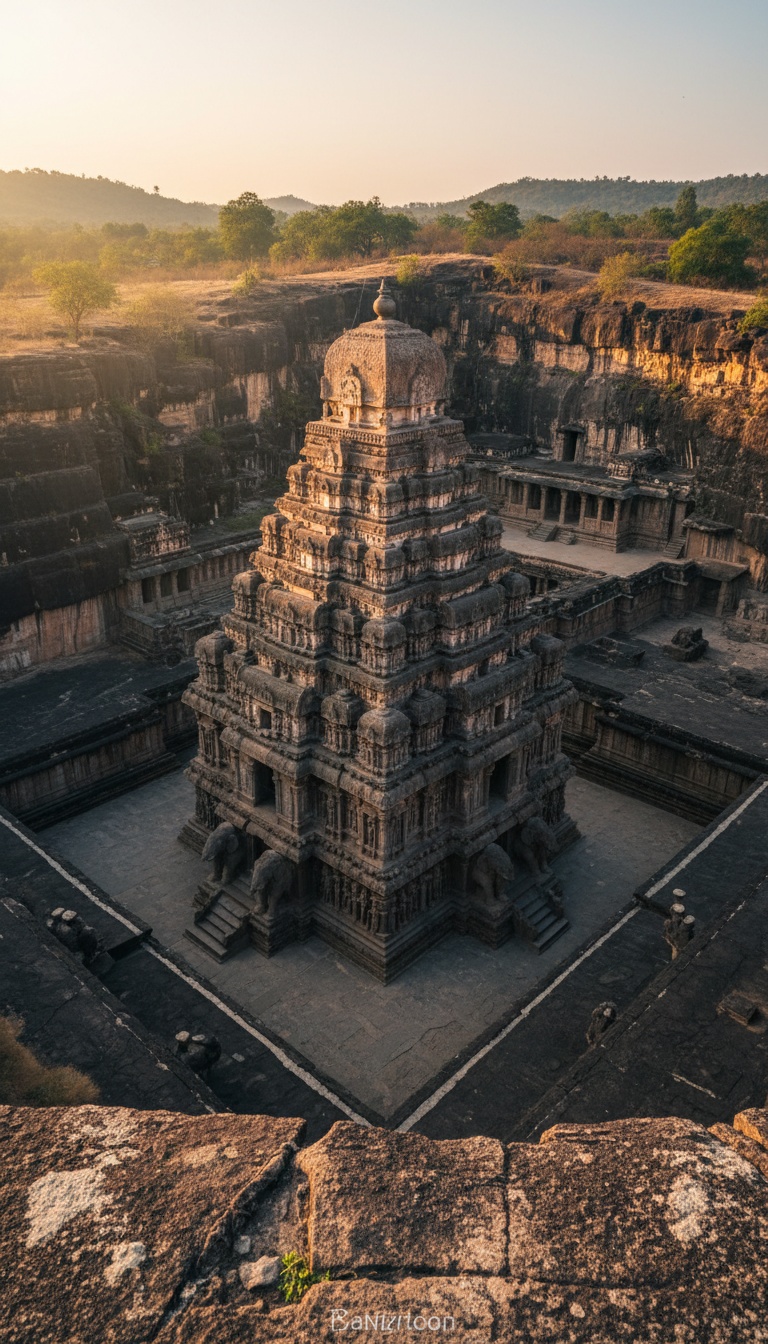 Ancient Engineering
Kailasa Temple: A Mountain Was Deleted Around It
In western India there is a temple that was not built. It was carved, downward, out of a single mountain of solid basalt, and the mountain that used to be there is gone. Kailasa Temple, Cave 16 at the Ellora Caves in Sambhaji Nagar district, Maharashtra, is the only structure of its size on Earth that was made by subtraction. Not stacking. Not assembly. Dele
Read the Investigation →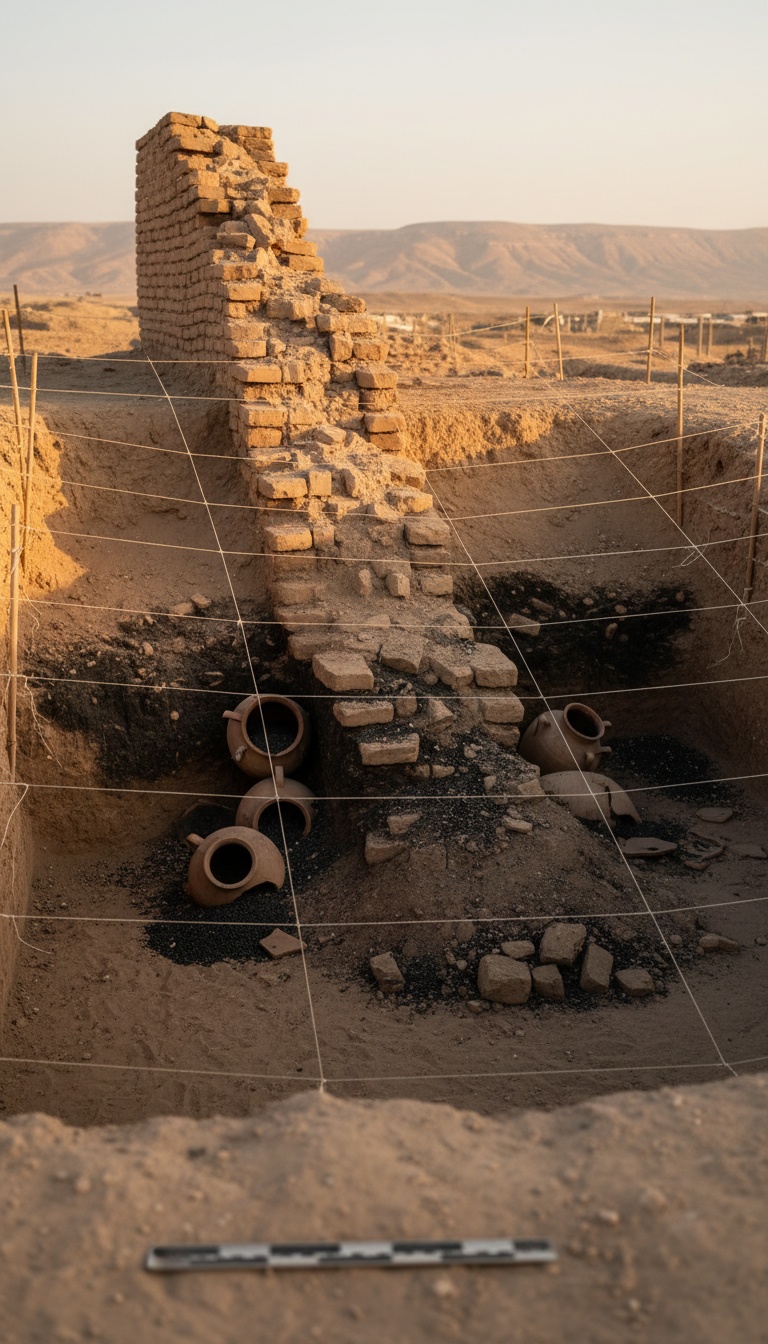 Biblical Archaeology
Jericho: The Walls Fell Outward and the Grain Was Still in the Jars
Every siege in ancient history ended with walls collapsing inward under the weight of attackers. At Jericho, the wall fell the other way, and the grain jars were still full when the fire hit them. Two anomalies. One tell. And a dig record that nobody wants to say out loud.
Read the Investigation →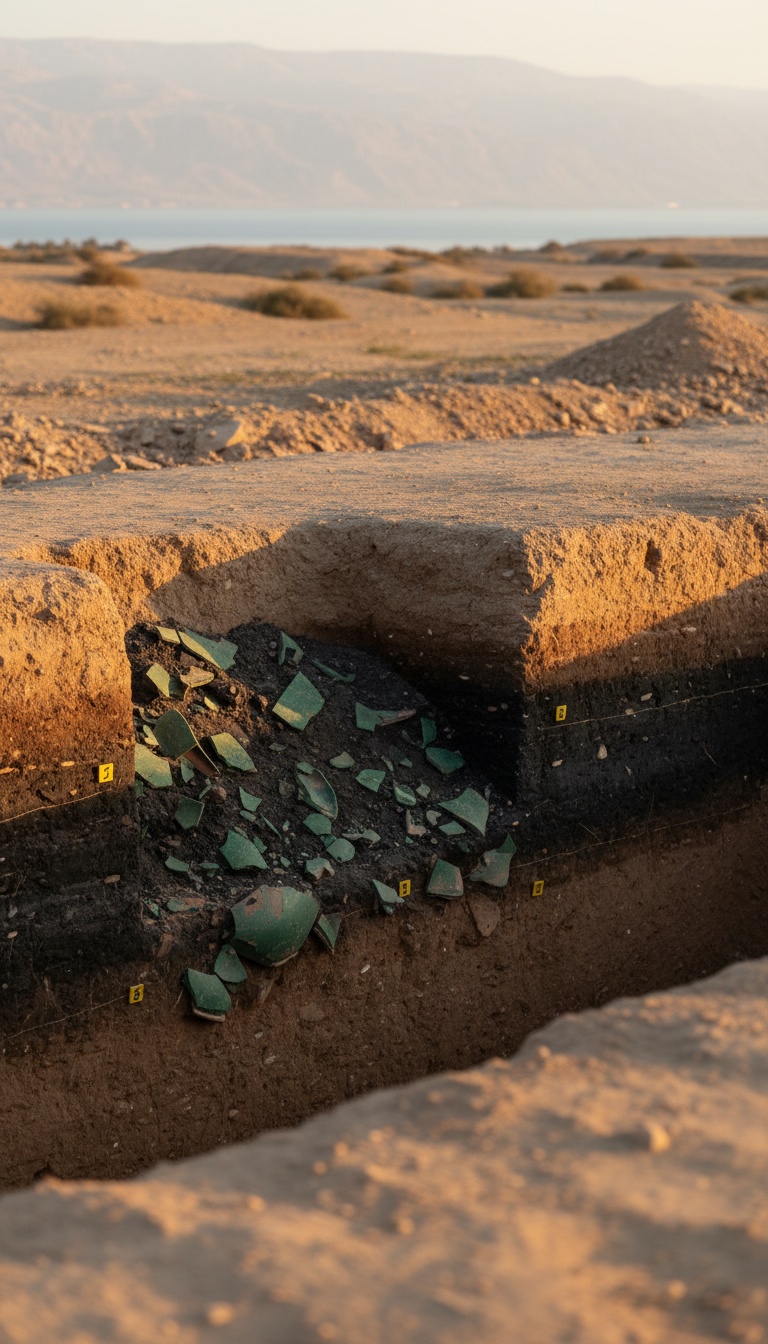 Biblical Archaeology
A Bronze Age City Turned to Glass Where Genesis Places Sodom
In 2021, a team of scientists published a paper in Nature's Scientific Reports arguing that a Bronze Age city in the Jordan Valley was flattened in a single morning by a cosmic airburst. The evidence was so extreme most readers assumed it was a mistake. It sits exactly where the Book of Genesis places Sodom. The city is called Tall el-Hammam. It lies 12.6 ki
Read the Investigation →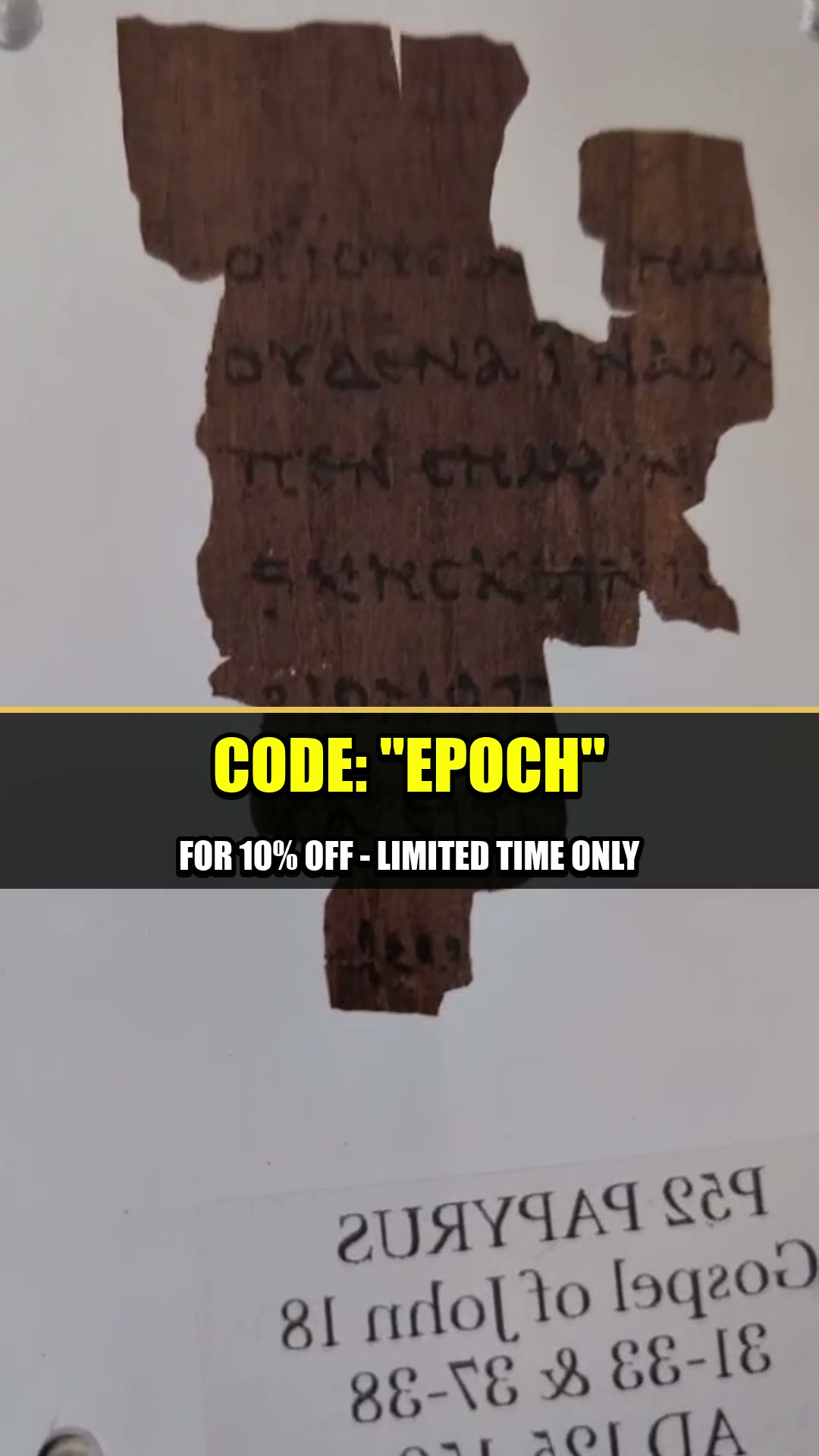 Biblical Archaeology
The Oldest Page of the New Testament Sat in a Drawer for 14 Years
In 1920, an Oxford scholar bought a lot of papyrus in Egypt. A scrap the size of a credit card sat unsorted in a Manchester library until 1934, when a young researcher turned it over and froze. It was the Gospel of John, chapter 18, Jesus before Pilate, copied around 125 AD. Cataloged as P52, it is the oldest surviving fragment of the New Testament anywhere on Earth. Here is the story, and how to hold a replica.
 Lost Civilizations
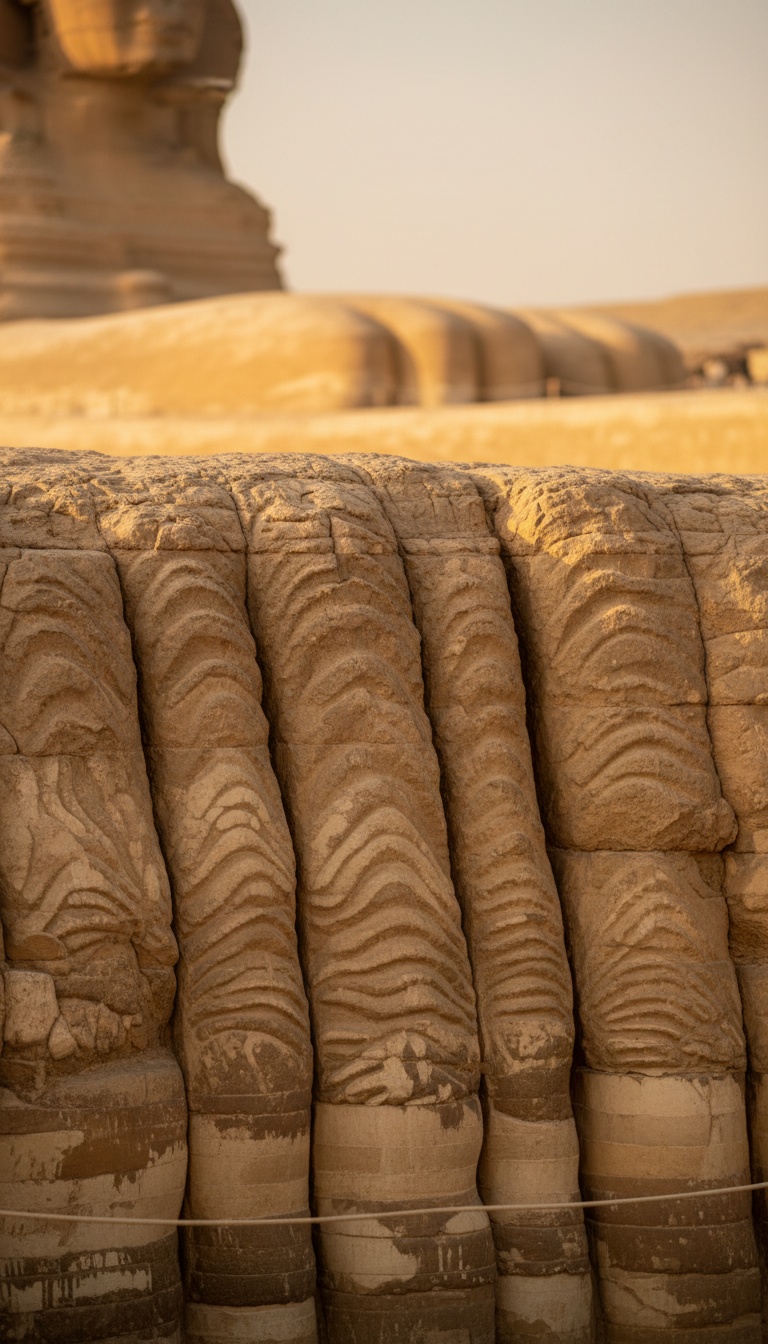
The Sphinx Has Rain Damage in a Desert Dry for 8,000 Years
The Great Sphinx of Giza is carved from limestone and covered in vertical fissures that geologists identify as rainfall weathering. It sits in a desert that has not seen sustained heavy rain since before 5000 BCE. Egyptology insists it was built around 2500 BCE. Almost nobody knows this fight happened on a public stage. In 1992, at a Geological Society of Am
Read the Investigation →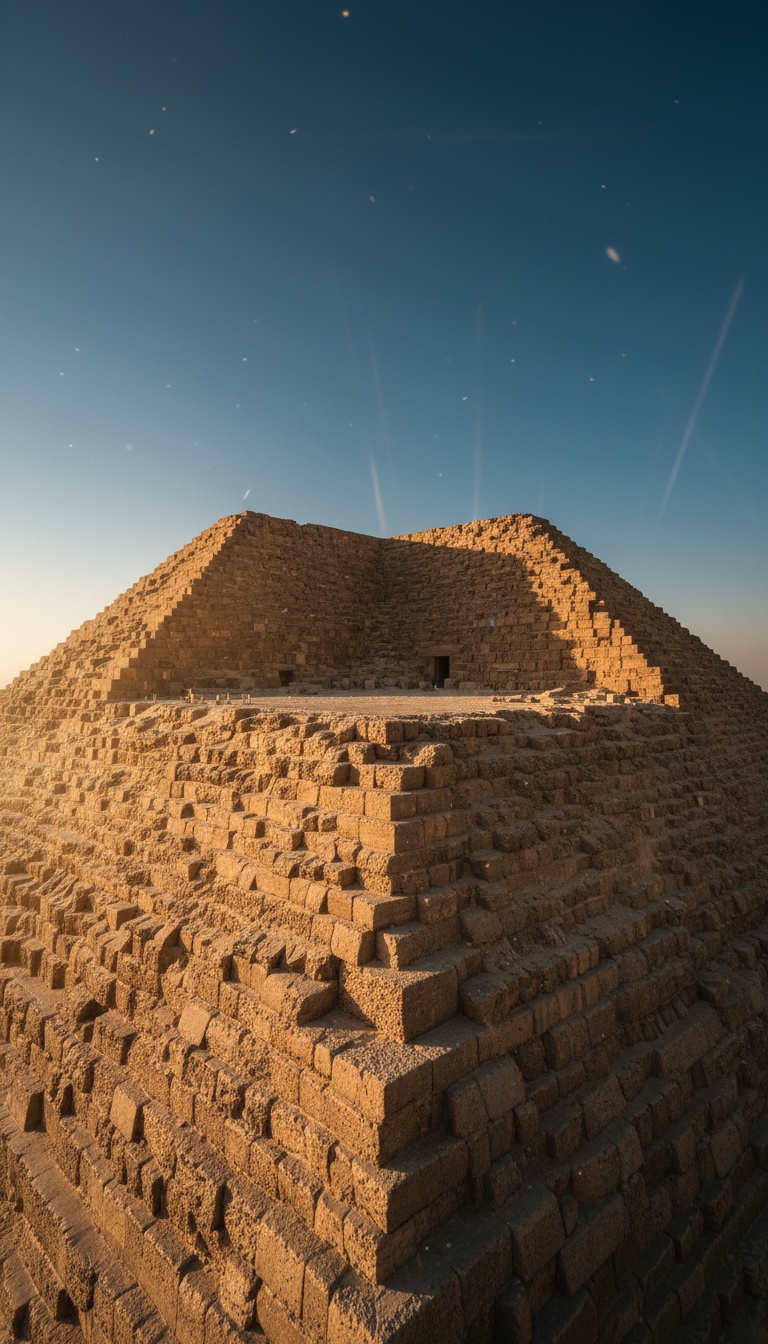 Egyptian Mysteries
The Great Pyramid's Capstone Was Already Missing 2,000 Years Ago
The Great Pyramid has no top. And the oldest surviving eyewitness description of it says the top was already gone before Julius Caesar was born. Almost nobody knows this. The pyramid you see in every photograph, every travel brochure, every documentary establishing shot, is missing the single most sacred stone in Egyptian cosmology. And it has been missing f
Read the Investigation →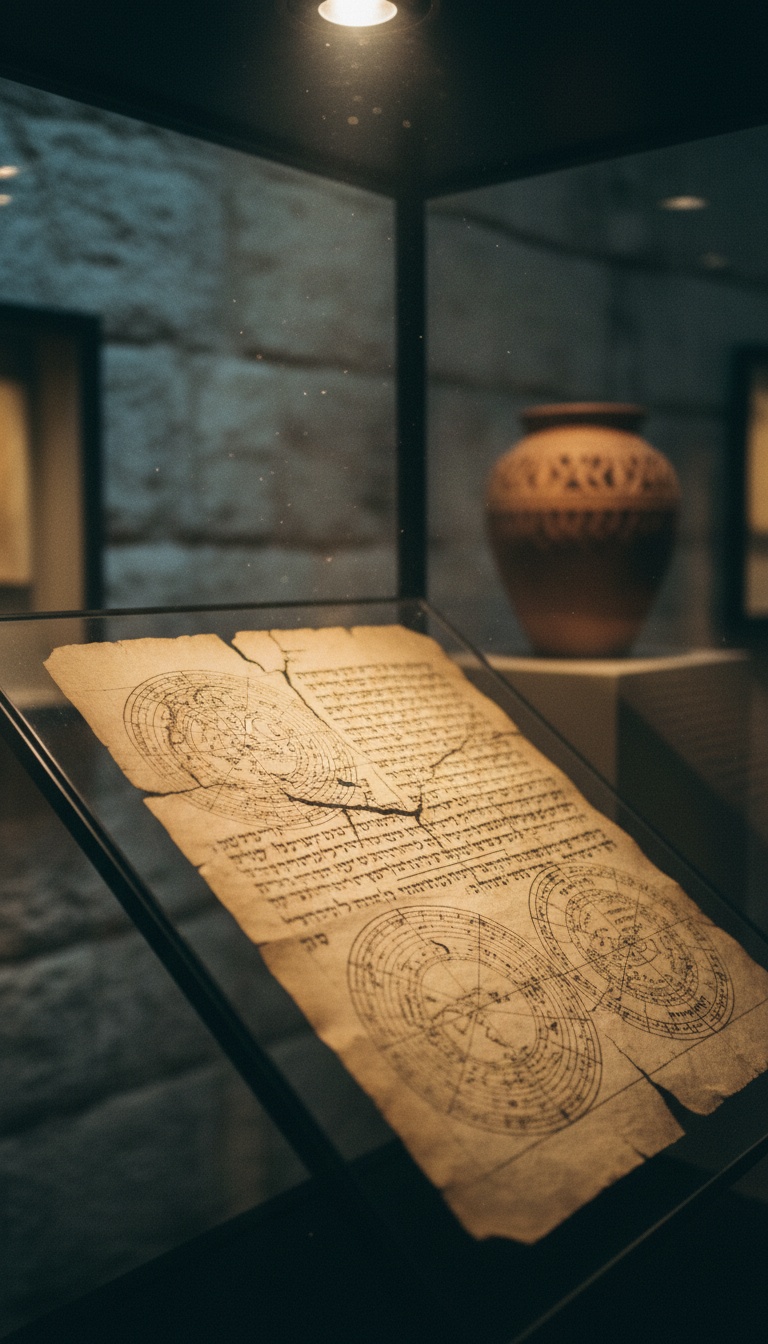 Biblical Archaeology
The Real Reason They Banned Enoch: The 364-Day Calendar
The church did not ban the Book of Enoch because of angels or giants. It banned Enoch because of a calendar. A 364-day solar grid. Four seasons. Thirteen weeks each. Every Sabbath locked to the same weekday, forever. No priest required to announce it. That is the real heresy, and the Dead Sea Scrolls prove a whole community died defending it.
Read the Investigation → Biblical History
How Many Books Are in the Bible? 66, 73, or 81. Depends Who Won the Vote.
Ask a Protestant and you get 66. Ask a Catholic, 73. Ask a priest in the Ethiopian highlands, 81. Same God, three tables of contents. Who wrote the Bible, when it was written, and who voted on what stayed in it is stranger than most people in a pew have been told.
Read the Investigation →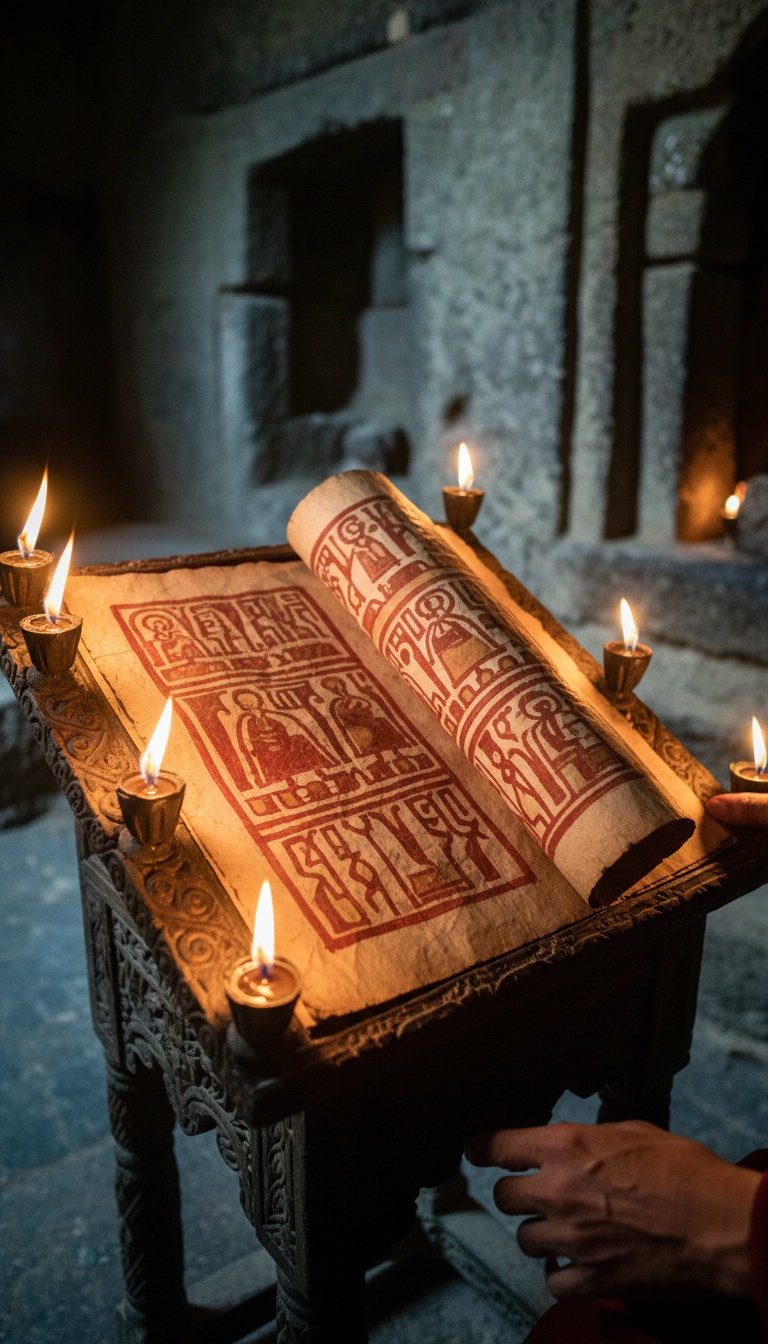 Biblical Archaeology
The Ethiopian Bible Has 81 Books. Yours Has 66. Ethiopia Never Agreed.
The Ethiopian Orthodox Tewahedo Church reads 81 books as scripture. The Protestant Bible sitting on your shelf contains 66. The gap is not a rounding error. It is fifteen books that Rome and Alexandria voted off the canon in the fourth century, and one African church that never agreed to the vote. Ethiopia kept reading Enoch, Jubilees, and 1 Meqabyan out lou
Read the Investigation →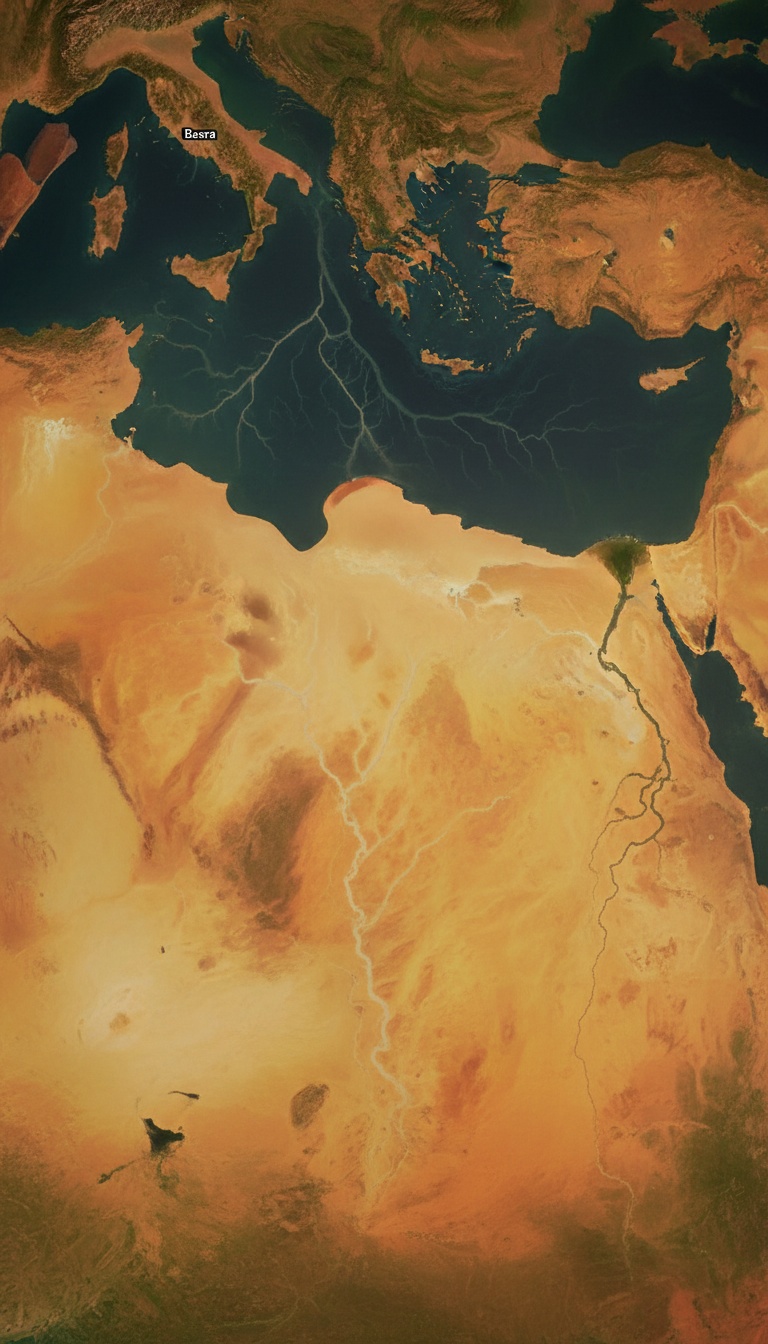 Biblical Archaeology
The Garden of Eden Has a Real Address. It Is Underwater.
The Bible gave the Garden of Eden a physical address, listed four rivers by name, and modern satellite imaging just found two of them. The basin they all point to is sitting under the Persian Gulf.
Read the Investigation → Biblical Archaeology
Noah's Flood Was Written 1,000 Years Before Genesis
The story of Noah was carved into wet clay in southern Iraq more than a thousand years before the Book of Genesis existed as a written text. Same boat. Same dove. Same mountain. Different god. The tablet sits in the British Museum right now. You can walk in and look at it. Room 55, case ten.
Read the Investigation → Biblical Archaeology
The Real Reason The Church Buried The Gospel of Thomas
The Bible you own is missing 114 sayings attributed to Jesus, and the reason has less to do with heresy than with real estate. Specifically, who owns the real estate between you and God. In December 1945, two Egyptian farmers named Muhammad and Khalifah Ali al-Samman were digging for sabakh fertilizer at the base of the Jabal al-Tarif cliffs near Nag Hammadi
Read the Investigation → Comparative Religion
The Jesus Story Was Older Than Jesus. Three Gods Had It First.
Jesus of Nazareth was not the first god born of a virgin, betrayed, entombed, and raised on the third day. He was at least the fourth to carry that resume, and the paperwork is older than the New Testament by a margin measured in millennia. The story you were handed in Sunday school was assembled from a template already carved into temple walls across three
Read the Investigation → American Anomalies
18 Giant Skulls Vanished Into the Smithsonian After Wisconsin Dig
The Smithsonian Institution received eighteen oversized human skulls from a mound complex outside Lake Delavan, Wisconsin, in May 1912. None of them were ever placed on public display. None of them appear in the current online catalogue of the National Museum of Natural History. That is the flip. That is the receipt. I am Jordan Vale, and I have spent six we
Read the Investigation → Biblical Archaeology
The 7 Books Removed From the Bible: The Forbidden Seven
The Bible on your shelf is missing books. Not lost in a fire. Not misplaced in a desert. Removed by name, by vote, by men who signed their signatures to the deletion. Seven of those texts were read aloud in first century congregations, quoted by New Testament authors, and buried in caves that Bedouin shepherds cracked open in 1947. This is the receipt trail.
Read the Investigation → Biblical Archaeology
The Book of Enoch Watchers: The Chapter Every Bible Cut
The Ethiopian Bible kept a chapter every other Bible removed, and that chapter is a receipt. A list of angels. A list of skills. A list of what humanity was not supposed to know. Almost nobody reads it. That is the point.
Read the Investigation →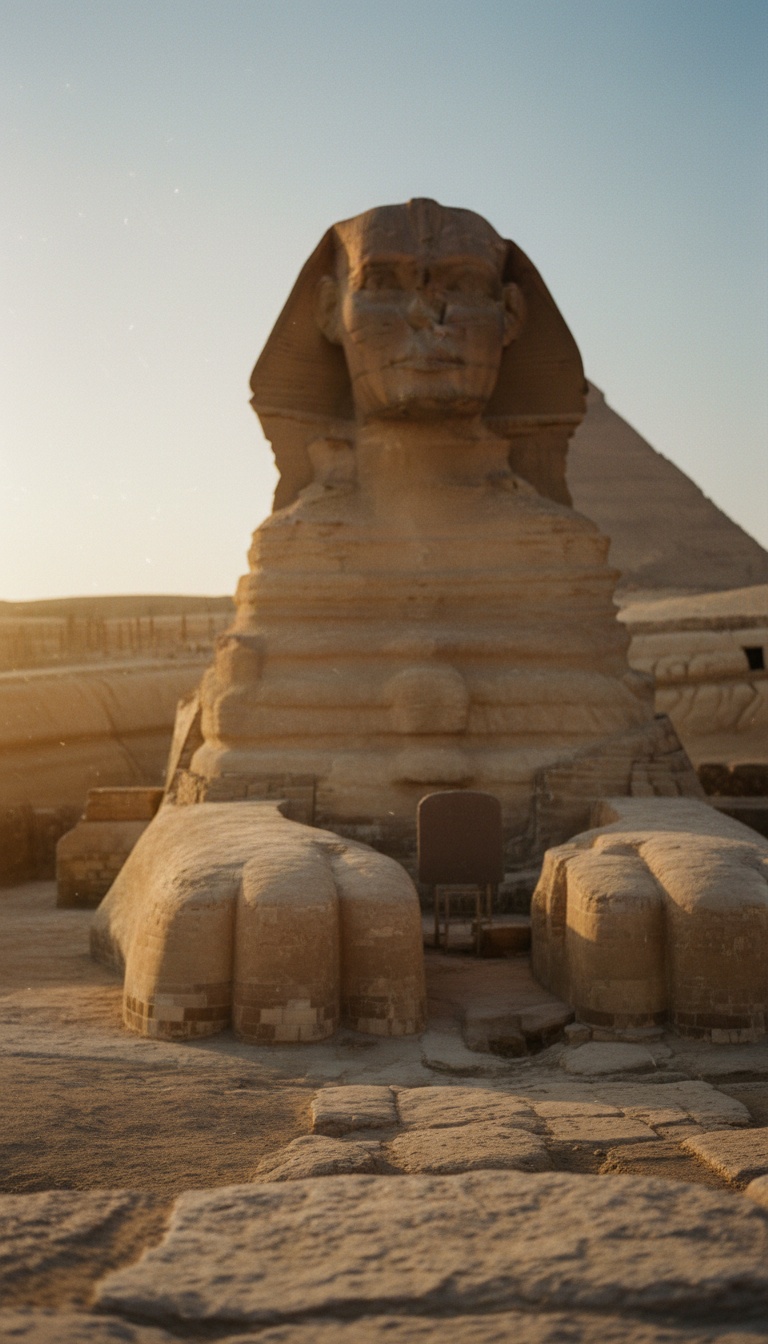 Egyptian Antiquities
Hall of Records Under the Sphinx: The 1998 Survey Egypt Buried
The Egyptian government drilled beneath the Sphinx in 1998. They stopped without explanation, and the coordinates never made it into a peer-reviewed journal. Three separate survey teams from three different countries have logged anomalies under the Great Sphinx of Giza in the last thirty years. Every single dataset ended up either classified, confiscated, or
Read the Investigation → Lost Civilizations
The Great Pyramid Math Doesn't Work. Here's What They Buried.
The Great Pyramid of Giza was supposedly built in 20 years by the pharaoh Khufu around 2560 BCE. The arithmetic makes that impossible, and the physical evidence points to something much older sitting underneath the official story. Google searches for the question of who really built Giza are up roughly 86 percent in recent months. There is a reason. The rece
Read the Investigation → Suppressed Archaeology
The Smithsonian Logged 8-Foot Skeletons in 1909. Then Silence.
In 1909, the Smithsonian Institution received a shipment of oversized human remains pulled from a cave in western Nevada. The bones were catalogued. Then they disappeared from public view. Almost nobody knows this story survived at all. What follows is not folklore. It is a paper trail. Dates, place names, storage counts, and cross-continental parallels that
Read the Investigation →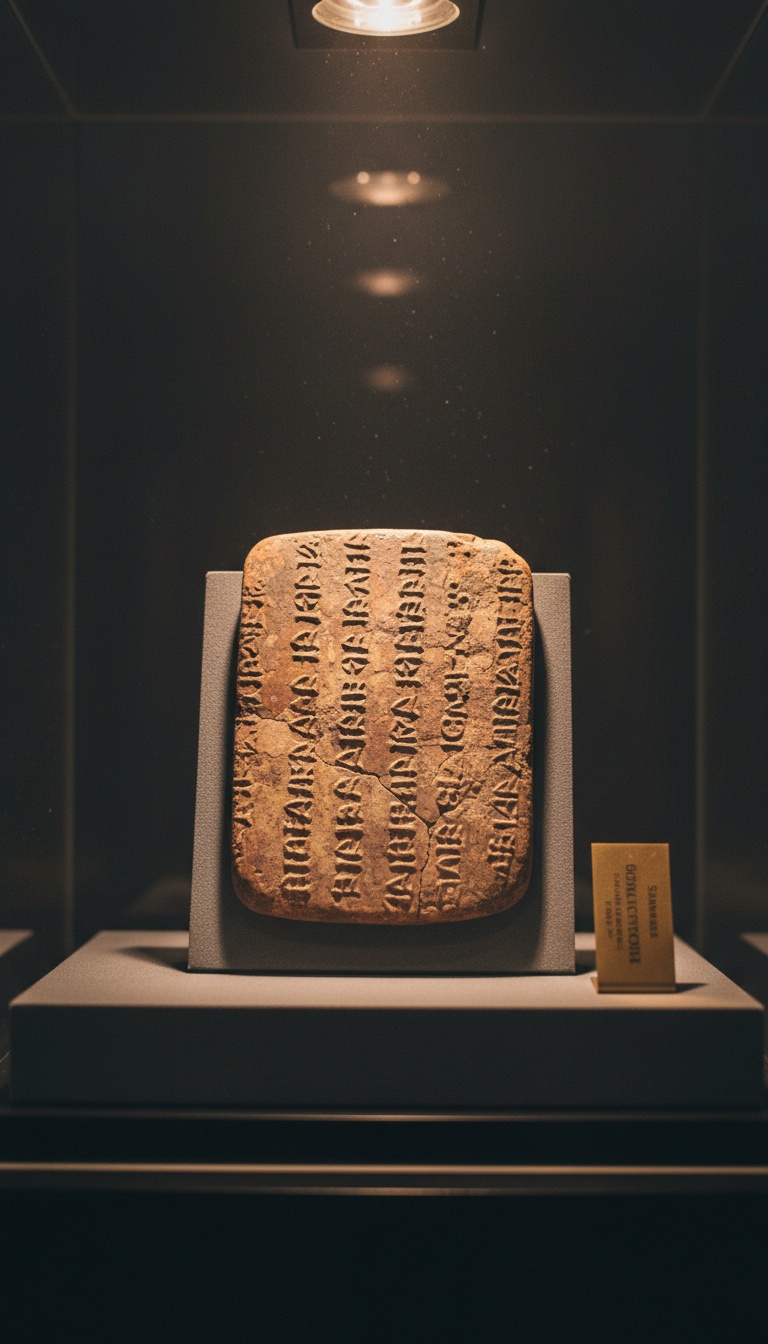 Sumerian Archaeology
The Atrahasis Tablet: Genesis Was Filed Away in 1876
The British Museum, Great Russell Street, London. Cabinet holdings include a clay tablet dated to roughly 1700 BCE that describes the manufacture of human beings from clay and the blood of a slaughtered god. It predates the earliest layer of Genesis by approximately 800 years. The parallels were catalogued by George Smith and his colleagues in the 1870s. The
Read the Investigation →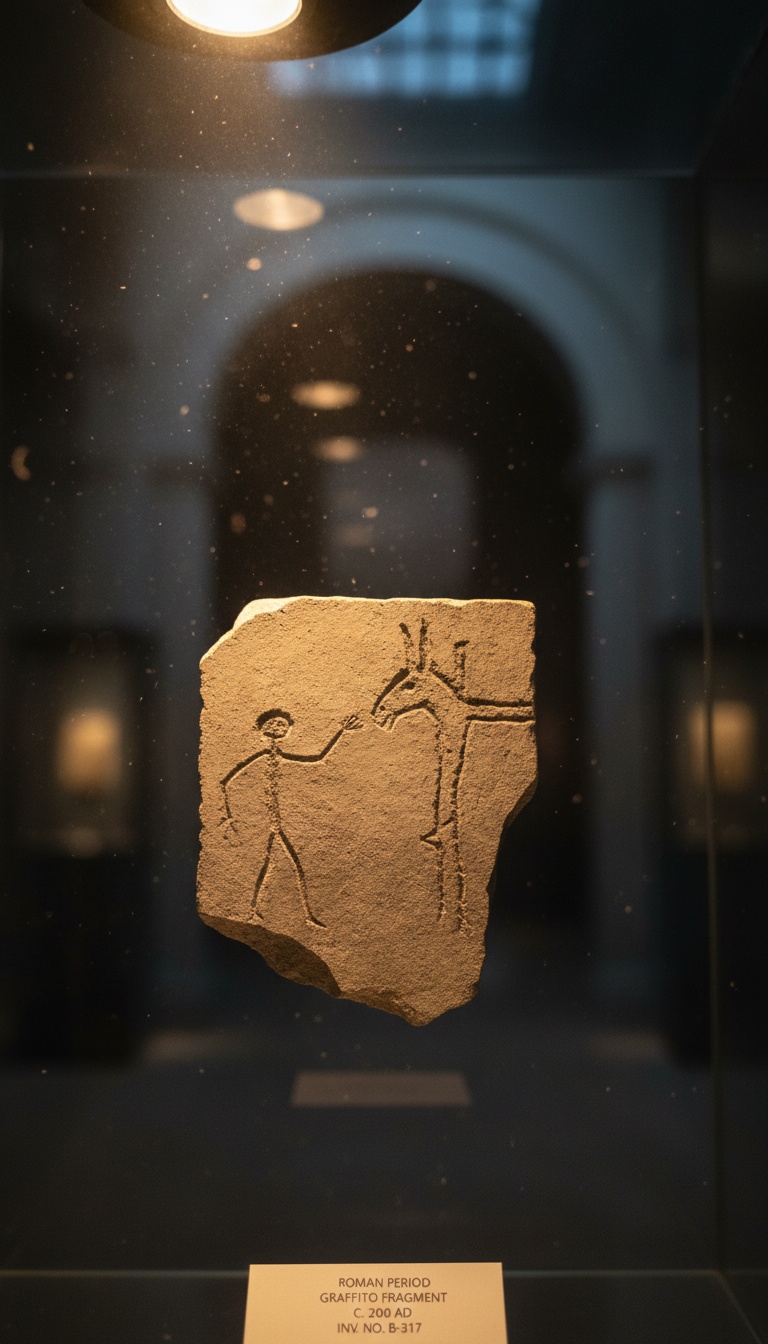 Biblical Archaeology
The Oldest Image of Jesus Has a Donkey Head. Rome Still Has It.
The oldest surviving image of Jesus Christ is not a fresco, not an icon, not a shroud. It is a piece of Roman graffiti scratched into plaster around 200 CE that shows a man worshipping a crucified figure with the head of a donkey. It is on display in Rome right now. The Palatine Antiquarium museum keeps it in a glass case. Tour buses drive past the building
Read the Investigation →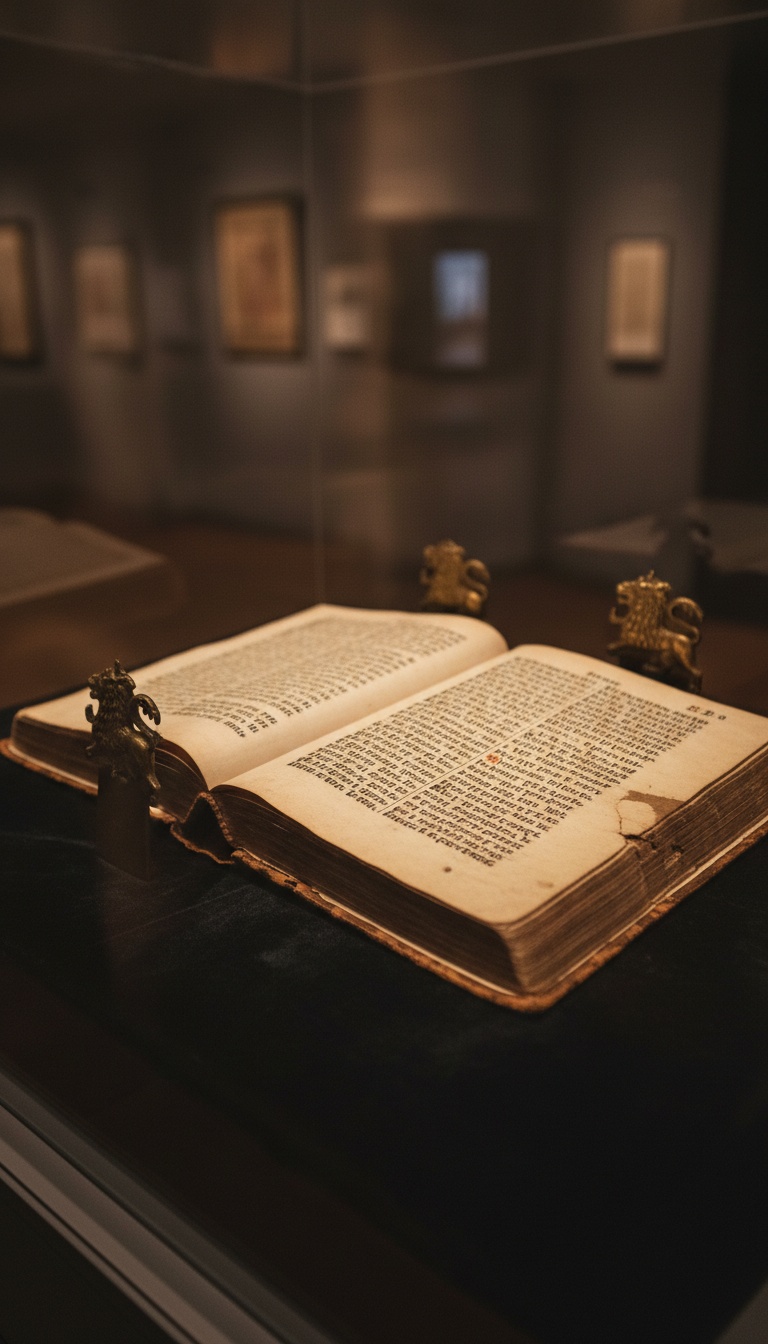 Biblical Forgery
The Trinity Verse Was Added in 1522. Erasmus Called It a Forgery.
The single verse that anchors the doctrine of the Trinity in the New Testament was not written by John. It was negotiated into the Bible in 1522 by a Dutch scholar who said, in writing, that the Greek manuscript backing it up was a fake. Almost nobody knows this. The footnotes in your ESV know. The textual critics know. The verse is still printed.
Read the Investigation →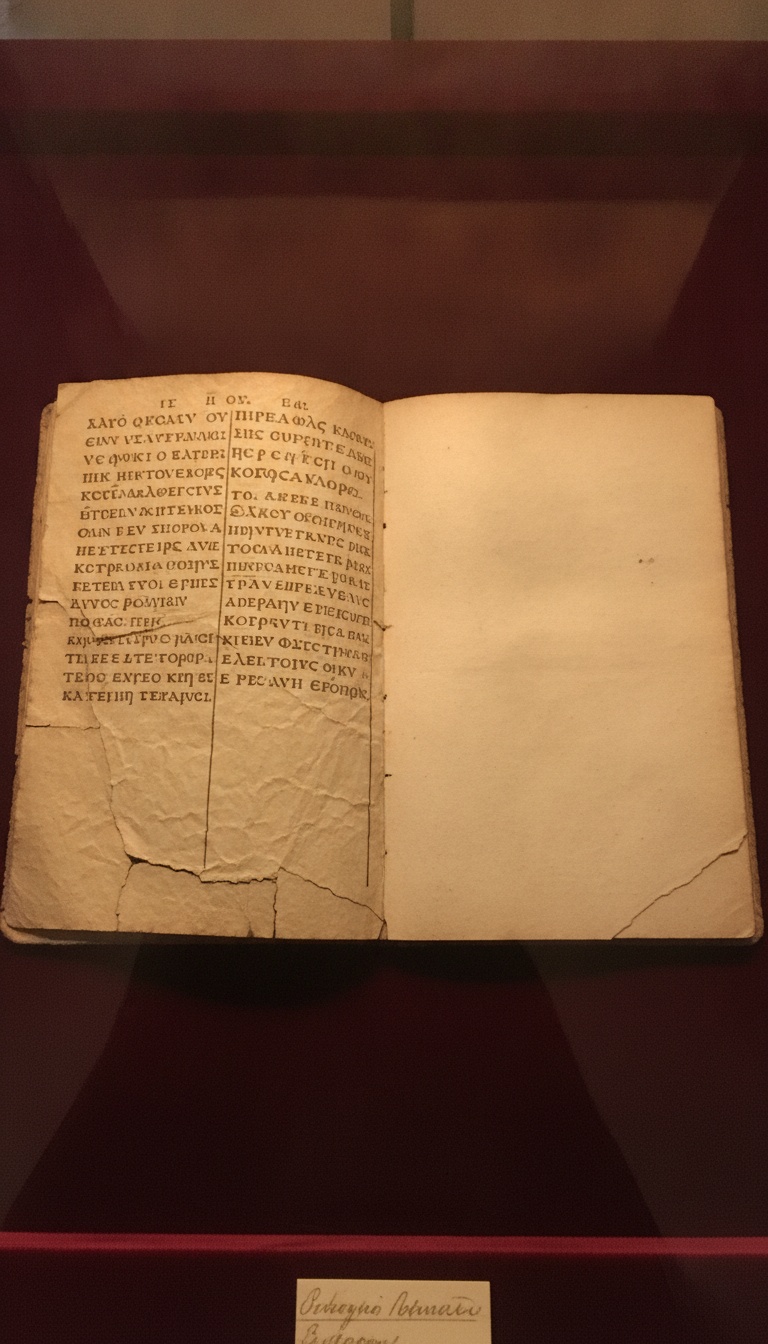 Biblical Manuscripts
The Blank Column in Codex Vaticanus: Why Mark 16 Ends at 'They Were Afraid'
The Gospel of Mark, in the two oldest complete Bibles on Earth, ends with three words. They were afraid. Everything after that was added later. Almost nobody knows this. The receipts have been sitting in the Vatican Library and the British Library for over a century.
Read the Investigation → Biblical Canon History
The 7 Books Luther Cut From Your Bible in 1534
Almost nobody knows this. One translator sitting in Wittenberg in 1534 made a decision that erased seven books from the Bible most Protestants read today. Those same seven books are still printed in 1.4 billion Catholic Bibles and roughly 220 million Eastern Orthodox Bibles right now. The flip is simple. The shorter Bible is the newer Bible. The longer Bible
Read the Investigation → Church History
The One Greek Word That Built Christianity Is Not In The Bible
Every Trinitarian church on Earth stands on a single Greek word that no apostle ever wrote, no evangelist ever quoted, and no Hebrew prophet ever uttered. A Roman emperor put it on the table in 325 AD, and a bishop wrote the cover letter explaining it to his flock. The word is homoousios. It means same substance. It is not in the Bible.
Read the Investigation → Comparative Mythology
Seven Flood Myths, One Catastrophe. The Date Mainstream Won't Touch.
Seven cultures separated by oceans and eleven thousand miles wrote the same flood story, with the same boat, the same bird, and the same mountain landing. They never met. That is not folklore. That is testimony. I have spent the last three years pulling the source tablets, the Sanskrit verses, and the Hopi oral records into one timeline. The overlap is not l
Read the Investigation → Comparative Mythology
5 Ancient Cultures Wrote the Same Creation Story. They Never Met.
Five civilizations that never met wrote the same creation story. Void. Primordial water. Earth split from sky. Man shaped from clay. The sequence repeats across three millennia, four language families, and three continents. Anthropologists call it a universal archetype. I think the pattern is too specific for that word to do the work it is being asked to do.
Read the Investigation →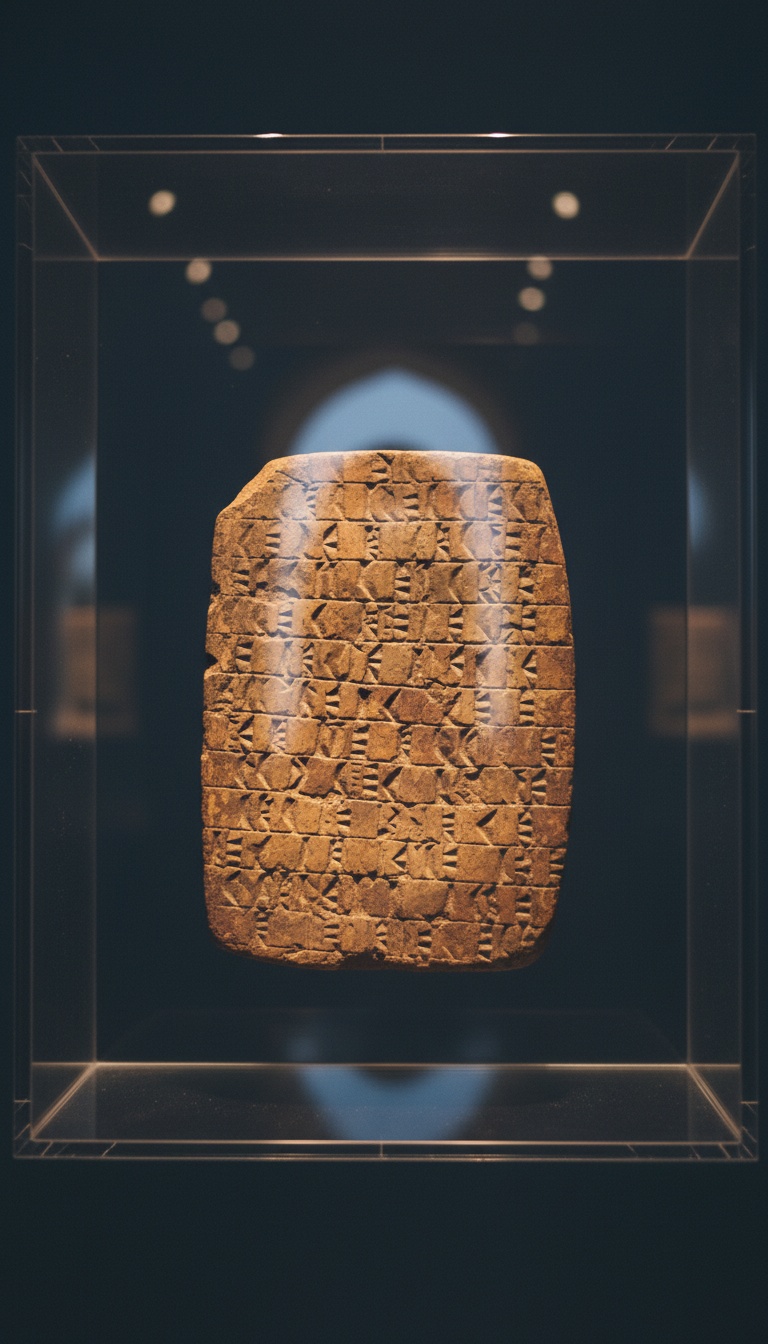 Biblical Archaeology
The British Museum Tablet That Breaks the Bible's Flood Timeline
The flood story you grew up reading in Genesis was already 1,400 years old when the Hebrews wrote it down, and the original is sitting in a glass case in Bloomsbury. Almost nobody knows this. The tablet is on public display. The translation has existed since 1872. And the parallels are not vague thematic echoes. They are line by line, object by object, bird
Read the Investigation →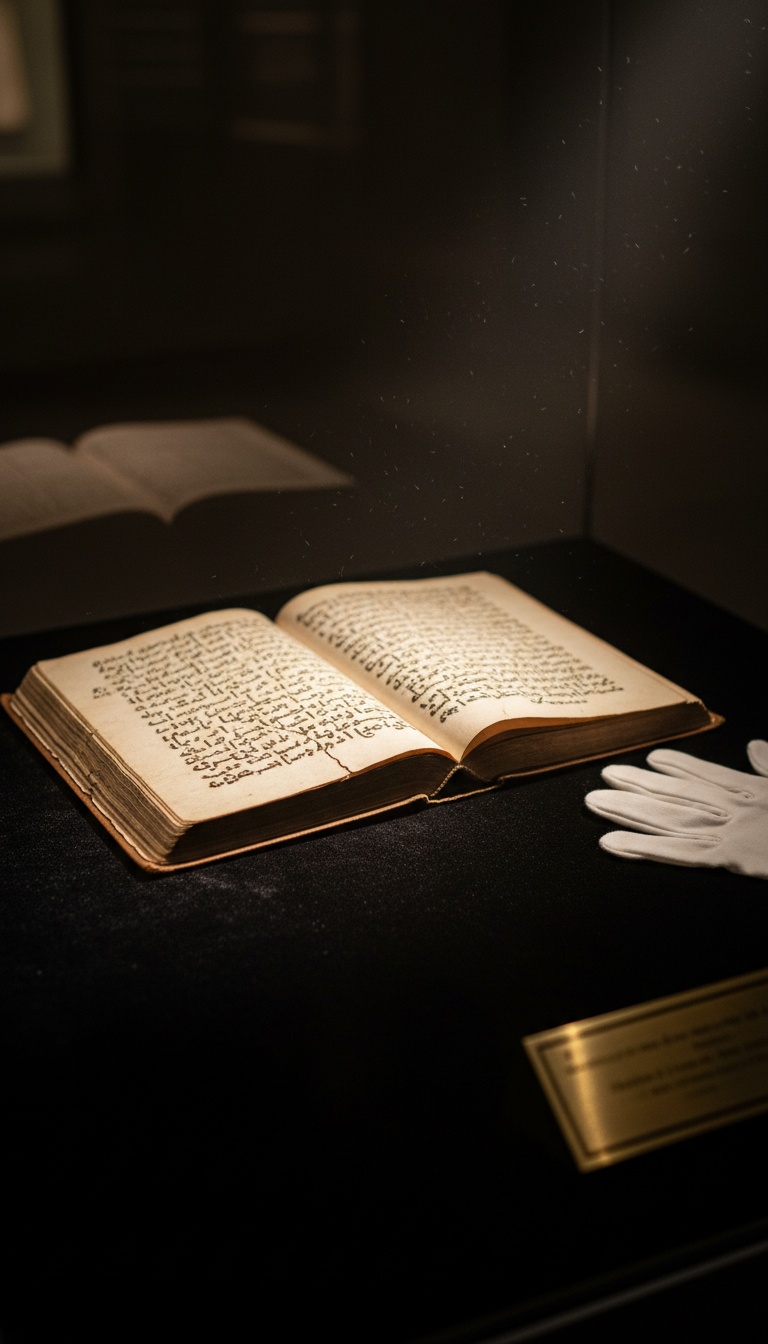 Biblical Archaeology
The Holy Spirit Was Feminine. Greek Translators Erased Her.
The Holy Spirit was a woman before three rounds of translation made her a man, then a thing, then a doctrine. The receipts are sitting in Cairo, Leiden, and Claremont. Nobody hid them. They just stopped translating them honestly. I am Jordan Vale. I read the footnotes nobody clicks. This one breaks the Trinity you were handed in Sunday school.
Read the Investigation →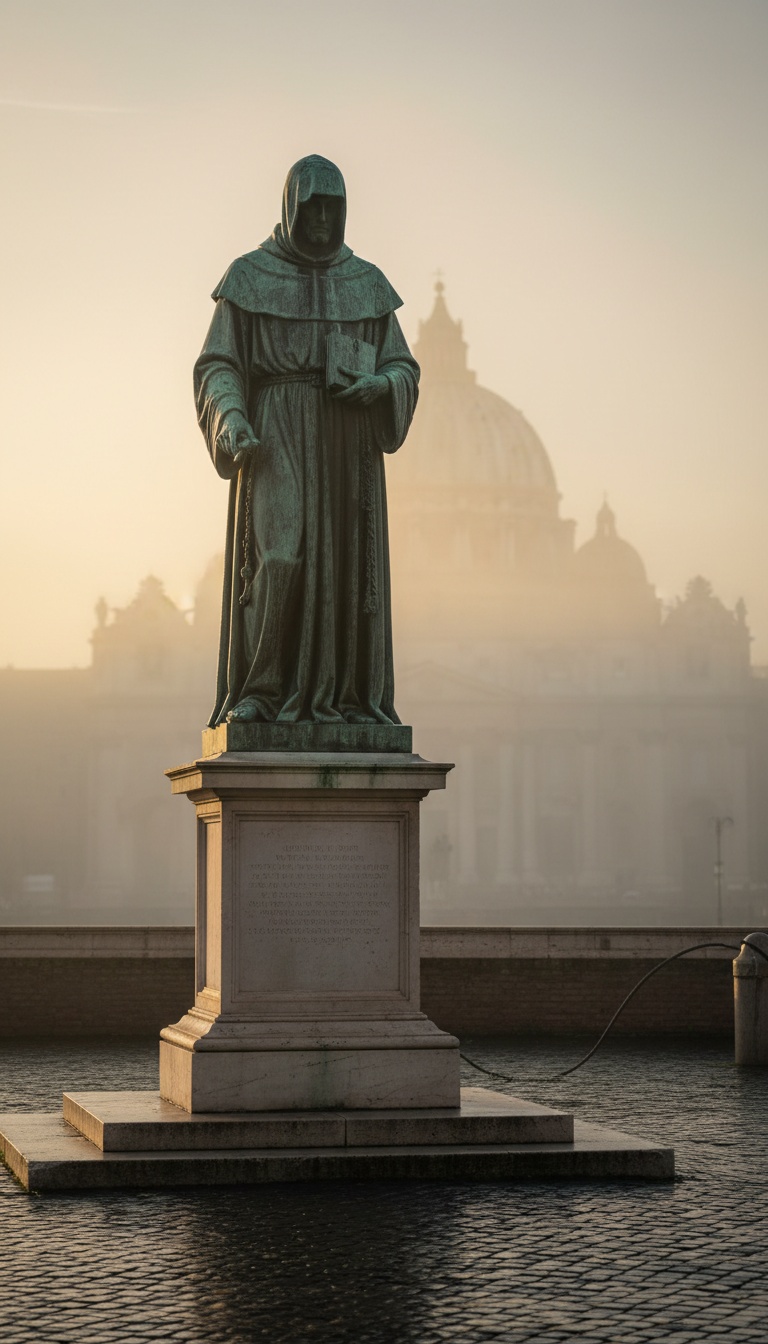 Suppressed Science
Giordano Bruno Predicted Exoplanets in 1584. Rome Burned Him Alive.
In 1584, a Dominican friar published a book claiming the stars were other suns with their own planets. Sixteen years later, the Vatican drove an iron spike through his tongue and burned him alive in a Roman market square. NASA confirmed his hypothesis 408 years after that. His name was Giordano Bruno. The Church has apologized for Galileo. It has never apolo
Read the Investigation →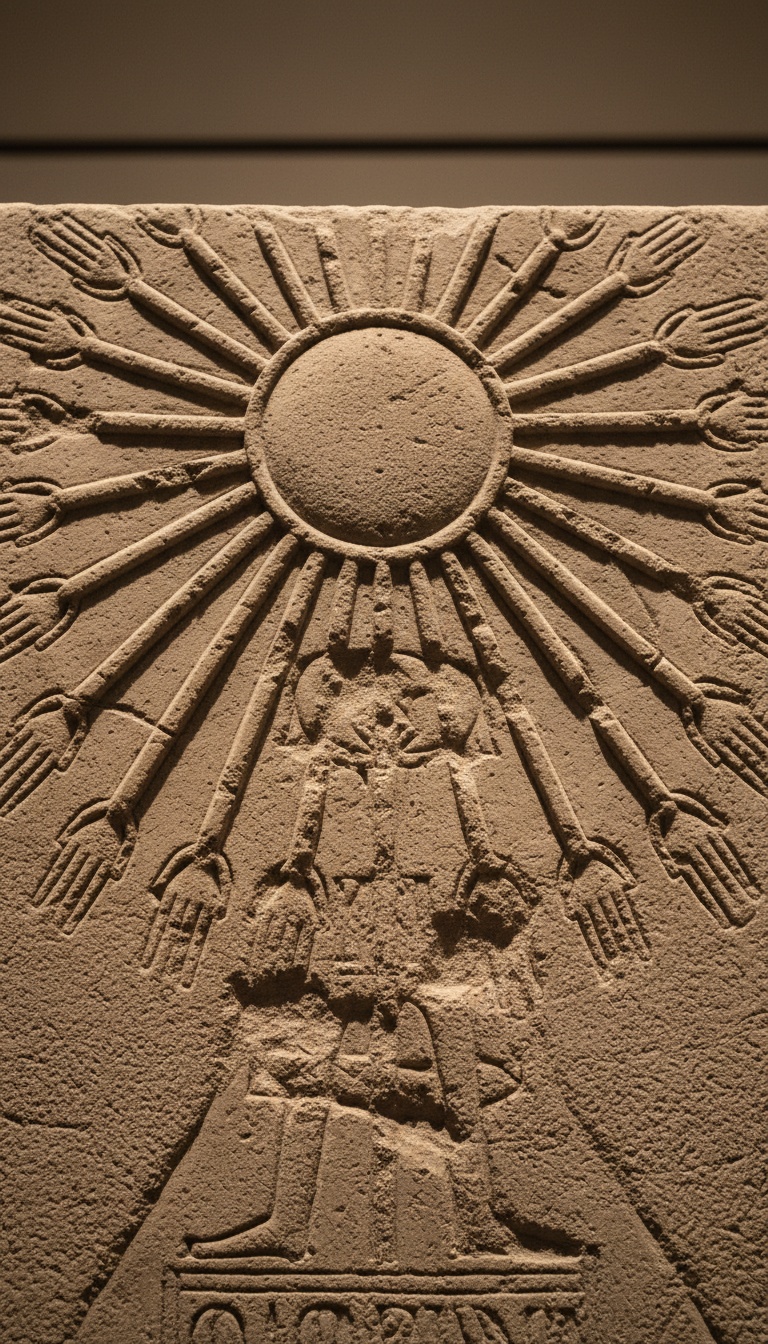 Biblical Archaeology
Egypt Erased Akhenaten From Every Stone. Freud Found Out Why.
One pharaoh abolished every god in Egypt except a sun disk with hands. Sigmund Freud said that pharaoh's priest walked out of the desert and became Moses. Almost nobody knows this story. That is the point.
Read the Investigation →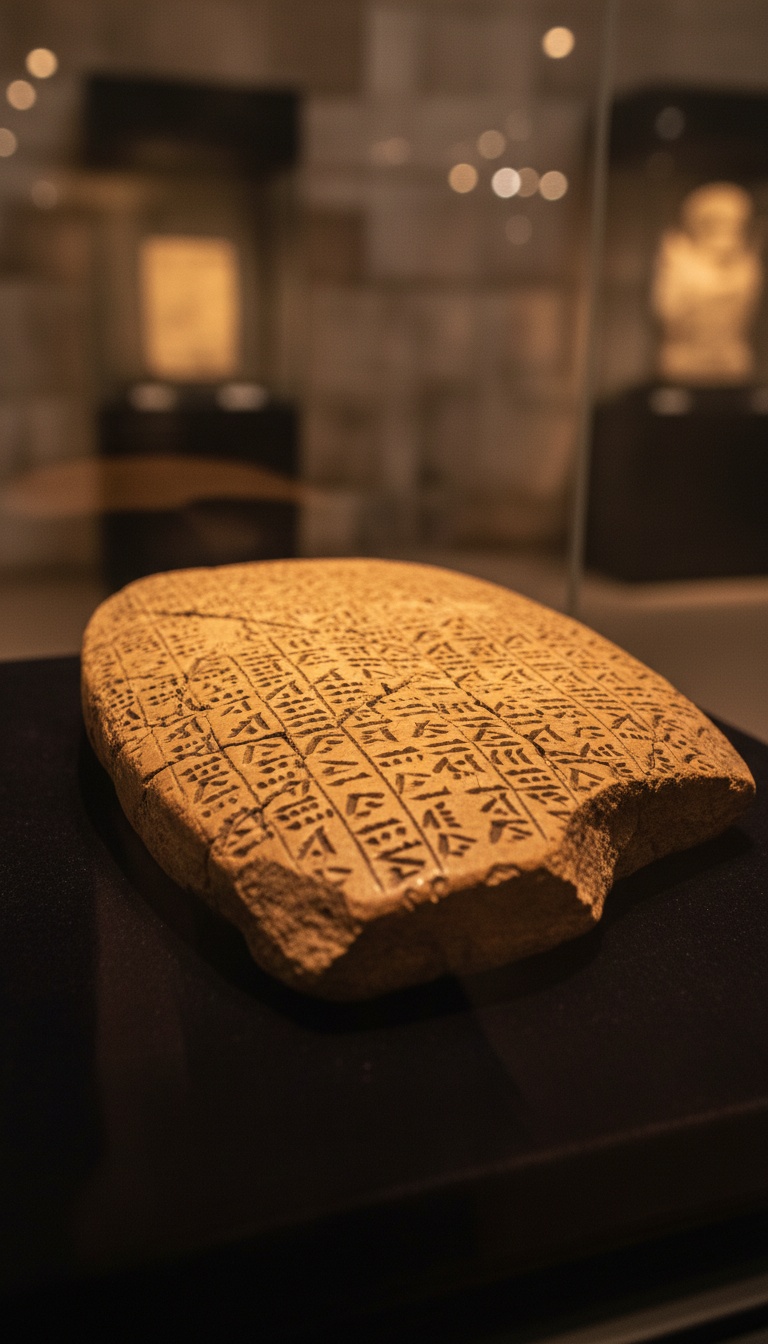 Sumerian Mythology
The First Resurrection Was Sumerian. 2,300 Years Before Christ.
The first resurrection story did not happen on a Jerusalem hill. It happened on a hook in a Sumerian underworld, twenty three centuries before Matthew picked up a stylus. Her name was Inanna. The clay tablets are in museum drawers right now. The translation has been sitting in academic libraries since 1942. Almost nobody in a pew has heard her name.
Read the Investigation →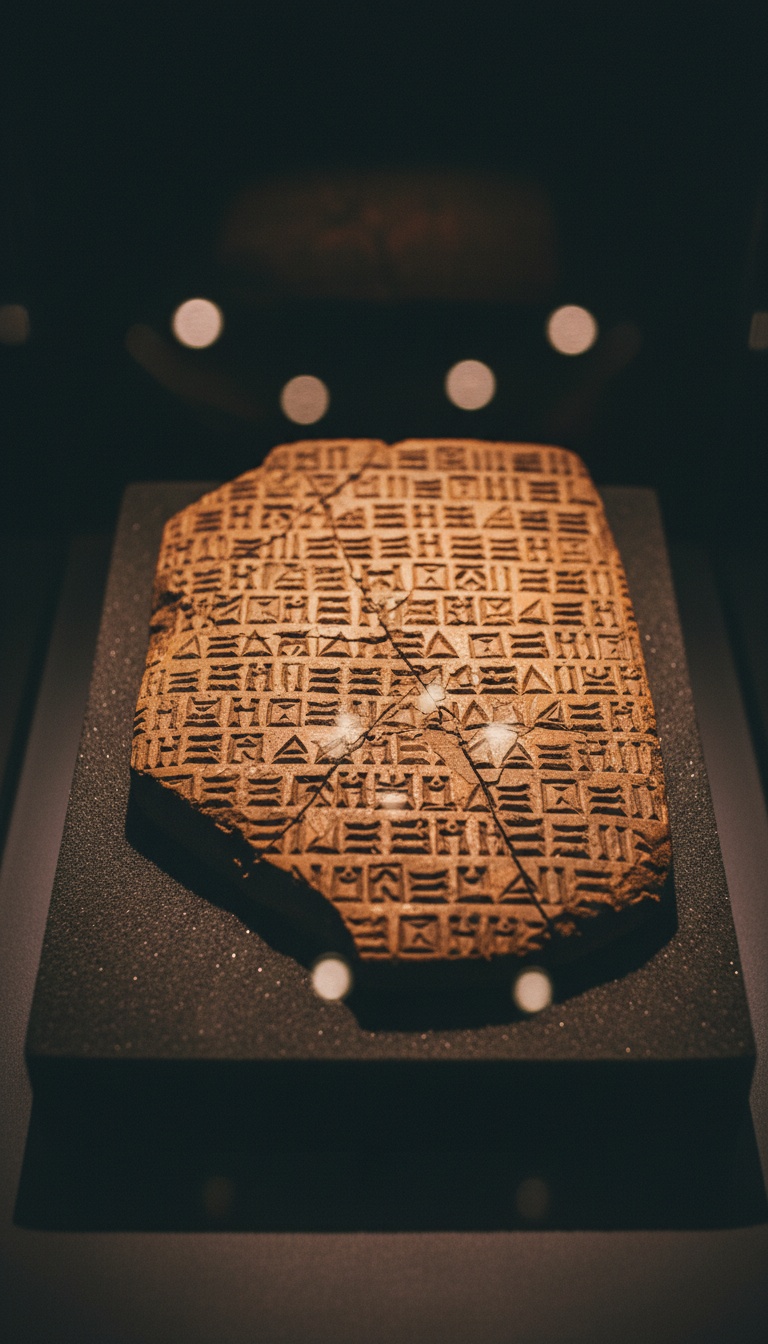 Biblical Archaeology
Psalm 22 Was a Babylonian Lament to Marduk, Not David's Cry
The most quoted line of the crucifixion was not composed in grief. It was inherited from a Babylonian temple liturgy sung to Marduk a thousand years before David was born. "My God, my God, why have you forsaken me" is not a private agony. It is a fixed opening formula from a Sumerian and Akkadian genre called the ershemma, and the cuneiform tablets that pres
Read the Investigation → Church History
The Council of Nicaea: Jesus's Divinity Was Decided by a Vote of 218 to 2
The divinity of Jesus Christ, the central claim of two billion people's faith, was not revealed from a burning bush or whispered by an angel. It was tallied on a Roman vote sheet in the summer of 325 AD, and the final count was 218 to 2. The two holdouts were exiled. The emperor who called the vote was not even baptized yet. The dogma you inherited has a pap
Read the Investigation →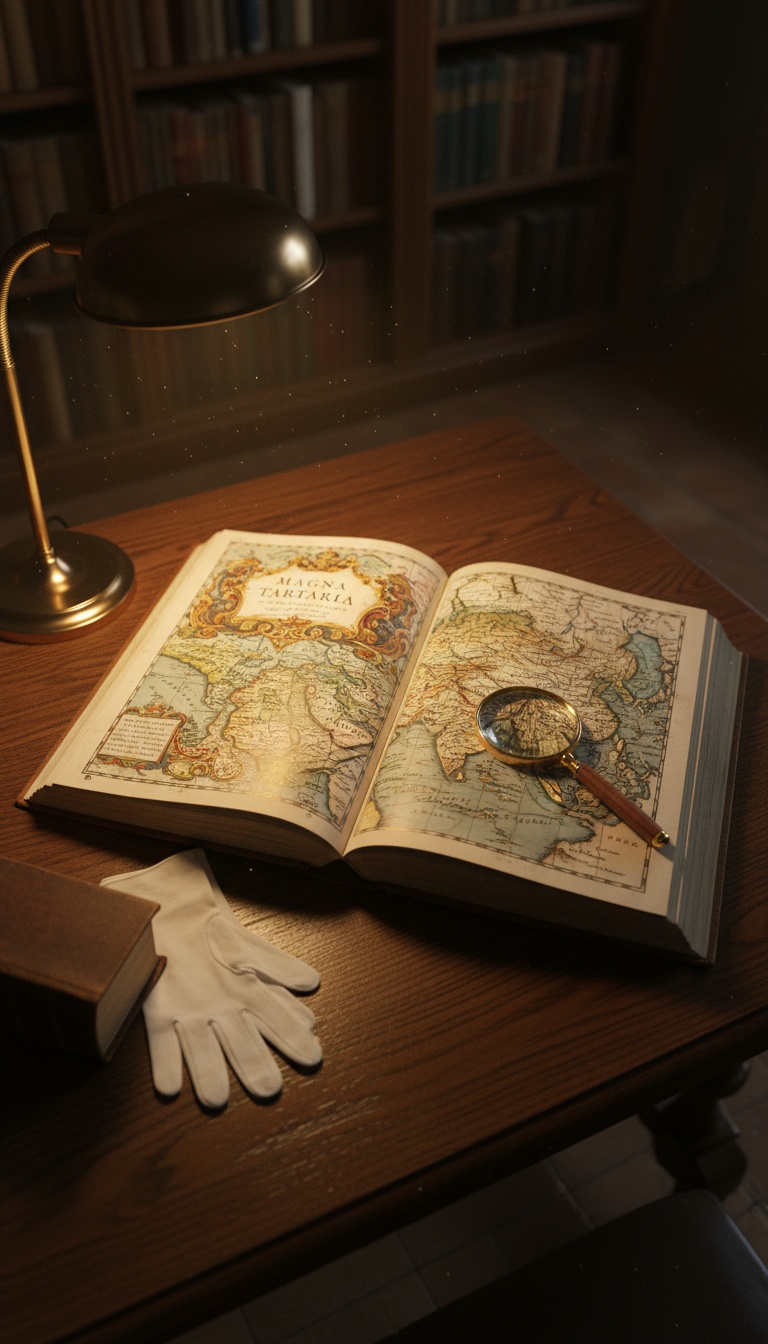 Cartographic Anomalies
Tartaria Appeared on Every 18th-Century Map. Then It Vanished.
Tartaria fills three centuries of European atlases as a named, bordered, city-studded empire. Then between 1771 and 1812 it disappears from the maps with no war declared, no treaty signed, and no conquest narrative in the archives. I have spent the last two weeks pulling scans from the Library of Congress Geography and Map Division, the British Library's Kin
Read the Investigation →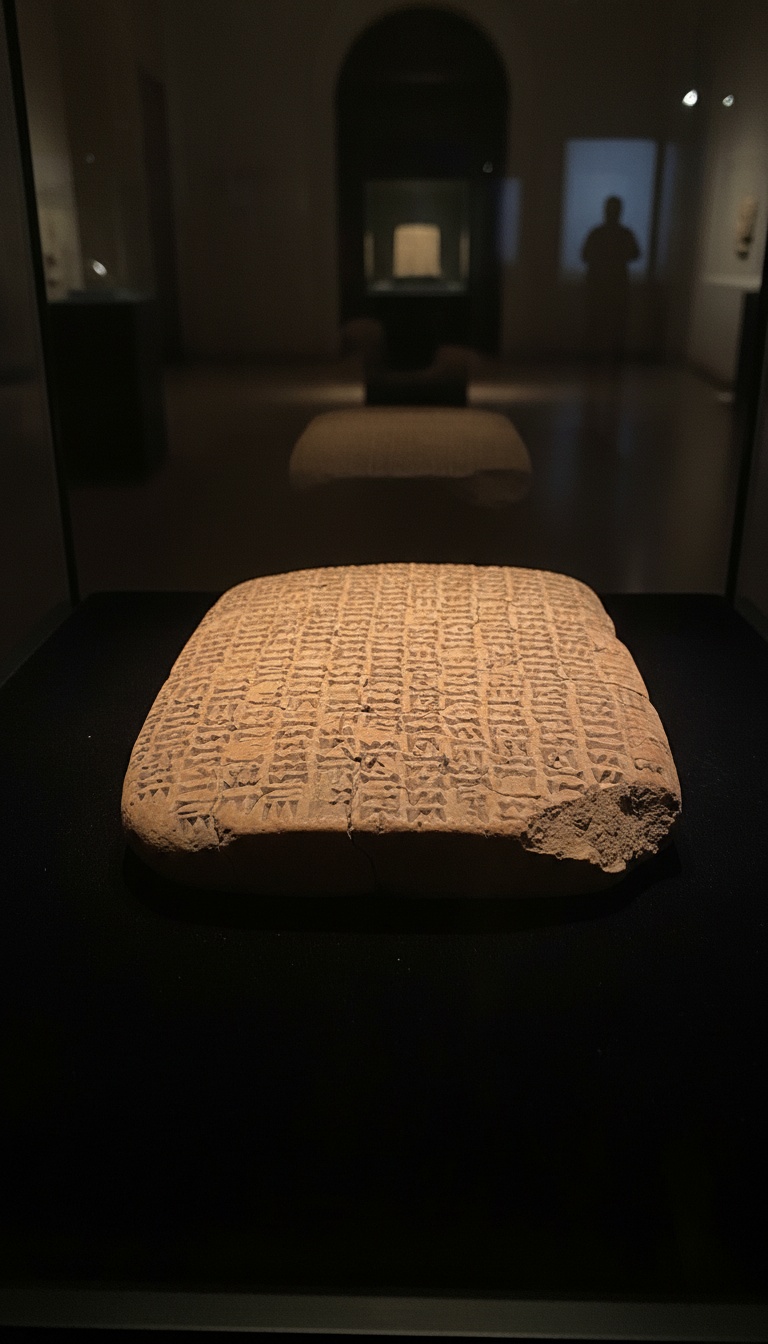 Biblical Archaeology
Atrahasis: The Flood Survivor Genesis Tried to Erase
Noah was not the first flood survivor on record. He was the rewrite. The original name is sitting in a glass case in Bloomsbury, baked into clay a thousand years before any scribe in Jerusalem put quill to scroll. Almost nobody knows this. That is exactly why we need to talk about it.
Read the Investigation →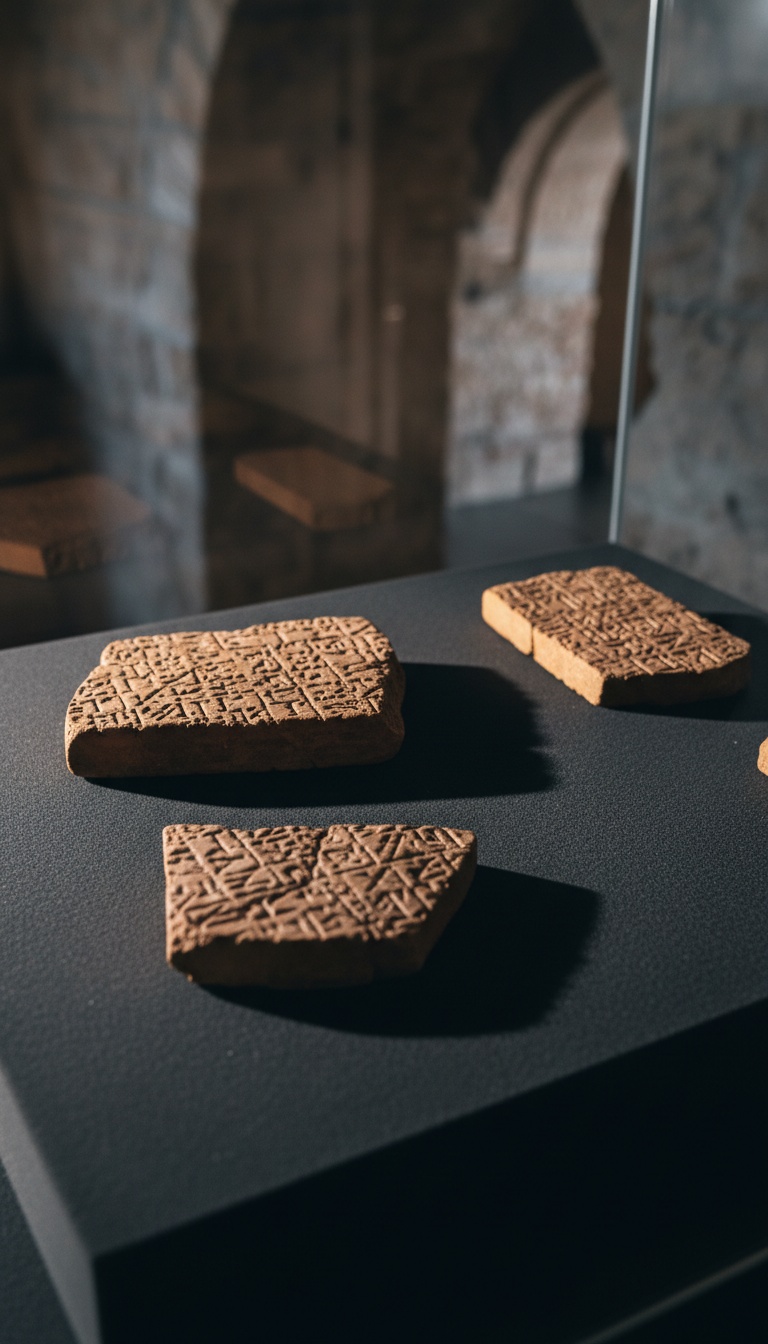 Sumerian History
Adapa: The Sumerian First Man Written 1,500 Years Before Adam
The first man wasn't Adam. He was Adapa. And the Sumerians wrote his story roughly 1,500 years before anyone in Judah put quill to Genesis. Three fragmentary clay tablets sitting in the British Museum tell the whole thing. A created man. A divine test involving food. A lost shot at immortality. Almost nobody knows this exists. That is the part I want to talk
Read the Investigation →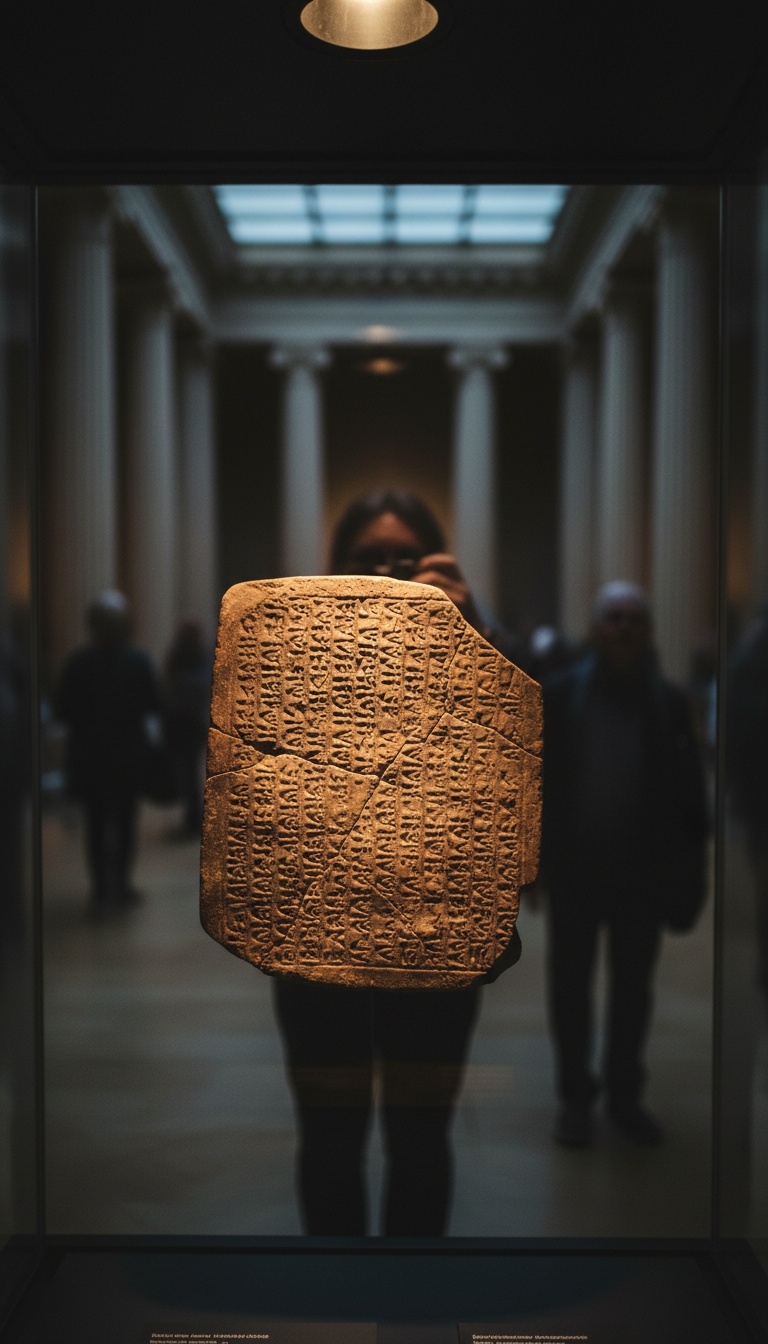 Biblical Archaeology
The British Museum Tablet That Predates Genesis by 800 Years
The opening chapter of Genesis was not the first version of that story. It was the second. The first version is sitting in a glass case in Bloomsbury, and it was written 800 years earlier. Almost nobody walks past it. The label is small. The implications are not.
Read the Investigation → Forbidden Archaeology
The Smithsonian Destroyed 18,000 Giant Skeletons. The 1909 Senate Hearing Documented It.
The New York Times printed the dimensions in 1885: seven feet four inches, Charleston West Virginia, Smithsonian field crew on site, eight more skeletons recovered. The Catalina Island nine-footer with double rows of teeth followed in 1886. The Senate testimony of 1909 logged seventeen anomalous remains shipped to Washington. By 1934 every catalogue entry was gone. The receipts never disappeared. The bones did.
Read the Investigation → Biblical Archaeology
The Bible Itself Documents a Pagan Resurrection Cult Inside the Jerusalem Temple.
Ezekiel 8:14, written in the Babylonian exile around 593 BCE, names what the prophet saw at the north gate of the Temple: women weeping for Tammuz. The Sumerian dying-and-rising shepherd-god had been worshipped for two thousand years before that. Jerome identified him with Adonis in the Vulgate. Origen confirmed it in 240 CE. The fourth month of the modern Jewish calendar still bears his name. The archetype was inside the Holy Place six hundred years before the empty tomb.
Read the Investigation → Comparative Mythology
Buddha Had Jesus's Biography 500 Years Earlier. The Pali Canon Documents It.
Queen Maya conceived through a dream of a white elephant. The sage Asita read the signs and wept that he would not live to hear the teaching. Mara tempted the Buddha for forty-nine days under the Bodhi tree and offered him rulership of the world. He walked across the Ganges, fed hundreds of monks from a small ration, gathered twelve named disciples, and died between two trees as Ananda wept beside him. The Pali Canon recorded it five centuries before the first Gospel was written.
Read the Investigation → Early Church History
Justin Martyr Admitted Jesus Copied the Pagans. In Writing. To the Roman Emperor.
In 150 CE, the first Christian apologist named six pagan saviors, Bacchus, Apollo, Hercules, Asclepius, Perseus, Mercury, and admitted in a letter to Antoninus Pius that Christian doctrine "propounds nothing new" beyond what was already believed about the sons of Jupiter. His exact words sit in the Vatican archive.
Read the Investigation → Roman Mystery Religion
Mithras Was Baptized 200 Years Before Jesus. The Roman Legions Brought It.
The Roman cult of Mithras initiated members through a ritual bath that washed away sin, two centuries before John the Baptist appeared on the Jordan. Over 400 Mithraea excavated. The architecture is identical. Tertullian called it demonic plagiarism. He did not call it untrue.
Read the Investigation → Ancient Mesopotamia
The Sumerians Baptized People in 2300 BCE. Christianity Inherited the Ritual.
In 2300 BCE the priests of Enki at Eridu required full-body immersion in a sacred basin before any worshipper could approach the altar. The ritual was called the water of the Abzu. Carved into clay tablets still sitting in the British Museum. Christianity called the same act baptism, 2,300 years later.
Read the Investigation → Suppressed History
The 13 Bloodlines That Have Ruled the World Since the Flood
King Og's iron bed at thirteen and a half feet long. Egyptian pharaohs claiming descent from sky beings. Six hundred years of Habsburg cousin marriages. Thirteen modern families researchers identified by name. The bloodline pattern starts before Genesis and never stops accelerating. From King Og to the Federal Reserve, a single behavioral protocol runs through 4,000 years of recorded ruling-class history.
Read the Investigation → Indigenous Astronomy
30 Unconnected Cultures Named the Same Seven Stars. The Story Predates the Human Migration Out of Africa.
The Aboriginal Australians and the ancient Greeks told the same Pleiades myth, same hunter, same sisters, same chase, ten thousand miles apart with no documented contact. Researchers catalogued more than thirty unconnected versions. In 2021, a peer-reviewed paper proposed the only explanation that fits: the original story is older than 100,000 years. Older than every civilization that exists.
Read the Investigation → Indigenous Cosmology
Twelve Tribes. Twelve Disciples. Twelve Imams. Twelve Hopi Clans. Why The Same Number?
Twelve tribes of Israel. Twelve Olympian gods. Twelve Imams. Twelve Hopi clans. Twelve zodiac signs. Twelve Anunnaki on the Sumerian rosters. Twelve principal Dogon ancestors descended from Sirius, documented in 1931, decades before Western astronomy could photograph the second star. Modern contactee literature lists exactly twelve active star species. The civilizations did not communicate. The number is identical.
Read the Investigation → Suppressed Scripture
Jesus Wrote One Letter in His Entire Life. The Vatican Declared It Fake in 494 AD.
The only document Jesus ever personally wrote was preserved in 324 AD by Eusebius of Caesarea, the official church historian under Constantine, who translated it himself from the royal archives of Edessa. The letter founded the Church of the East. In 494 AD, Pope Gelasius declared it apocryphal and removed it from the official record. The text still exists. Here's what it says, and why Rome buried it.
Read the Investigation → Suppressed History
Mesopotamian Tablets Name Four Men Who Came Out of the Sea After the Flood. They Called Them Apkallu.
Berossus, a Babylonian priest writing in 300 BCE, documented seven fish-cloaked sages who emerged from the Persian Gulf to teach civilization to humanity. Four returned after the flood, two-thirds apkallu, one-third something else. Genesis 6:4 says the Nephilim returned afterward. Same timeline. Same fraction. And every flood-surviving culture remembers the same figure rising from the water.
Read the Investigation → Biblical History
Genesis 10 Names a Man Whose Story Was Already Old. The Sumerians Called Him Adapa.
Before Adam in Genesis, the Sumerians documented Adapa, a fisherman shaped from clay by the god Enki, given divine knowledge, summoned to the heavens, and refused immortality at the last moment. The Adapa tablets predate Genesis by more than 1,000 years and were already being copied in Egyptian royal archives by 1350 BCE. The parallels are not approximate.
Read the Investigation → Comparative Mythology
Six Religions Before Jesus Told the Same Story. The Church Buried Five.
Mithras was born December 25 from a rock and shared bread and wine with twelve followers two centuries before Christianity arrived in Rome. Osiris died and rose again 2,000 years before Jesus. Dionysus, Attis, Tammuz, six dying-and-rising savior figures across three continents and three thousand years tell the same story. The pattern is older than the religion that owns it.
Read the Investigation → Investigation
David Wilcock Is Gone. The Ruling Came Within Hours.
UFO researcher David Wilcock died April 20, 2026 near Nederland, Colorado. A 911 call at 10:44 AM. Deputies arriving on an armed man. The ruling, self-inflicted, closed within hours. In the same week his longtime co-author Wynn Free was reported dead, and an anti-gravity researcher in Alabama who had explicitly denied future suicide was ruled a suicide. Wilcock spent twenty-five years telling his audience not to believe it when this moment came. You tell me which statement is true.
Read the Investigation → Biblical History
Giants After The Flood: The Iron Bed The Bible Measured in Public
Noah's Flood was supposed to end the Nephilim line. A single clause in Genesis 6:4 says otherwise, and the rest of scripture names giant tribes, marks their territories, documents the extermination campaigns sent against them, and records the measurements of a 13-foot iron bed on public display at the Ammonite capital.
Read the Investigation → Gnostic History
The Fall of Man Was a Neurological Downgrade. The Pineal Gland Is the Evidence.
The Garden of Eden didn't disappear, human perception did. The 1945 Nag Hammadi discovery named the entities responsible: the Archons, whose documented purpose was consciousness containment. The pineal gland calcifies at puberty on a fixed biological schedule no other organ follows. That detail still has no explanation.
Read the Investigation → Biblical Archaeology
The Pishon River Found: NASA Mapped Eden's Lost River Under the Saudi Desert.
Genesis 2:11 names the Pishon, Eden's missing river that "encompasses Havilah where there is gold." A Harvard archaeologist identified it in 1996. NASA satellite imagery traced a 1,000-km dry channel buried under Saudi sand, originating in the gold-bearing Hejaz mountains and emptying near Shatt al-Arab, exactly where the Bible said the river should be.
Read the Investigation → Biblical Archaeology
The Bible Gave Exact Coordinates for Eden. Scientists Found It 200 Feet Underwater.
Genesis 2 names four rivers converging at the Garden of Eden. Two still flow through Iraq today. In 1987, a Smithsonian archaeologist used satellite imaging to trace the other two, both submerged beneath the Persian Gulf for 12,000 years. The location has been mapped. It has never been excavated.
Read the Investigation → Ancient Civilizations
The Oldest Mummies on Earth Are Not Egyptian. A 2021 DNA Study Said They Came From Nowhere.
7,000-year-old mummies in South America predate Egypt by two millennia. But the Tarim Basin mummies of western China are stranger, Caucasian features, blonde and red hair, buried thousands of miles from anywhere such people should have existed. DNA confirmed they matched no known ancestor group on Earth.
Read the Investigation → Biblical History
The Sumerians Wrote Noah's Flood Story in 2100 BC. Genesis Didn't Exist Yet.
In 1853, archaeologists excavated a library in Nineveh containing 40,000 clay tablets. One described a catastrophic flood, an ark built to specifications, three birds released to find dry land, a mountain landing, written word for word like Genesis. It was dated 1,500 years before the Bible was written.
Read the Investigation → Sumerian Astronomy
The Sumerians Named Planet Nine 4,000 Years Before NASA
A clay cylinder carved around 2300 BCE shows our solar system with one more planet than NASA has officially confirmed in 2024. That cylinder has been sitting in a Berlin museum since 1889.
Read the Investigation →