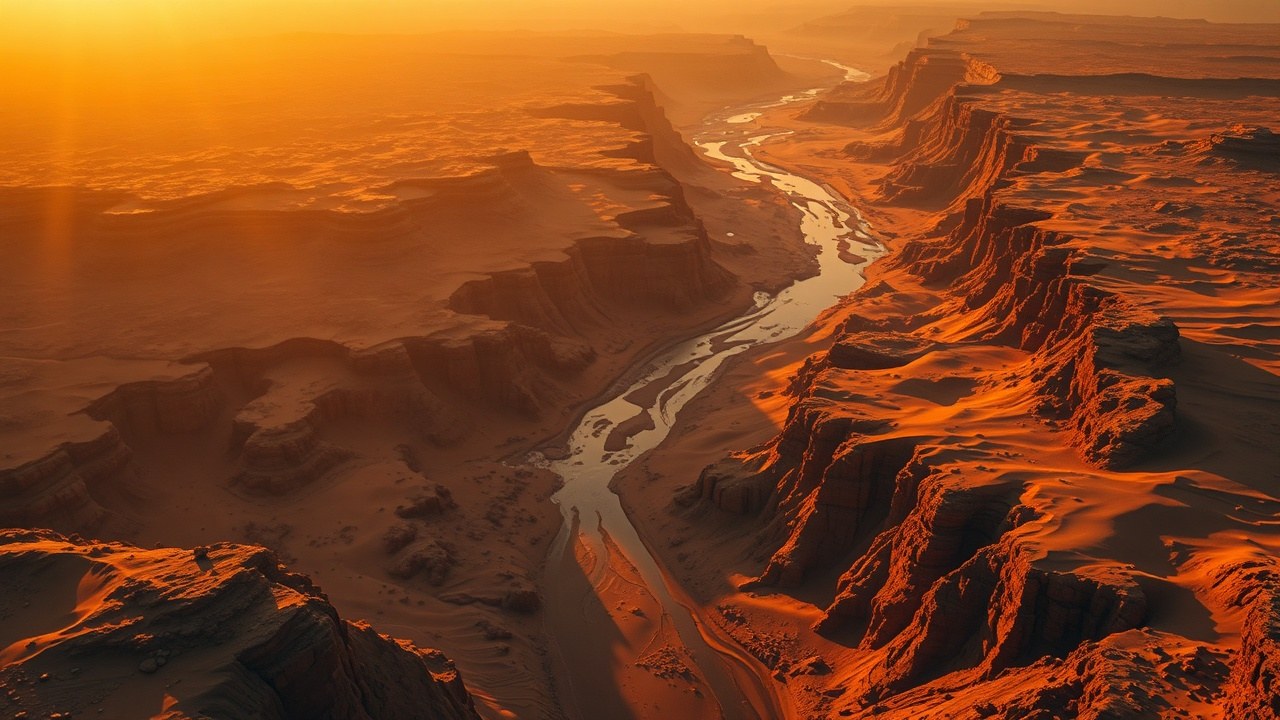
Genesis names four rivers at the Garden of Eden.
Two of them are the Tigris and the Euphrates, still flowing through modern Iraq today, joining at the Shatt al-Arab and emptying into the Persian Gulf. Anyone with a map can find them.
The other two, the Pishon and the Gihon, vanished. For most of recorded history, scholars treated them as mythological. Names attached to a story, not features of real geography.
Then a Harvard archaeologist found the Pishon. It had been buried under the Saudi desert the entire time.
What Genesis 2:11 Actually Says
The text is unusually specific:
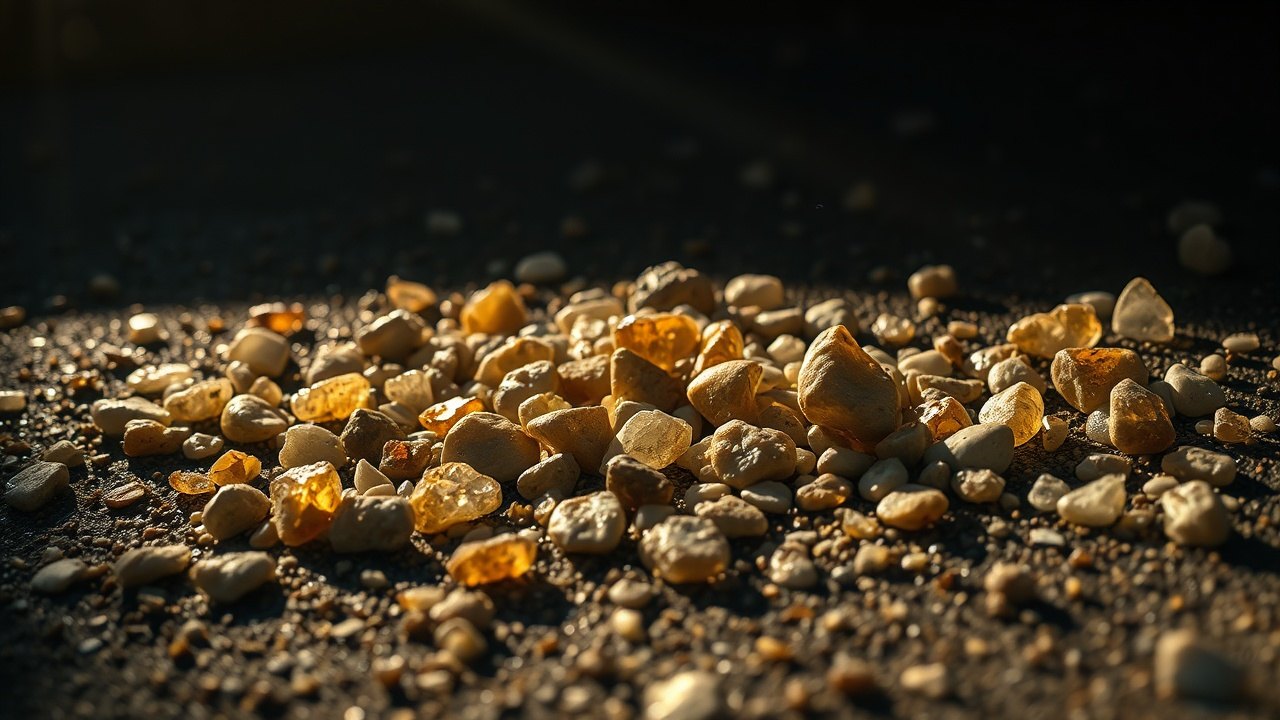
"The name of the first is Pishon: that is it which compasseth the whole land of Havilah, where there is gold; and the gold of that land is good: there is bdellium and the onyx stone."
, Genesis 2:11–12
The author is not being poetic. They are giving a navigation instruction. Find the river. Follow it. It will encircle a land called Havilah. That land has gold, and the gold is high quality. There is also bdellium (a fragrant resin) and onyx stone.
Three identifying features. Real geography. Verifiable resources.
For 3,000 years, no one could match the description to a known river.
James Sauer and the 1996 Identification
In 1996, Dr. James Sauer, curator of the Harvard Semitic Museum and one of the most respected Near Eastern archaeologists of his generation, published a paper in Biblical Archaeology Review proposing that the Pishon was not lost. It had been hiding in plain sight.
Sauer identified it as the Wadi al-Batin, a dry riverbed in northern Saudi Arabia that runs roughly 1,000 kilometers from the Hejaz mountains in the west, across the Arabian Peninsula, and terminates near the Persian Gulf basin where the Tigris and Euphrates now empty.
The Wadi al-Batin is real. It is mapped. It is geologically documented as a paleo-river, a riverbed that once carried water, then dried up. The question was always when, and how it related to the biblical text.
Sauer's argument was simple: every detail in Genesis 2:11 matches.
The Three-Point Match
The text says three things about Havilah, the land the Pishon encircles:
- Gold, and the gold is high quality.
- Bdellium, an aromatic resin from a specific desert tree.
- Onyx stone.
The Wadi al-Batin originates in the Hejaz mountains of western Saudi Arabia. Embedded in the Hejaz is one of the most famous gold-mining regions on Earth: Mahd adh-Dhahab, translated as "Cradle of Gold." The mine has been worked since at least the third millennium BCE. It is still active today. The gold is exceptionally pure.
The same region produces bdellium-bearing trees of the genus Commiphora, and onyx is documented in the geology of the western Arabian shield.
Three identifiers. One location. The river runs through it.
"The Bible gave coordinates. Satellite imagery confirmed them 4,000 years later."
NASA, Landsat, and the Buried Channel
The Wadi al-Batin is invisible from the ground in much of its course. Sand and erosion have covered it. Without satellite imagery, the full 1,000-kilometer channel is impossible to trace.
Beginning in the 1980s and accelerating through the 1990s, NASA's Landsat program and Space Shuttle imaging radar (SIR-A, SIR-B, SIR-C) made it possible to see beneath shallow desert sand for the first time. Researchers, including Boston University's Dr. Farouk El-Baz, who used the same techniques to identify lost paleo-rivers under the Sahara, confirmed extensive paleo-drainage networks across the Arabian Peninsula.
The Wadi al-Batin / Wadi al-Rimah system was mapped. The channel was real. It originated in the Hejaz, ran east across the desert, and terminated near the head of the Persian Gulf.
Exactly where Genesis said the Pishon should be.
The Holocene Wet Period
The Arabian Peninsula was not always desert.
Between roughly 5500 and 2000 BCE, a span known as the Holocene Wet Period, the climate of Arabia was significantly wetter. Lakes formed in what is now empty desert. Rivers flowed where sand now sits. Pollen records, lake-bed sediments, and ancient settlement patterns all confirm that this region supported far more water and far more life than it does today.
The Wadi al-Batin was not a dry wadi 6,000 years ago. It was a flowing river. It would have carried water from the Hejaz down to the Persian Gulf basin, feeding into the same waters that received the Tigris and the Euphrates.
Then, around the third millennium BCE, the climate shifted. Rainfall declined. The river dried. The sand covered it.
The timing is significant. The Holocene Wet Period overlaps almost exactly with the cultural memory window of the Genesis text. Whoever wrote, or compiled, the description of the four rivers was working from a memory of a geography that no longer existed by the time the text reached its final form.
How This Connects to Eden
Genesis describes a single river flowing out of Eden that divides into four. The Tigris and Euphrates meet at the Shatt al-Arab in southern Iraq, then empty into the head of the Persian Gulf. The Wadi al-Batin terminates at the same Persian Gulf basin. The fourth river, the Gihon, has been independently identified as the Karun River draining out of the Zagros mountains in modern Iran, also emptying into the Persian Gulf head.
Four rivers. One convergence point. The same location.
That convergence point, the head of the Persian Gulf at approximately 29°N, 48°E, was not always under water. During the last Ice Age, the Persian Gulf was a fertile valley, fed by all four rivers, with a warm climate and freshwater access from multiple directions. Smithsonian archaeologist Dr. Juris Zarins documented this submerged Eden basin in 1987 using the same satellite-imagery techniques that later confirmed the Wadi al-Batin.
Two independent satellite-mapping projects, two decades apart, converging on the same biblical geography.
What This Means
The Pishon River was not a metaphor.
It was a real watercourse, 1,000 kilometers long, originating in the gold-bearing Hejaz mountains and terminating at the Persian Gulf basin. It flowed during the Holocene Wet Period. It dried as the climate shifted. The sand covered it. The biblical text preserved its memory.
Four thousand years after the river vanished, satellite imagery traced every curve of its dried channel, exactly where Genesis said it would be.
The Question That Remains
The Genesis description of the Pishon is not an isolated detail. It is one of four geographic identifiers in a single passage, and three of the four (Tigris, Euphrates, Pishon) are now confirmed real rivers, with documented courses, in their stated locations. The fourth (Gihon) has a strong candidate in the Karun.
Whoever wrote that passage was looking at a real map.
The text describes a geography that existed before 2000 BCE, before the Wadi al-Batin dried, before the Persian Gulf basin flooded, before the Holocene Wet Period ended. The author either had access to that geography directly, or inherited a memory of it that survived intact across thousands of years and the rise and fall of multiple civilizations.
The Pishon was buried for four millennia. The text remembered it the entire time.
What else is the text remembering that we have not yet mapped?