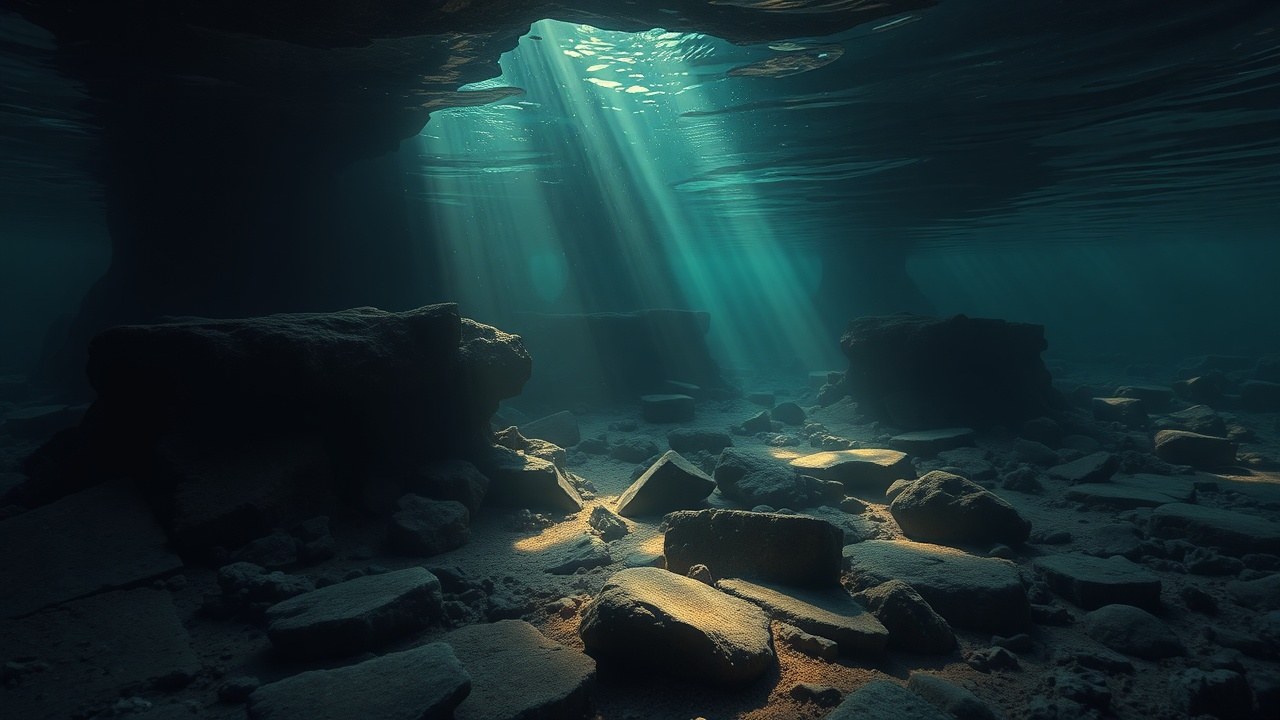
The Garden of Eden is supposed to be a myth.
A metaphor. An allegory. The kind of story theologians tell you not to read too literally.
Then Genesis gave coordinates.
Not symbolic ones. Real ones. Four rivers, named, located, two of them still flowing today through identifiable geography in modern Iraq.
In 1987, a Smithsonian archaeologist used satellite imaging to find the other two. They were there. They had been there the entire time, submerged beneath the Persian Gulf for 12,000 years.
What Genesis Actually Says
Genesis 2:10–14 describes a single river flowing out of Eden that divides into four separate rivers. The text names all four:
- The Pishon, flowing around the land of Havilah
- The Gihon, flowing around the land of Cush
- The Tigris, flowing east of Assyria
- The Euphrates
The Tigris and Euphrates require no detective work. They flow through modern Iraq today, some of the most historically significant rivers on Earth, the rivers that watered Babylon, Sumer, and Mesopotamia. They are real. They are still there.
The author of Genesis was not writing fiction. He was describing a geography his audience could verify.
The problem was the other two. The Pishon and the Gihon had vanished.
The Missing Rivers
For centuries, biblical scholars attempted to locate the Pishon and Gihon without success. Theories placed them in Africa, in Asia, in Iran. None held up under scrutiny because the text is unambiguous: all four rivers had to converge at a single point.
The Tigris and Euphrates meet near the southern end of modern Iraq at the Shatt al-Arab waterway, then empty into the Persian Gulf. For the Genesis account to be geographically coherent, the Pishon and Gihon had to meet them somewhere in that region.
The problem: there are no other rivers there today.
"29°N, 48°E. 200 feet underwater. Mapped. Confirmed. Never excavated."
Juris Zarins and the 1987 Discovery
In 1987, Smithsonian Institution archaeologist Dr. Juris Zarins published research that reframed the entire conversation.
Using satellite imaging technology that had only recently become available to civilian researchers, Zarins examined the floor of the Persian Gulf, the shallow seabed stretching between Kuwait, Saudi Arabia, and Iran.
What he found had been sitting there, hidden underwater, for 12,000 years.
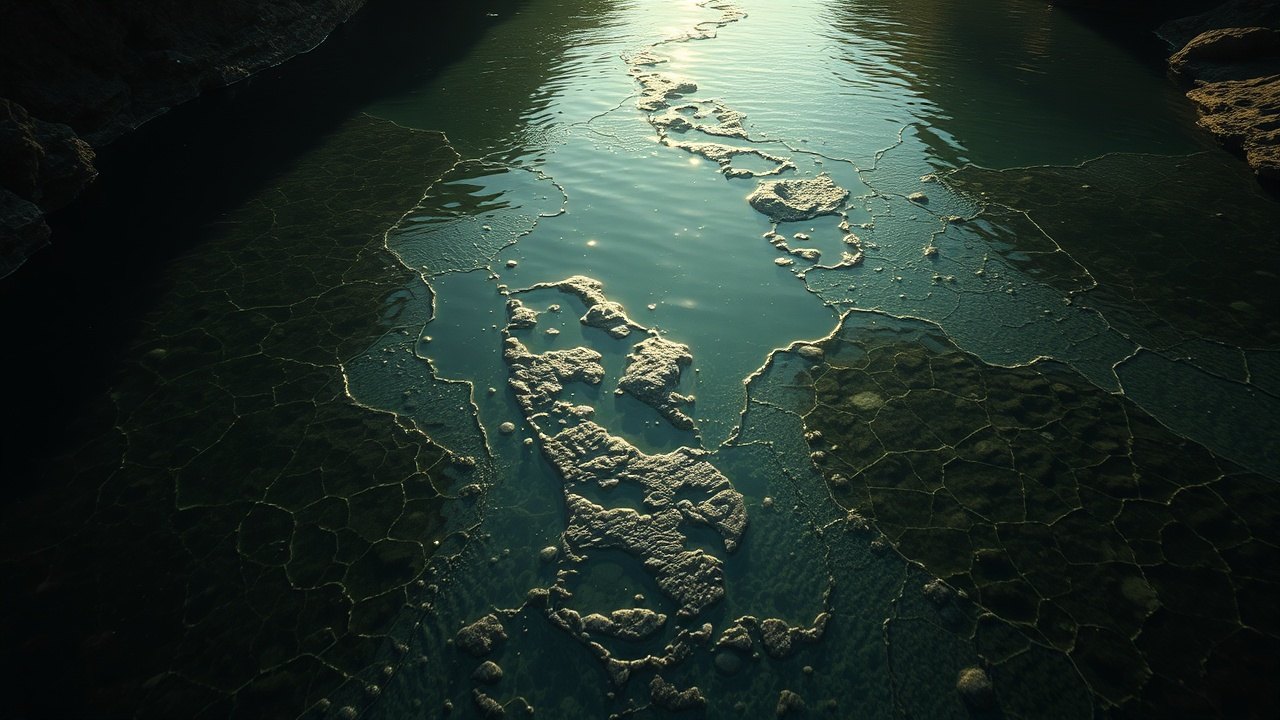
The satellite imagery revealed two ancient riverbeds submerged beneath the Gulf floor. One traced through what is now Kuwait, corresponding to a dry valley called the Wadi al-Batin, an ancient watercourse that once flowed eastward into the Gulf. Zarins identified this as the Pishon.
The second traced through the Persian Gulf basin itself, corresponding to a river that once drained from the Zagros mountains of Iran. Zarins identified this as the Gihon.
Both rivers were real. Both had disappeared, not because they were mythological, but because the sea had swallowed them.
The Ice Age and the 400-Foot Sea Rise
Twelve thousand years ago, the last Ice Age was ending.
As the ice sheets melted, global sea levels rose dramatically. Conservative estimates place the total sea level rise following peak glaciation at over 400 feet, a process that unfolded over thousands of years but fundamentally reshaped the geography of coastlines worldwide.
The Persian Gulf was not a gulf 12,000 years ago. It was a valley. A large, low-lying basin fed by four converging rivers, with a warm climate and access to fresh water from multiple sources. The conditions were precisely those associated with early human agriculture and settlement.
As the ice age ended and sea levels rose, that valley filled. Slowly, over millennia, the Persian Gulf basin flooded. The Pishon and Gihon rivers were submerged. The fertile land at their confluence disappeared beneath the water.
The Garden of Eden was not destroyed by a supernatural event. It was drowned by the end of an ice age.
The Coordinates
Zarins was specific about the location.
The confluence of the four ancient rivers, the Tigris, the Euphrates, the ancient Pishon running through the Wadi al-Batin basin, and the ancient Gihon draining from the Zagros mountains, points to a location at approximately 29°N, 48°E.
That coordinates sits in the northwestern Persian Gulf, near the modern Kuwait-Saudi Arabia maritime border. It is currently approximately 200 feet underwater.
The ancient riverbeds have been confirmed by satellite imaging and seismic survey data. The submerged valley is not speculation, it is a geological feature that has been mapped and acknowledged in peer-reviewed research.
It has never been excavated.
Why No One Has Looked
The Persian Gulf floor presents a specific combination of logistical difficulty and political complication. The area falls within overlapping economic zones and territorial waters of multiple nations, Kuwait, Saudi Arabia, Iran, Iraq, with competing geopolitical interests that have historically made international archaeological cooperation difficult to coordinate.
Excavation of a seabed at 200 feet depth also requires specialized equipment and sustained funding at a scale that academic archaeology rarely commands.
There is also the question of what an excavation might find, and what it might prove about the age and sophistication of human civilization in the region. A confirmed pre-flood settlement at the confluence of these four rivers would predate most of what we consider the origins of organized civilization.
Göbekli Tepe, the 12,000-year-old temple complex in southeastern Turkey, already demonstrated that organized human civilization existed far earlier than previously accepted. The Persian Gulf basin is the same age. The implications of an excavation there are significant enough that the silence around it is its own kind of answer.
What the Evidence Says
The Genesis account of Eden is not vague. It names four rivers. Two of those rivers have been continuously identified throughout history. Two disappeared, and a Smithsonian archaeologist found them in 1987 using satellite imaging, submerged beneath the Persian Gulf at the same confluence point the text describes.
The location exists at 29°N, 48°E, approximately 200 feet underwater. It has been mapped. The ancient riverbeds are confirmed. The geological mechanism for their disappearance, post-glacial sea level rise, is established science.
The Bible gave coordinates. The coordinates were real.
No one is going to excavate the site. Not yet.
The question worth asking is why.