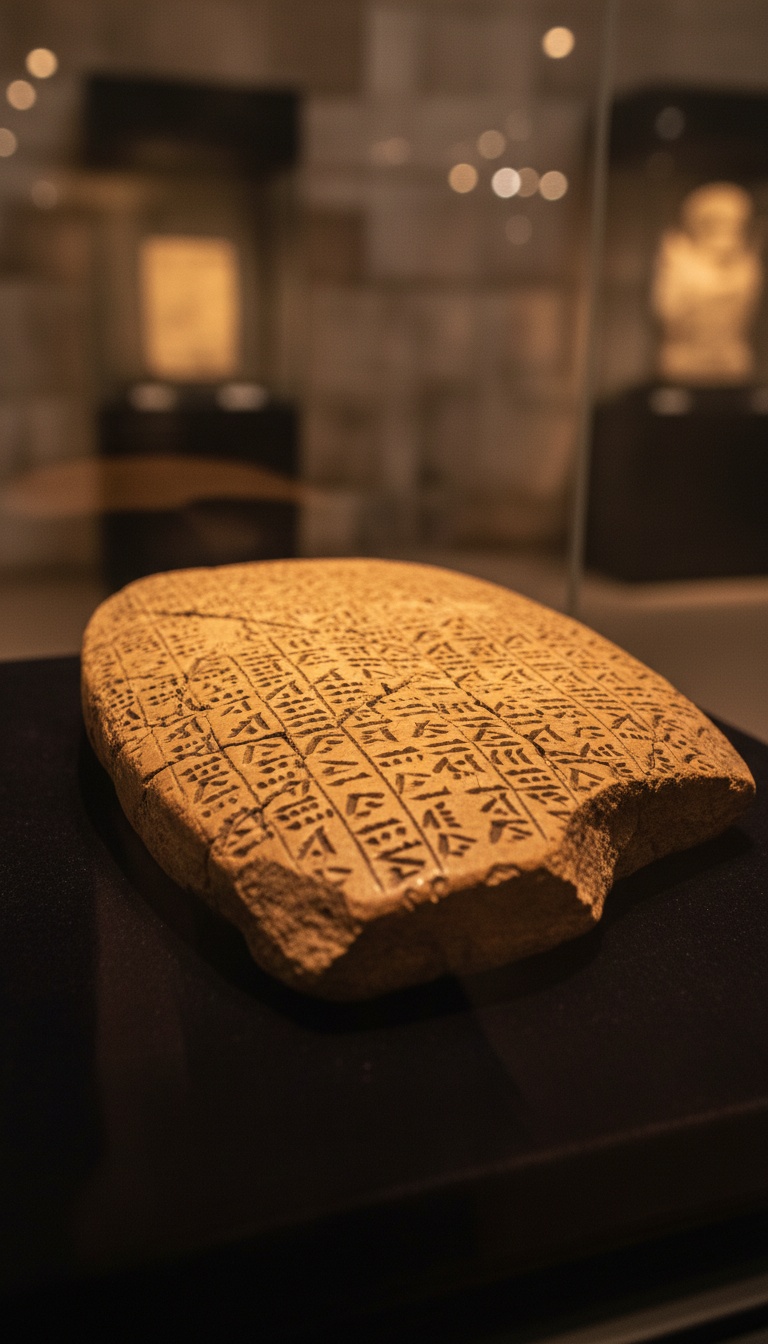
The first resurrection story did not happen on a Jerusalem hill. It happened on a hook in a Sumerian underworld, twenty three centuries before Matthew picked up a stylus.
Her name was Inanna. The clay tablets are in museum drawers right now. The translation has been sitting in academic libraries since 1942. Almost nobody in a pew has heard her name.
The Tablets Exist. They Have Catalog Numbers.
The Sumerian poem we call The Descent of Inanna survives on cuneiform tablets excavated at Nippur, a temple city about 110 miles south of modern Baghdad. The composition is dated to the Third Dynasty of Ur, roughly 2112 to 2004 BCE.
Samuel Noah Kramer, the Assyriologist who effectively built the field of Sumerian literature in the twentieth century, published the first major English translation in 1942 in the Journal of the American Oriental Society. He worked from tablets housed at the University of Pennsylvania Museum in Philadelphia and the Istanbul Archaeological Museums.
Diane Wolkstein and Kramer co-authored the definitive popular edition, Inanna, Queen of Heaven and Earth, published by Harper and Row in 1983. That book is on the shelf at any serious university library. The receipts are not hidden. They are cataloged.
Seven Gates, Stripped at Each One
Inanna was the Sumerian queen of heaven, goddess of love and war, later absorbed into the Akkadian Ishtar. The text opens with her decision to descend into the kur, the underworld ruled by her elder sister Ereshkigal.
She passes through seven gates. At each gate, the gatekeeper Neti removes one of her divine ornaments. Her crown. Her lapis measuring rod. Her necklace. Her breastplate. Her gold ring. Her lapis beads. Finally her royal robe. She arrives before her sister naked and powerless.
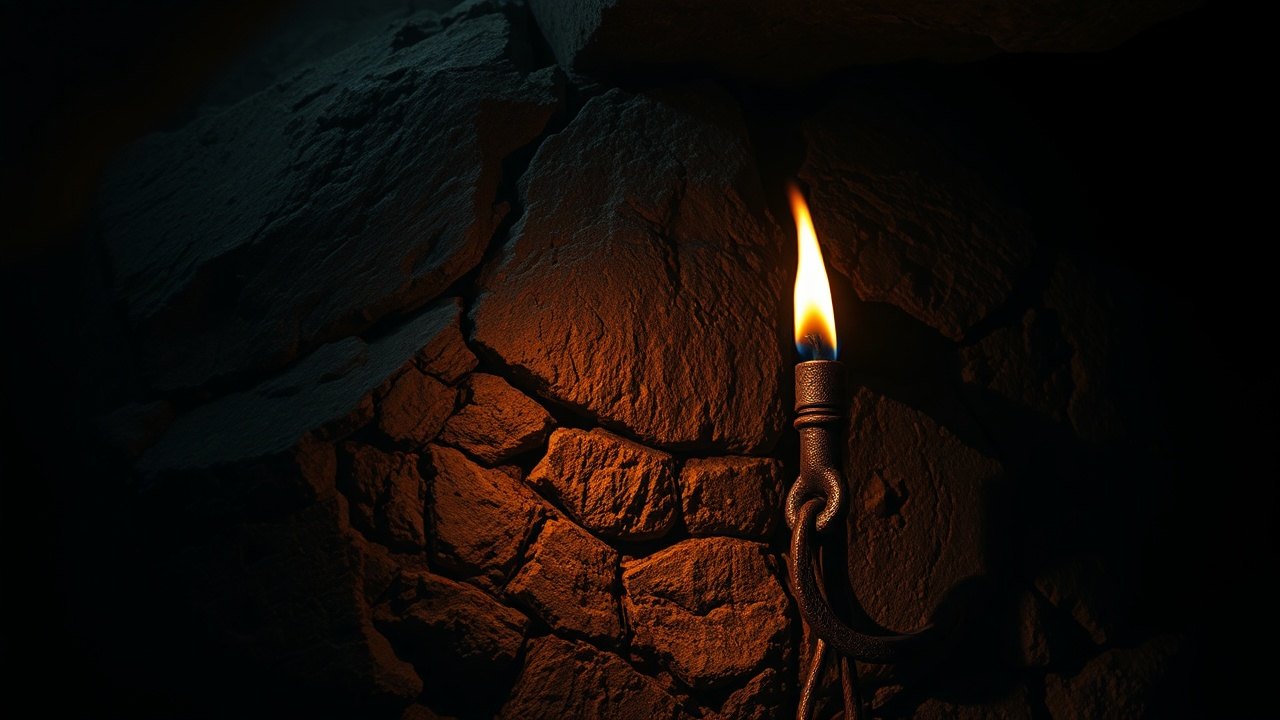
Ereshkigal and the seven Anunnaki judges fasten the eye of death on her. The text is explicit. Inanna is turned into a corpse and hung on a hook on the wall. The Sumerian word used is gish gag, a peg or nail driven into the wall of the throne room.
Three Days. Three Nights. Then the Water of Life.
The poem states the duration plainly. Three days and three nights pass. Inanna does not return.
Her minister Ninshubur petitions the high gods. Enlil refuses. Nanna refuses. Enki, the god of wisdom and fresh water, agrees to intervene. He fashions two genderless beings, the kurgarra and the galatur, from the dirt under his fingernails. He gives them the food of life and the water of life.
They slip into the underworld, sprinkle the food and water on the corpse hanging from the hook, and Inanna rises. The tablet line, in Kramer's translation, reads that the corpse was given to them, they sprinkled the food of life on it, they sprinkled the water of life on it, and Inanna arose.
A naked goddess, dead on a hook for three days and three nights, raised by water sprinkled on her corpse. Written down before Abraham was born.
The Pattern Repeats Across Six Civilizations
Inanna is not an isolated case. The dying and rising deity is a documented motif across the ancient Near East and Mediterranean.
Osiris, the Egyptian god, is murdered and dismembered by Set, reassembled by Isis, and resurrected as lord of the duat. The Pyramid Texts containing the earliest versions date to roughly 2400 BCE, contemporary with or earlier than Inanna's tablets. Tammuz, the Mesopotamian shepherd god and Inanna's consort, descends to the underworld annually and returns. The prophet Ezekiel, writing around 592 BCE, complains in chapter 8 verse 14 about women at the Jerusalem temple weeping for Tammuz.
Adonis, borrowed by the Greeks from Phoenician Adon, dies and returns each spring. Attis, the Phrygian consort of Cybele, castrates himself, dies under a pine tree, and rises on the third day in a festival the Romans codified as the Hilaria on March 25th. Dionysus, the Greek god torn apart by Titans and reconstituted, completes the set.
The Comparative Religion Problem Nobody Wants to Touch
James Frazer cataloged this pattern in The Golden Bough, first published in 1890 and expanded through 1915. His category was the dying and rising god. Twentieth century scholars including Tryggve Mettinger, in his 2001 Coniectanea Biblica volume The Riddle of Resurrection, pushed back on Frazer but ultimately confirmed that genuine death and resurrection deities existed in the ancient Near East before the Hellenistic period.
The geographic chain is not speculative. Sumerian Inanna becomes Akkadian Ishtar. Ishtar becomes Phoenician Astarte. Astarte travels by trade route into the Greek world and pairs with Adonis. Paul of Tarsus, writing his epistles in the 50s CE, was a Roman citizen from Cilicia in southern Anatolia, the same coastline where the Attis cult was active and where the spring resurrection festival was a public event.
The Gospel of Matthew, composed somewhere between 70 and 90 CE, places Jesus in the tomb for three days and three nights, citing the sign of Jonah in chapter 12 verse 40. The structural match to Inanna is not subtle. Descent. Death. Three days. Resurrection by divine intervention. Return.
What the Mainstream Will Not Say Out Loud
Academic Assyriology has known this for eighty years. Kramer's 1942 paper is not classified. The University of Pennsylvania Museum will show you the tablets if you make an appointment.
The conclusion that follows is the one that does not get printed in Sunday school curricula. Either six independent civilizations, separated by thousands of miles and thousands of years, spontaneously invented an identical narrative architecture, or the later versions are adaptations of the earlier ones.
Probability is not on the side of independent invention. Trade routes are. Cultural transmission is. The Septuagint translation of the Hebrew Bible was completed in Alexandria, a Greek city built on Egyptian soil, surrounded by Osiris worship, in the third century BCE.
The hook in the underworld came first. The three days came first. The sprinkled water that revives the corpse came first. The clay is older than the parchment by two millennia, and the clay is sitting in Philadelphia and Istanbul with catalog numbers attached.
The question is not whether the resurrection is a powerful story. The question is whose story it was originally. And if a Sumerian goddess wore the template first, what else in the canon was borrowed from a tablet nobody told you to read.
Before you go
7 books the Vatican doesn't want you reading. Free PDF, the texts they cut, with sources. Joined by 140+ Inner Circle members.
No spam. Unsubscribe anytime.
Go deeper
The Hidden Canon, Vol. I, Enoch. Jubilees. Thomas. Mary. Judas. 90 pages, 14 chapters, every receipt cited. The books your Bible quietly removed.
Read the Canon →Books that informed this investigation
- The Sumerians (Kramer)
- Babylon: Mesopotamia and the Birth of Civilization (Kriwaczek)
- The Ancient Near East (Hallo & Simpson)
As an Amazon Associate, Hidden Epoch earns from qualifying purchases. Cost to you: nothing.
Research safely
The VPN we use to research without being tracked. First 3 months free.
Get NordVPN →