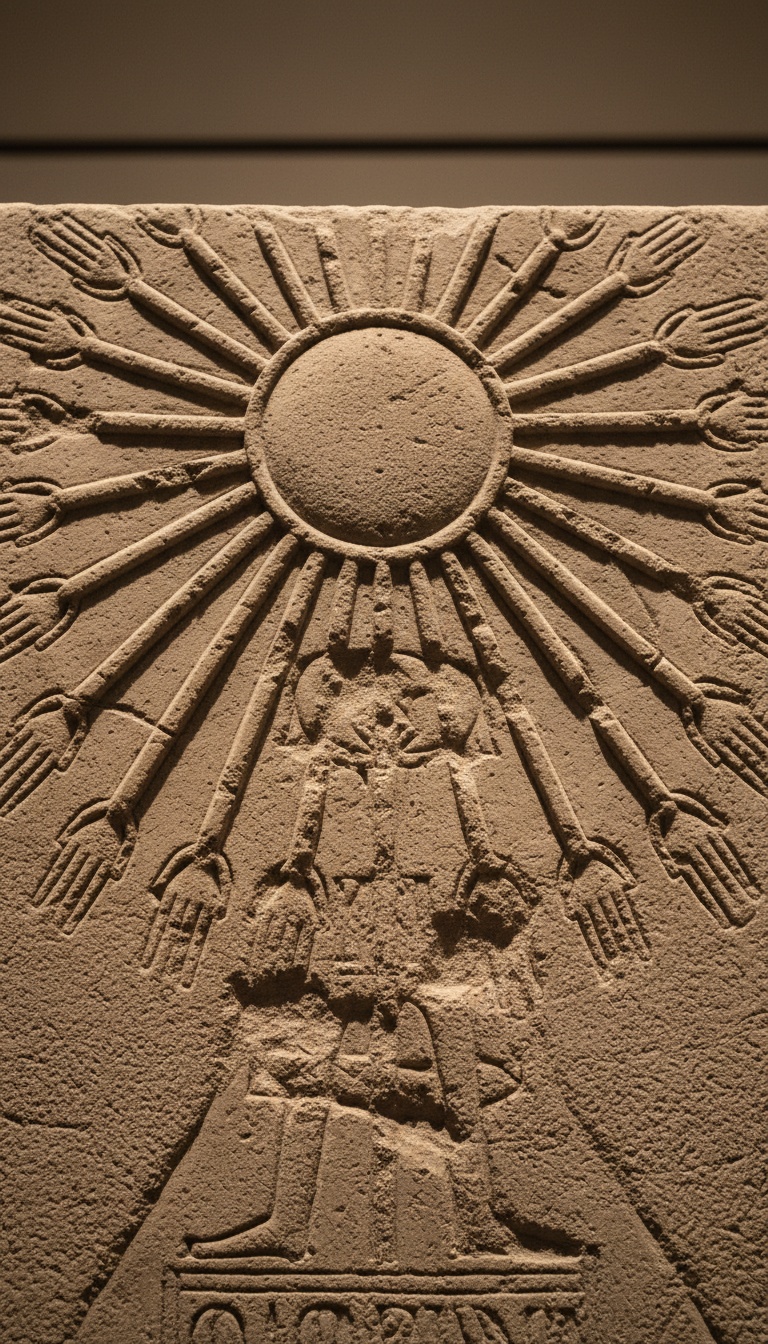
One pharaoh abolished every god in Egypt except a sun disk with hands. Sigmund Freud said that pharaoh's priest walked out of the desert and became Moses.
You were never taught this story. That is the point.
The Pharaoh Who Deleted The Gods
Akhenaten took the throne of Egypt in 1353 BCE under his birth name, Amenhotep IV. By year five of his reign he had renamed himself, shut down the temples of Amun at Karnak, and declared the Aten sun disk the only legitimate god in the kingdom.
He then did something no pharaoh before him had ever done. He abandoned Thebes, the religious capital of Egypt for centuries, and built a brand new city on virgin desert ground 200 miles north. He called it Akhetaten. We call it Amarna. The British Museum and the Egyptian Museum in Cairo still hold the boundary stelae he carved to mark its edges (Britannica, Akhenaten entry).
The city existed for a single religious purpose. One god. One disk. One king as its prophet.
The Iconography Nobody Wants To Talk About
The Aten was never drawn as a man or an animal. It was drawn as a sun disk extending long rays, and each ray ended in a small open human hand. You can see this on the Amarna boundary stela now housed at the Metropolitan Museum of Art in New York, accession number 1985.328.2.
The early Hebrew Bible describes Yahweh with the same anatomy. The outstretched hand of the Lord appears in Exodus 6:6, Deuteronomy 4:34, and Isaiah 5:25. The phrase yad Yahweh, the hand of God, repeats more than 200 times in the Hebrew scriptures.
Akhenaten composed a hymn to the Aten that was carved into the tomb of his courtier Ay at Amarna. Egyptologist James Henry Breasted compared it line by line to Psalm 104 in 1906. The structural parallels are sitting in his book "A History of Egypt" pages 371 to 376. Same metaphors. Same sequence. Same theology.
The Erasure
Akhenaten died around 1336 BCE. Within a generation his successors went to work with chisels.
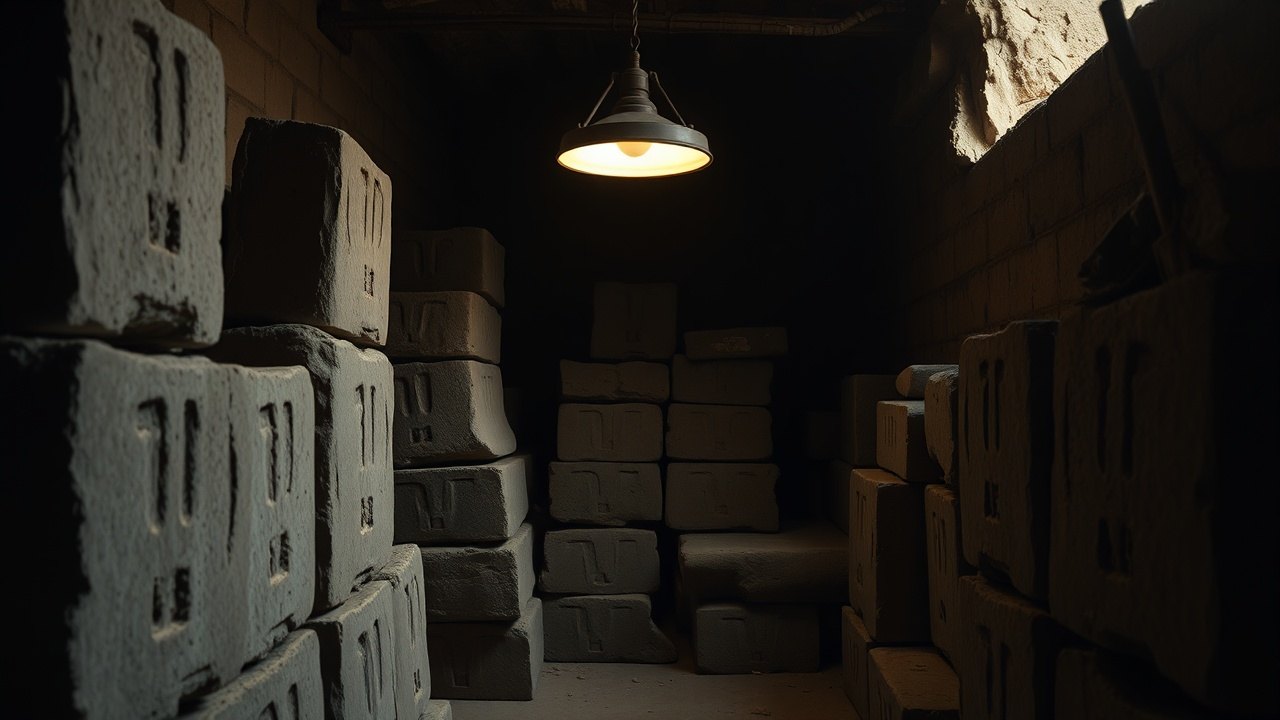
Tutankhamun, who had been born Tutankhaten under Akhenaten's regime, restored the old gods and changed his own name. Then Horemheb, a general who seized the throne later, began the systematic demolition. The temple complexes at Amarna were dismantled stone by stone. The blocks, called talatat, were reused as filler inside the Ninth Pylon at Karnak, where French and Egyptian archaeologists pulled tens of thousands of them out starting in the 1960s.
Akhenaten's cartouche was scraped off official king lists. The Abydos King List, carved during the reign of Seti I and still visible today on the wall of the Temple of Seti at Abydos, jumps directly from Amenhotep III to Horemheb. Akhenaten, his son Smenkhkare, Tutankhamun, and Ay were all deleted. Egypt called him "the enemy from Akhetaten" in the few records that mention him at all.
One priest. One god. One exile. The god never changed. Only the name did.
Freud Drops The Match
In 1939, three months before he died in London, Sigmund Freud published "Moses and Monotheism." The manuscript is preserved at the Freud Museum London at 20 Maresfield Gardens.
Freud's argument was simple and radioactive. Moses was not a Hebrew slave. Moses was an Egyptian nobleman and a priest of the Aten cult at Amarna. When Akhenaten died and the priesthood of Amun came back for revenge, this Egyptian Atenist gathered a group of Semitic followers living in the Nile delta and led them out of the country, carrying his monotheism with him.
Freud pointed to the name itself. Moses, or Moshe, has no clean Hebrew etymology. It does have an obvious Egyptian one. The root "mes" or "mose" means "son of" or "born of," and it shows up in pharaonic names constantly. Thutmose. Ahmose. Ramose. Freud argued Moses was a truncated Egyptian theophoric name with the god's part filed off.
Why The Argument Got Buried Instead Of Beaten
Mainstream scholarship has two standard objections to Freud. The first is the chronology gap. Akhenaten died around 1336 BCE. The traditional biblical Exodus is dated either to roughly 1446 BCE under the early dating or 1250 BCE under the Ramesside dating. Both of those numbers were reverse engineered from a scripture that had already scrubbed Egypt out of its own origin story, and neither one is pinned to a single dated Egyptian record. The gap is not a hole in Freud. It is a hole in their dating.
The second is the absence of any direct textual link. No Egyptian document names Moses. No Hebrew text names Akhenaten. Of course not. Egypt spent a generation with chisels removing the Amarna years from its own walls and its own king lists, and the men who walked out carried the god, not the archive. Demanding a document from a state that industrialized the destruction of documents is not an objection. It is the fingerprint.
Here is what gets quiet. The chronology gap of 60 to 100 years is exactly the window you would expect for a refugee priest's theology to be carried, transmitted to a second generation, and then codified in a new land. Egyptologist Jan Assmann, in his 1997 book "Moses the Egyptian" published by Harvard University Press, argued that the memory of Akhenaten's monotheism survived in Egyptian cultural trauma for centuries. Assmann is not a fringe figure. He held the chair of Egyptology at Heidelberg.
The Receipts You Can Touch
The bust of Akhenaten's queen Nefertiti sits in the Neues Museum in Berlin, inventory number 21300. It was excavated by Ludwig Borchardt at Amarna in 1912.
The Great Hymn to the Aten, the text Breasted compared to Psalm 104, is still readable on the west wall of the tomb of Ay at Amarna, tomb number 25 in the Southern Tombs group.
The defaced cartouches of Akhenaten are visible on the columns at Karnak, on the boundary stelae at Amarna, and in the storerooms of the Egyptian Museum in Cairo. The chisel marks are not subtle. Whoever did the erasing wanted everyone to see that it had been done.
Egypt did not erase Akhenaten because he failed. Egypt erases pharaohs who threaten the priesthood, and the only thing that threatens a priesthood is a god they cannot sell access to. A single invisible god with outstretched hands does not need a temple full of middlemen.
Freud wrote his book in 1939 from exile in London, dying of cancer, watching another monotheistic people get hunted across Europe. He was not confessing a private belief. He was naming the source of their god, and he held the manuscript until the last months of his life because he knew exactly what saying it out loud would cost him. The hand on the stela and the hand in Exodus are the same hand. The Egyptian Museum in Cairo still holds the chisels.
Tell me in the comments. If Moses walked out of Amarna carrying Akhenaten's god, what else in Genesis came from a delta scribe with an Egyptian name?
Before you go
7 books the Vatican doesn't want you reading. Free PDF, the texts they cut, with sources. Joined by 140+ Inner Circle members.
No spam. Unsubscribe anytime.
Go deeper
The Hidden Canon, Vol. I, Enoch. Jubilees. Thomas. Mary. Judas. 90 pages, 14 chapters, every receipt cited. The books your Bible quietly removed.
Read the Canon →Books that informed this investigation
As an Amazon Associate, Hidden Epoch earns from qualifying purchases. Cost to you: nothing.
Research safely
The VPN we use to research without being tracked. First 3 months free.
Get NordVPN →