The Sumerians Baptized People in 2300 BCE. Christianity Inherited the Ritual.
By Jordan Vale·2026-05-14·8 min read
The oldest documented baptism in human history happened roughly two thousand three hundred years before the gospel of Mark was written. It happened in a city most modern Christians have never heard of.
The city was Eridu, in southern Mesopotamia, one of the oldest continuously inhabited urban centers on Earth, founded near the head of the Persian Gulf around 5400 BCE. By 2300 BCE, Eridu was the cult center of Enki, the Sumerian god of fresh water, wisdom, and creation.
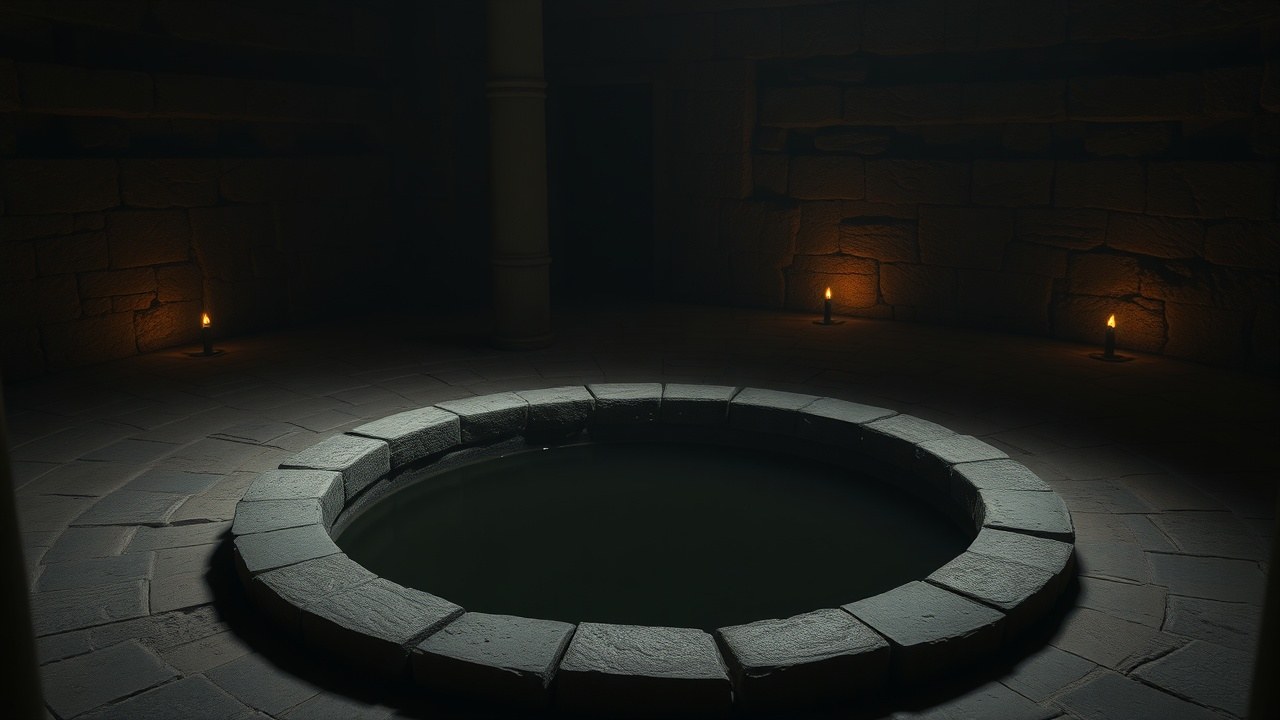
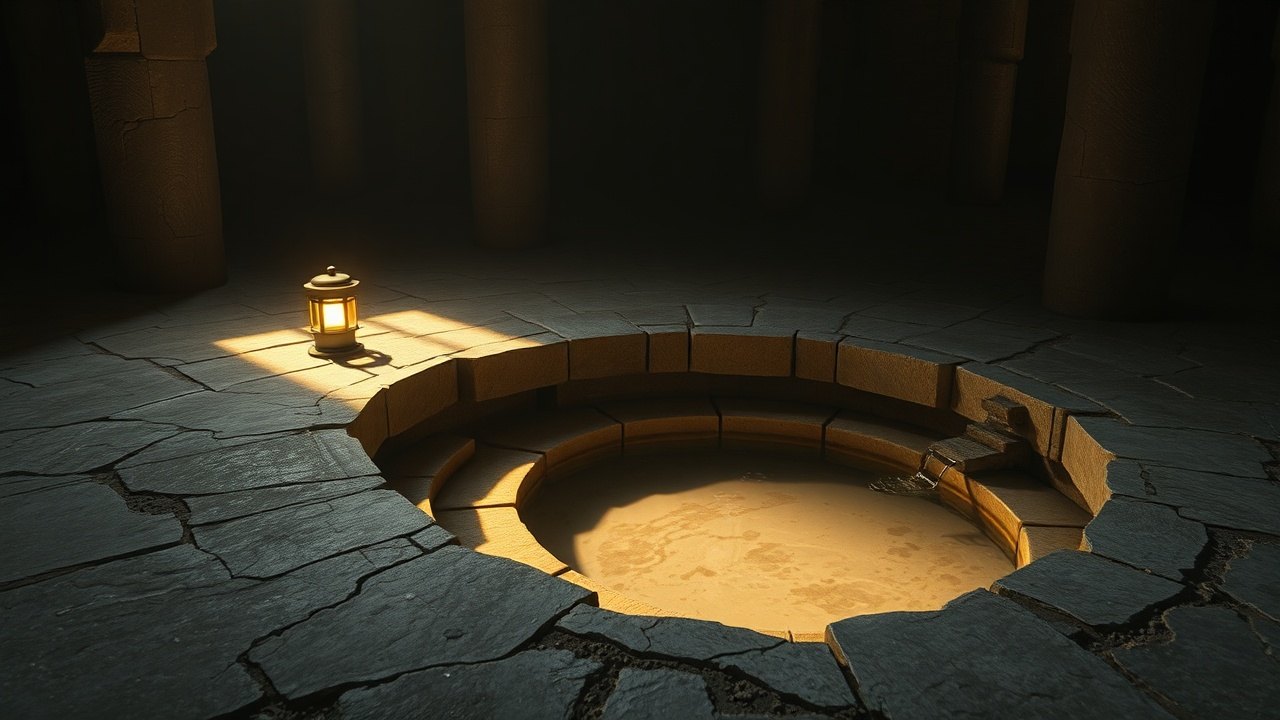
At the heart of Eridu's main temple stood a sunken stone basin built directly into the temple floor. It was called the Abzu, the same word used for the cosmic subterranean ocean of fresh water that Enki was believed to rule. Before any worshipper could approach the altar to make an offering, they had to enter the Abzu. Full immersion. No exceptions.
This was not optional ritual. It was temple law.
The Word "Abzu", and What It Carried
The Sumerian word ab-zu meant, literally, "deep water." In Akkadian, the language of the Babylonians and Assyrians who inherited the Sumerian religious system, the same concept appears as apsû. The cosmic Abzu was the freshwater aquifer believed to lie beneath the dry land, the source of springs, rivers, and the water that made agriculture possible in the arid Mesopotamian plain.
Enki was its lord. He was also the god who, in the Sumerian flood narrative (preserved in the Eridu Genesis and the later Atrahasis epic), warned a chosen man to build a boat before the gods drowned the world. The flood-and-survival pattern, the freshwater god who saves humanity, the ritual immersion that connects the worshipper to that god, the structural elements are not vague.
The temple basin in Eridu was not a metaphor. Archaeologists excavating the site in the 1940s under the direction of Iraqi archaeologist Fuad Safar uncovered the foundations of eighteen successive temples stacked one on top of another, the earliest dating to around 5300 BCE, the latest to roughly 600 BCE. The water installations are physical features in the stratigraphy, built basins, channels, drains.
The Ritual Itself
The procedure is reconstructed from a combination of surviving Sumerian and Akkadian liturgical texts, temple inventory lists, and the so-called incantation series, long ritual handbooks copied and recopied across the centuries. The relevant material survives most extensively in the bilingual Sumerian-Akkadian compilations housed in the British Museum and the Penn Museum.
The worshipper approached the temple precinct in a state of ritual impurity (any number of conditions could trigger this: bloodshed, contact with the dead, sickness, contact with a foreign person, certain sexual acts)
The priests of Enki conducted preliminary purifications with incense and aspersion
The worshipper descended into the Abzu basin and was fully immersed in fresh water drawn from the sacred aquifer beneath the temple
Incantations were recited, formulas naming the worshipper, declaring their sin or impurity, and pronouncing it washed away
The worshipper emerged, was dried with sacred linens, and was now ritually permitted to approach the altar
The phrase used in the Akkadian incantations is direct: "By the water of the Abzu, your sin is loosed. By the water of the Abzu, you are made new."
That language is not paraphrase. It is the standard formulation preserved across multiple ritual tablets.
🔒 Research Without Being Tracked
Reading suppressed history, ancient baptismal rites, pre-Christian mystery cults, Vatican-archive admissions, leaves digital fingerprints. The VPN we use at Hidden Epoch while researching these topics. First 3 months free.
The Sumerian baptismal rite predates Abrahamic monotheism by at least a thousand years and predates Christian baptism by over two millennia. It was the standard temple practice across all of southern Mesopotamia for at least three thousand consecutive years.
The Hebrew Bible reflects awareness of Mesopotamian religion, the Babylonian exile (586-539 BCE) placed elite Jewish scribes inside the heart of the system that had inherited Sumerian temple practice. Ritual washing as a precondition for approaching the sacred enters the Hebrew priestly tradition in the same period, codified in the Levitical purity laws and the Temple's bronze laver.
By the first century CE, ritual immersion was a fixed feature of Second Temple Jewish religious life. The mikveh, a stepped immersion pool, has been excavated at virtually every major Jewish site of the period, including dozens at the foot of the Temple Mount in Jerusalem, in private Hasmonean and Herodian residences, and most famously at Qumran, the site associated with the Dead Sea Scrolls community.
John the Baptist did not invent immersion. He did not even invent immersion as a ritual of repentance and spiritual rebirth. He inherited a practice that was, at that point, already two thousand years old.
The Direct Architectural Lineage
The Abzu basin at Eridu was a stepped stone tank built into the floor of the temple. The Second Temple mikveh was a stepped stone tank, typically rock-cut, built into the floor of the bath complex. The early Christian baptistery, examples survive from the third and fourth centuries CE at sites like Dura-Europos in Syria and the Lateran Baptistery in Rome, was a stepped stone basin built into the floor of the baptistery building.
Same architecture. Same function. Same theological framing: passage through water marks the boundary between the unclean and the sacred, between the old self and the new.
The argument that this is "just universal", that immersion in water is too obvious a ritual gesture to require historical lineage, does not survive scrutiny. The specific structural elements (a built tank, full immersion, priest-administered, declaration of forgiveness of sin, permitted approach to the altar afterward) are not universal. They are a specific set of features that appears in Sumerian, Akkadian, Babylonian, Second Temple Jewish, and early Christian contexts in the same configuration.
The Tablets Are Not Hidden
The relevant cuneiform documentation is on public display, in academic databases, and in published scholarly translation. The major collections:
The British Museum, Department of the Middle East. Holds the largest collection of Sumerian and Akkadian ritual tablets, including the bilingual incantation series describing the Abzu rite
The Iraq Museum, Baghdad, Houses material from the original Eridu excavations under Fuad Safar (1946-1949)
The Penn Museum, Philadelphia, Holds the Sumerian temple archive material from the University of Pennsylvania's excavations at Nippur
The Yale Babylonian Collection, Includes the standard Šurpu and Maqlû incantation series, both of which prescribe water-purification rituals at the Abzu
The standard reference works, Wilfred Lambert's Babylonian Wisdom Literature, Erica Reiner's edition of Šurpu, Tzvi Abusch's Maqlû editions, are sitting on the open shelves of every major university library that supports a Near Eastern Studies program.
What the Church Inherited, and Never Said
This is not a claim that Christian baptism is "fake." The historical reality of John the Baptist and his immersion ministry on the Jordan is treated as factual by virtually every secular New Testament historian. The continuity of the rite from John into the early Jesus movement is well-documented in the canonical gospels and in independent attestation in Josephus.
What is at issue is something narrower: the theological frame around the rite did not originate with the rite's first Christian practitioners.
The idea that immersion washes away sin, that it enables passage into the sacred presence, that it constitutes a kind of ritual death and rebirth, all of this is older than Israel. The Sumerians had worked it out by 2300 BCE. The Akkadians and Babylonians inherited and refined it. The Second Temple Jewish tradition adapted it. John the Baptist preached it as the climax of the prophetic tradition. The early Christian church received it from John and gave it Christological content.
None of these steps is invention. Each is inheritance.
The Question That Doesn't Get Asked
If the ritual structure was already two and a half thousand years old by the time the gospel writers picked it up, basin, priest, immersion, formula, forgiveness, sacred entry, what part of Christian baptism is original to Christianity?
The answer is not "the act." The answer is "the name attached to it." The act was Sumerian when Christianity arrived. The name is what Christianity contributed.
Justin Martyr, writing his First Apology to Roman emperor Antoninus Pius around 150 CE, was aware that the pagan mystery cults of his own day practiced baptismal rites. His explanation, preserved in Chapter 62 of the First Apology, was that demons, knowing the prophecies in advance, had counterfeited the Christian sacraments to deceive humanity.
He did not deny the resemblance. He explained it as preemptive demonic plagiarism. That is an admission, not a denial.
The Eridu tablets, older than Justin Martyr by two thousand years, older than Christianity itself by twenty-three centuries, describe the same act, in the same setting, with the same theological content. They were already ancient when Moses, if Moses ever lived, was a child.
The water of the Abzu washed away sin. The priests of Enki said so on tablets that are sitting in a London museum right now. The Church inherited the rite. It did not invent it.
Related Investigation
JV
Jordan ValeInvestigative Writer, Hidden Epoch
Jordan Vale is an independent historian and investigative writer specializing in suppressed archaeology, biblical history, and ancient anomalies. He writes to make the buried past impossible to ignore.