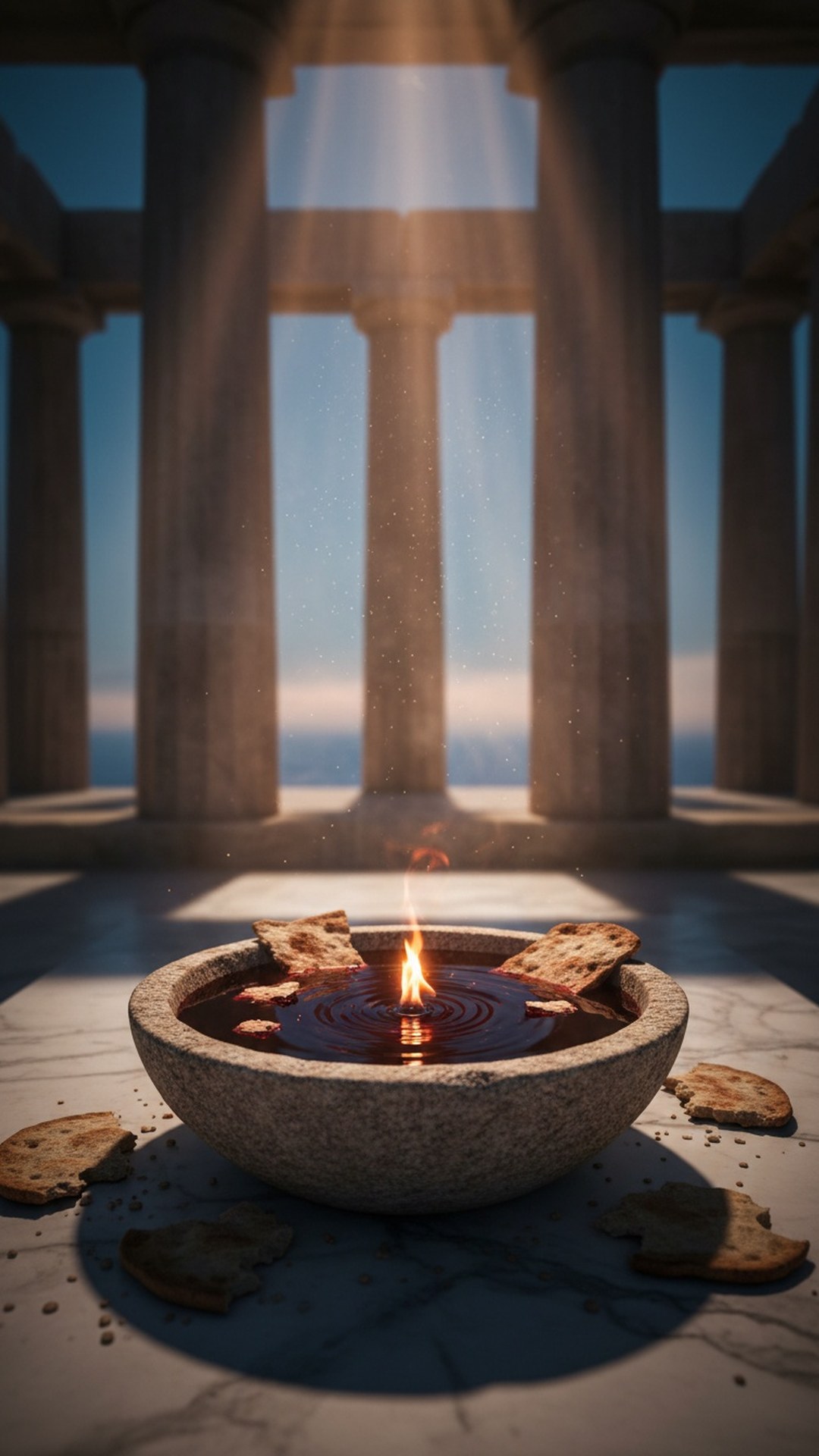
Centuries before the Last Supper, Greek initiates were eating flesh and drinking wine as the body and blood of a resurrected god, the son of the highest god and a mortal woman. His hymns call him King of Kings and God of Gods. His name was Dionysus, and the city where John's Gospel was written had worshipped him for centuries before the apostle arrived.
This is part 5 of THE BLUEPRINT, our 23-part investigation into the figures who carried pieces of the Jesus story before the story was told. This chapter is the one that made even cautious New Testament scholars take the comparison seriously.
A god born of a mortal mother
Dionysus was the son of Zeus and Semele, a mortal woman: a god carried in a human womb, divine father, human mother. In the Orphic telling, the child god was torn apart by the Titans, and from destruction he returned, reborn. His initiates believed his death and return were the mechanism of their own: join the god, share his dismemberment ritually, share his resurrection actually.
The ritual heart of the cult was the sacred meal. In the omophagia, the initiates consumed raw flesh as the body of the god. In the wine rite, Dionysus was himself the wine; to drink it was to take the god inside you. Euripides puts it plainly in The Bacchae, staged in 405 BC: poured out as an offering, the god himself. Flesh eaten, wine drunk as divine blood, union with a dying and returning son of god, four centuries before an upper room in Jerusalem.
The physical receipts
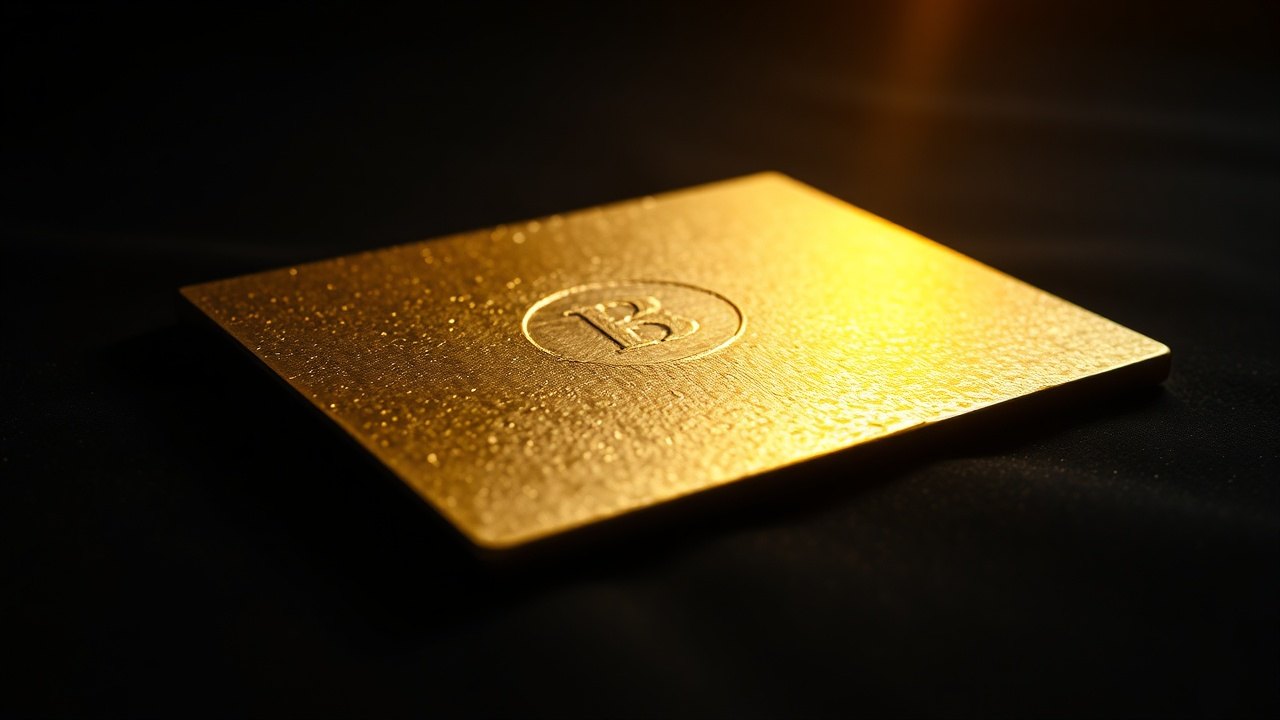
None of this rests on reconstruction. The Bacchae survives complete and is datable to the year. The Orphic gold tablets are physical objects: thin sheets of hammered gold buried with initiates from the fifth century BC onward, inscribed with passwords for the afterlife and promises of blessed immortality through the god. Museum cases in Naples, London and Athens hold them today. The Orphic Hymns hail Dionysus with the exact stacked superlatives, King of Kings, God of Gods, that Christians would later fix on Christ.
John's Gospel was written in Ephesus. Ephesus had worshipped Dionysus for centuries before the apostle ever saw the city.
The Ephesus problem
Now place the Gospel of John on the map. Church tradition and most scholarship locate its composition at Ephesus, on the Anatolian coast, near the end of the first century. Ephesus was Dionysus country: his cult, his festivals, his imagery saturated the region. And John is precisely the Gospel that gives us the wine miracle at Cana, I am the true vine, and the command to eat the flesh and drink the blood of the son of God, language so raw that John 6 records followers abandoning Jesus over it. Scholars of John's Gospel acknowledge that of all Greco-Roman deities, the Dionysus parallels are the strongest. A Gospel written in a Dionysian city speaks fluent Dionysian.
Where the objections break
Every objection thrown at this chapter breaks on contact. Start with the loudest one: that Dionysus turning water into wine is a late folk motif with no classical footing. It has classical footing. Pausanias describes sealed vessels left overnight in a locked and witnessed temple at Elis and found full of wine by morning, and Pliny records the spring on Andros running wine on the god's feast day. The wine miracle was written down, ritually staged and public property in the Greek world centuries before anyone set a wedding at Cana. Now take the rest. The omophagia was raw and ecstatic, and a solemn commemorative supper looks nothing like it: that is precisely what a rite looks like once it crosses from a mountainside into a dining room, domesticated for a city congregation, the same act with the blood wiped off the chin. Dionysus dies in myth-time, not in datable history, and his rebirth stories vary wildly between tellings: variation is the signature of a living cult, and a living cult is exactly the raw material a writer freezes into one telling and pins to a calendar. A photocopy is what a forger leaves behind. What Ephesus handed John was stronger than a photocopy, a working vocabulary: son of god by a mortal mother, destroyed and returned, shared meal of flesh and blood, immortality through union with him, all in circulation in the exact city where the highest Christology of the New Testament was written down.
When John's Jesus says whoever eats my flesh and drinks my blood has eternal life, every listener in Ephesus already knew a god of whom that sentence was ritually true, and had known him for centuries.
Did John describe Jesus, or write him into a mold the city already knew? The next chapter walks into a Roman cave-temple where a church father found a sacred meal so familiar he blamed demons for it.
This is Part 5 of 23 in THE BLUEPRINT, an investigation into the pre-Christian figures who carried the pieces of the Jesus story. See every part of the series here.
Before you go
7 books the Vatican doesn't want you reading. Free PDF, the texts they cut, with sources. Joined by 140+ Inner Circle members.
No spam. Unsubscribe anytime.
Go deeper
The Hidden Canon, Vol. I, Enoch. Jubilees. Thomas. Mary. Judas. 90 pages, 14 chapters, every receipt cited. The books your Bible quietly removed.
Read the Canon →Books that informed this investigation
As an Amazon Associate, Hidden Epoch earns from qualifying purchases. Cost to you: nothing.
Research safely
The VPN we use to research without being tracked. First 3 months free.
Get NordVPN →