A king is warned that a newborn child will destroy him. He orders infants killed. The baby is smuggled away in the night, across a river, to be raised by foster parents among herdsmen, until the day he returns to fulfill the prophecy. If that sounds like the second chapter of Matthew, it is also the birth story of Krishna, told in the sacred texts of India.
This is part 8 of THE BLUEPRINT, and it is the part where this series earns its credibility, because no figure in the whole investigation has been buried under more fake claims than Krishna. We are going to show you the real evidence, which is carved in stone, and then we are going to kill the viral falsehoods one by one. What survives is stranger than the fabrications.

The story India tells
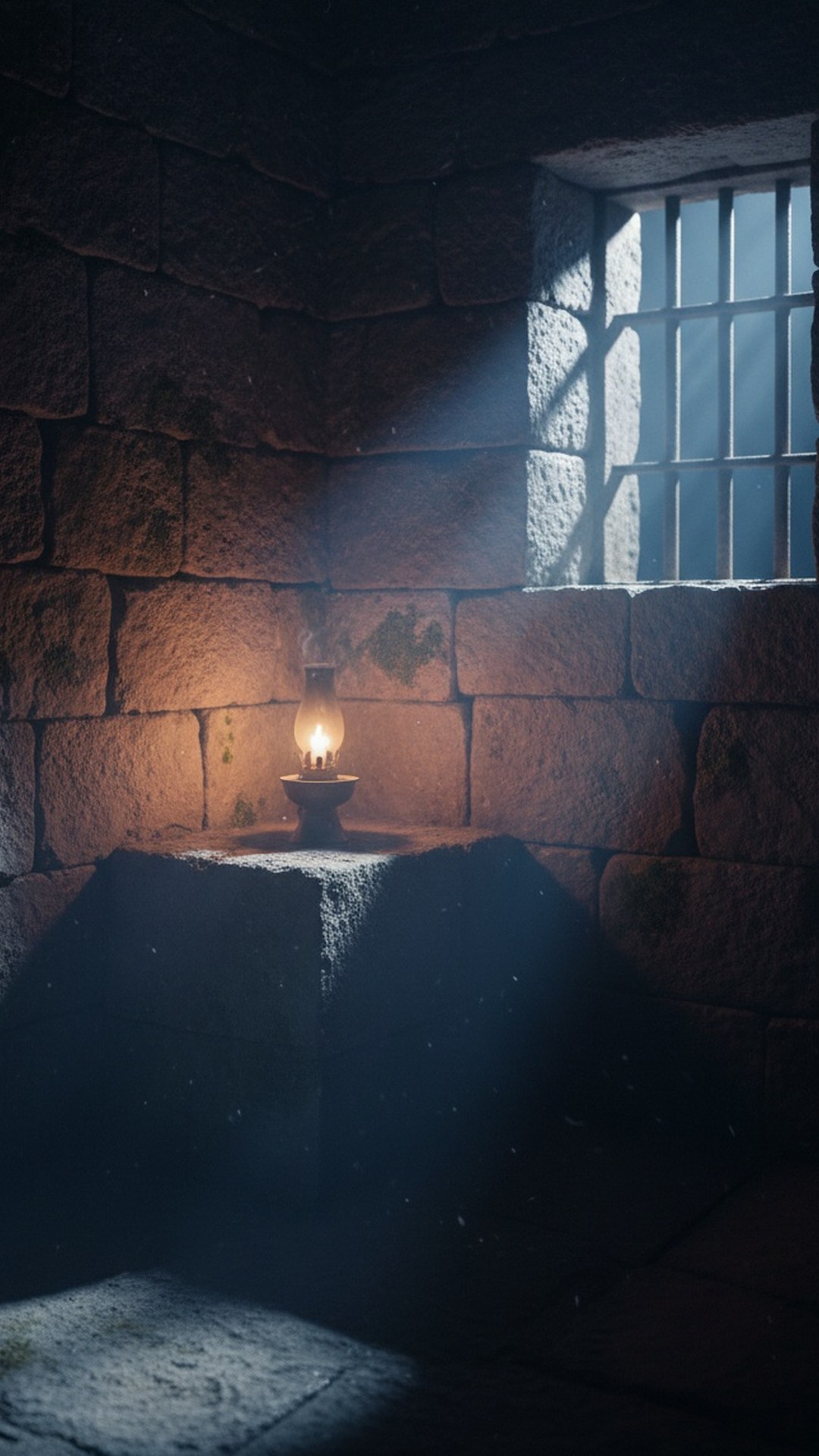
The setting is Mathura, on the river Yamuna. At the wedding of the princess Devaki, a voice from the sky warns her cousin, King Kamsa, that her eighth child will kill him. Kamsa throws Devaki and her husband Vasudeva into prison and kills their infants one by one as they are born, six children destroyed to cancel a prophecy. When the eighth child, Krishna, arrives at midnight, the prison locks fall open and the guards sleep. Vasudeva carries the newborn out into the storm, the Yamuna river parts to let him cross, and he swaps the baby into the cradle of Nanda and Yashoda, cowherds of Gokula. The tyrant's blade falls on the wrong child. The divine boy grows up hidden among herdsmen, and one day he comes back for the king.
A prophesied child, a slaughtering king, a night escape, a working herdsman family raising a god in secret. The skeleton of Matthew's nativity is all here. The question this series always asks is the only one that matters: who told it first? Mathura answers before Bethlehem does, and it answers in stone.
The receipt carved by a Greek
Start with what is beyond dispute. In 113 BC, more than a century before Bethlehem, a Greek ambassador named Heliodorus erected a stone column at Besnagar in central India. It is still standing, and the inscription is still legible.
This Garuda-standard of Vasudeva, the God of Gods, was erected here by the devotee Heliodoros, the son of Dion, a man of Taxila, sent by the Great Yona King Antialkidas.
Vasudeva is Krishna. A Greek diplomat, raised on Zeus and Apollo, converted to the worship of Krishna and said so in stone in 113 BC. And the pillar is not alone. Around 300 BC the Greek ambassador Megasthenes described a native god worshipped at Methora, which is Mathura, Krishna's city. Around 180 BC the Greek king Agathocles minted coins showing Vasudeva holding his war discus. The grammarian Panini referenced devotees of Vasudeva as early as the fourth century BC. Krishna worship predates Christianity by centuries, and the proof is stone, coin and ink, not speculation.
Killing the fake parallels
Now the falsehoods, because the internet version of this comparison is poisoned. Krishna was not crucified. That claim was invented by Kersey Graves in an 1875 book that scholars on every side of this debate regard as worthless. In the actual text, the Mausala Parva of the Mahabharata, Krishna dies when a hunter named Jara mistakes his foot for a deer and hits it with an arrow. No cross, no thieves, no tomb. Krishna was not born on December 25: his birth festival, Janmashtami, falls in August or September. And Krishna was not born of a virgin: Devaki was a married mother of seven. What the texts do describe is the eighth conception as a transfer from Vasudeva's mind into Devaki's womb with no physical act, a conception with no body involved, and that is the parallel worth having. Those manuscripts were written down centuries after the Gospels, which records when Indian scribes finally committed a memorized tradition to palm leaf, not when the belief started. Krishna never needed a stolen crucifixion. He was already a god conceived without contact.
The dating trap
This is where the skeptic plants his flag, so we will walk straight into it. The worship of Krishna is provably older than Christianity. The earliest text that tells the Kamsa story in full, the Harivamsa, dates to roughly the first century AD, the same decades the Gospels were being written. The most elaborate version, the one with the closest echo of Herod, sits in the Bhagavata Purana, composed some eight centuries after Christ. Nineteenth-century Sanskrit scholars, including R. G. Bhandarkar, took those two dates and argued the infant-massacre element flowed from Christian storytellers into India rather than the other way. Now break it. A manuscript date is the date somebody wrote a story down, not the date the story began, and India ran on memorized transmission for centuries before it ran on palm leaf. Bhandarkar's version requires Christian preachers to reach Mathura, rewrite the origin myth of a god who already had temples, minted coins and a Greek convert's pillar, and leave not one trace of that operation in any source on either side. The pillar is dated 113 BC and it calls Vasudeva the God of Gods. The cult is on the ground first, and the tyrant who tried to kill the child is the reason that cult existed at all.
But step back one more level and the ground shifts again. A tyrant warned of a prophesied infant, a slaughter, a child hidden in a river or across one, a secret upbringing among common people: Sargon of Akkad's birth legend had it by the second millennium BC. Moses had it. Perseus had it. The hunted divine infant is older than Krishna's texts and older than Matthew's, a template both religions inherited rather than invented.
So the verdict on Krishna is single-edged once the junk is cleared away. The god is older than Christianity, and a Greek ambassador's pillar proves it in stone. The birth story is a genuine parallel, and serious scholars have fought over its direction for two hundred years, which is exactly what happens when the older claimant is the one nobody wants to name out loud. And the fake claims, the crucifixion and the December birth, deserve to die, because the real mystery does not need them. Mathura already had the hunted infant, the murdering king and the god raised in secret by herdsmen while Bethlehem was still a village on a hill.
Two religions, continents apart, telling the same story of a king who murdered infants to stop a prophecy, and both insisting they told it first. Where did the template come from? Follow THE BLUEPRINT as the investigation continues.
This is Part 8 of 23 in THE BLUEPRINT, an investigation into the pre-Christian figures who carried the pieces of the Jesus story. See every part of the series here.
Before you go
7 books the Vatican doesn't want you reading. Free PDF, the texts they cut, with sources. Joined by 140+ Inner Circle members.
No spam. Unsubscribe anytime.
Go deeper
The Hidden Canon, Vol. I, Enoch. Jubilees. Thomas. Mary. Judas. 90 pages, 14 chapters, every receipt cited. The books your Bible quietly removed.
Read the Canon →Books that informed this investigation
As an Amazon Associate, Hidden Epoch earns from qualifying purchases. Cost to you: nothing.
Research safely
The VPN we use to research without being tracked. First 3 months free.
Get NordVPN →