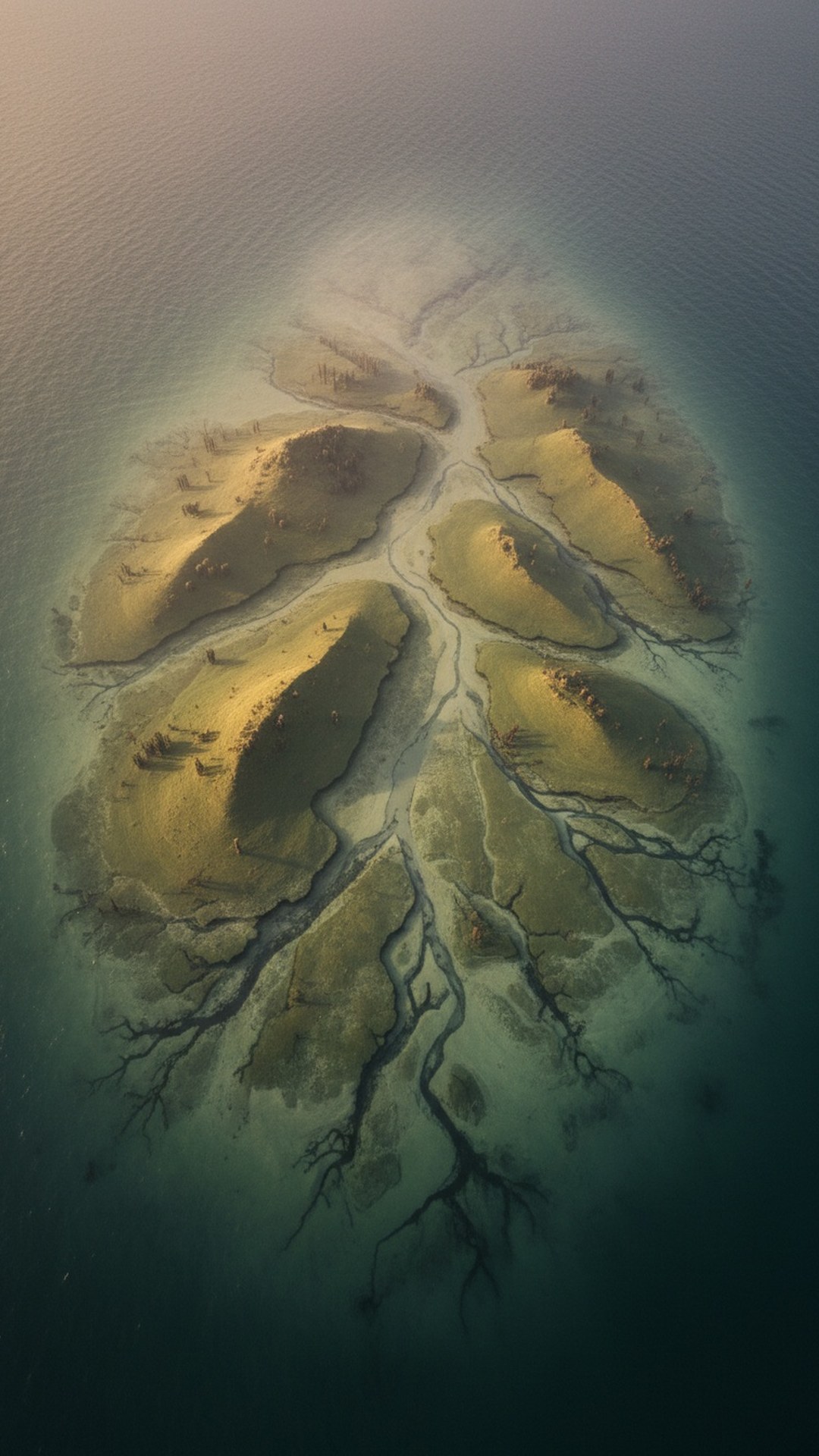
There is a lost country under the North Sea, and the strangest part is how we keep finding it. Not with submarines. With fishing nets.
Ten thousand years ago the seabed between England and the Netherlands was dry land. Forests, rivers, hills, marshes. Archaeologists call it Doggerland, after the Dogger Bank that was once its high ground. It was not a bridge between two places. It was the place.
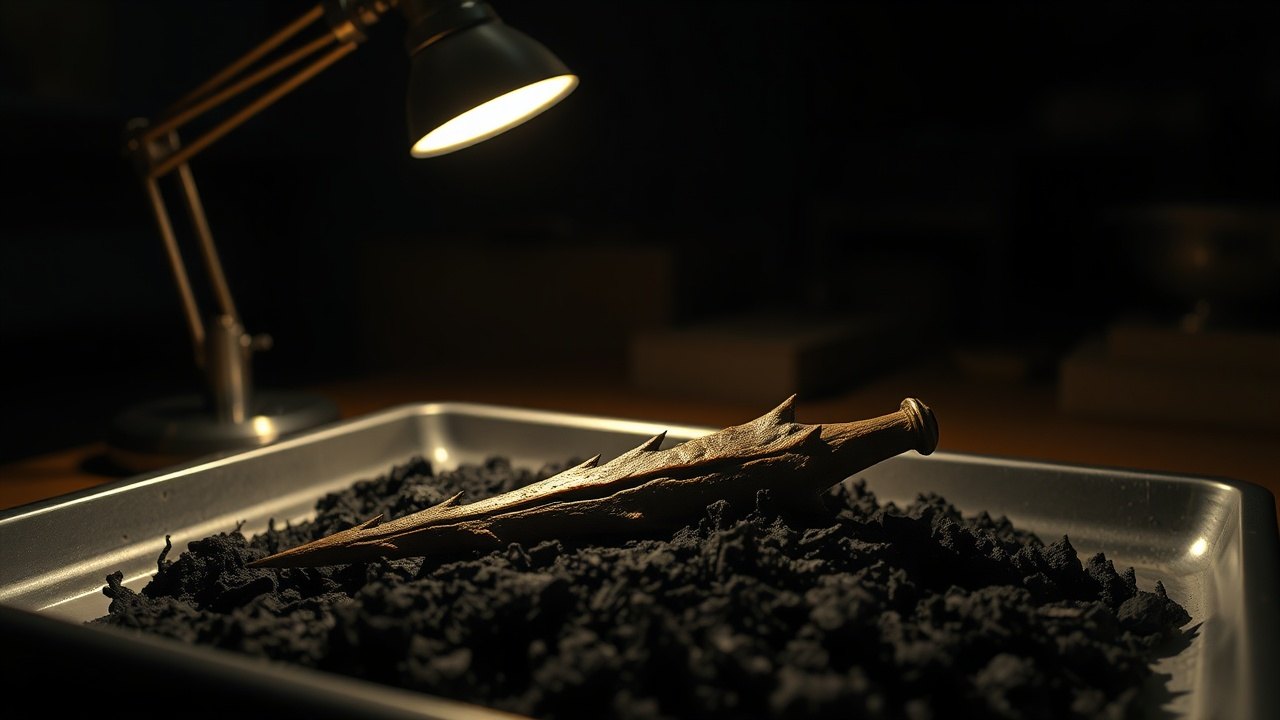
The harpoon in the net
In 1931 the trawler Colinda was fishing off the Norfolk coast when the crew hauled up a lump of peat. Inside it was a carved antler point, a barbed harpoon head, later dated to around 12,000 years old. It came up from roughly 36 meters of water. Someone made that weapon, on land, where there is now open sea.
The Colinda point was not a fluke. For a century, boats working the southern North Sea have dredged up mammoth teeth, lion bones, worked flint, human remains. Dutch fishermen pull up so much Ice Age bone that paleontologists buy finds directly at the dock. Every trawl is an accidental excavation of a drowned country.
Not a crossing. A homeland.
The textbook version, when Doggerland gets mentioned at all, calls it a land bridge. That framing is doing a lot of quiet work. Bridges are places you pass through. But the seafloor record says people lived there. Hunted there. Raised children and buried their dead there. Preserved footprints have been documented in the intertidal muds off the English coast, left by families walking estuary flats that are now under the tide.
In March 2026, researchers announced new evidence that Doggerland's forests and wildlife were flourishing thousands of years earlier than previously believed. The implication is uncomfortable for the old story. This was not a marginal corridor that people scurried across. It was prime territory, likely some of the best hunting ground in Mesolithic Europe, occupied for generation after generation.
People lived there, hunted there, died there. Their footprints are still on the seafloor.
How a country drowns
The end came from meltwater. As the glaciers of the last Ice Age collapsed, sea levels rose at rates that reached two meters per century at the fastest pulses. That is fast enough to watch. A hunting camp used by your grandparents would be salt marsh in your lifetime and open water in your grandchildren's.
Then, around 6200 BC, the Storegga slide let go. An underwater landslide off the coast of Norway, one of the largest known on Earth, sent a tsunami across the shrinking lowlands. Sediment traces of that wave are still found in Scotland today. For whoever was left on the low country, there was no warning system and no high ground worth the name.
By around 6000 BC, Doggerland was gone. A territory the size of a nation slid under the sea in the span of cultural memory, and the survivors carried the story inland.
The part nobody wants to say out loud
Nearly every coastal culture on Earth keeps a flood memory. Mesopotamia has Utnapishtim. The Hebrew Bible has Noah. Australia's Aboriginal traditions describe coastlines drowned at the end of the Ice Age with enough accuracy that geologists have matched the stories to real submerged features. We treat these accounts as myth. Doggerland is the receipt that at least some of them are memory.
Because here is the sequence the seafloor preserves: a people watched their world shrink, meter by meter, storm by storm, until the sea took all of it. That is not a metaphor. It happened in the North Sea, and it finished happening about 8,000 years ago. The people who escaped became the coastal populations of Britain and mainland Europe. Their descendants may have told the story until the story outlived the land.
Mapping projects using seismic survey data from oil companies have now reconstructed river valleys, lakes and coastlines across thousands of square kilometers of the seabed. Every new pass finds more structure down there. More landscape. More places where people would have lived.
Doggerland is only the drowned country we happened to find, because trawlers kept snagging its bones. Sea level rose on every coast on Earth at the same time. How many more countries are down there, waiting for a net?
Before you go
7 books the Vatican doesn't want you reading. Free PDF, the texts they cut, with sources. Joined by 140+ Inner Circle members.
No spam. Unsubscribe anytime.
Go deeper
The Hidden Canon, Vol. I, Enoch. Jubilees. Thomas. Mary. Judas. 90 pages, 14 chapters, every receipt cited. The books your Bible quietly removed.
Read the Canon →Books that informed this investigation
As an Amazon Associate, Hidden Epoch earns from qualifying purchases. Cost to you: nothing.
Research safely
The VPN we use to research without being tracked. First 3 months free.
Get NordVPN →